

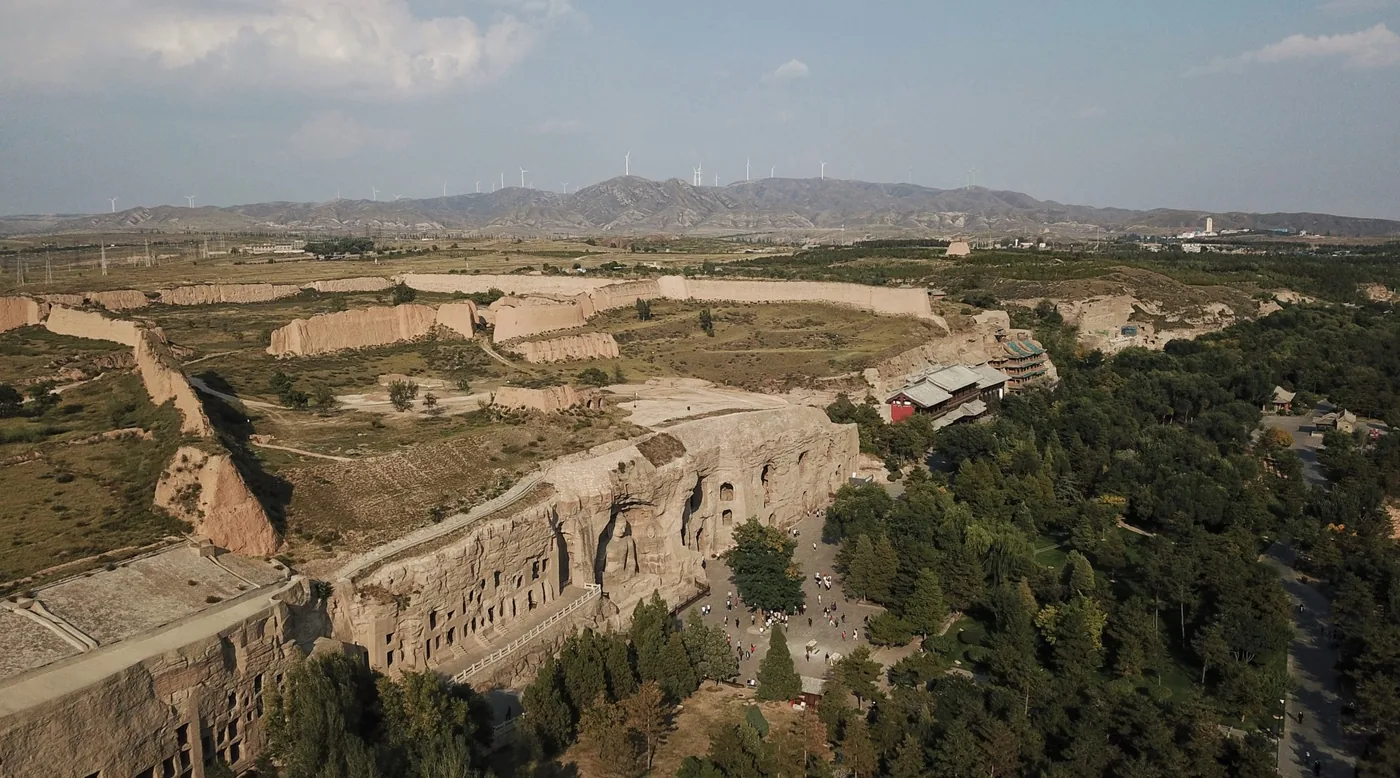
Some places impress you because they are famous. Others stay with you because they reset your sense of scale. The Yungang Grottoes [YOON-gahng] (云冈石窟, a major Buddhist cave complex in northern China), just outside Datong [dah-TONG] (大同, a historic city in northern Shanxi) in Shanxi Province [shahn-SHEE] (the inland province west of Beijing), belong to the second category. Before you start thinking about dynasties, Buddhist doctrine, or UNESCO labels, you feel the site physically: a sandstone cliff cut into cave sanctuaries, giant Buddha figures appearing from shadow, and a silence that somehow still carries imperial ambition 1,500 years later.
For many Western travelers, China’s best-known historic icons are the Great Wall, the Forbidden City, or the Terracotta Army. The Yungang Grottoes are less instantly recognizable outside Asia, which is exactly what makes them such a strong editorial discovery. They do not feel like a textbook site that only matters to specialists. They feel cinematic, monumental, and surprisingly approachable even if you have never studied Buddhist art.
What the Yungang Grottoes Actually Are
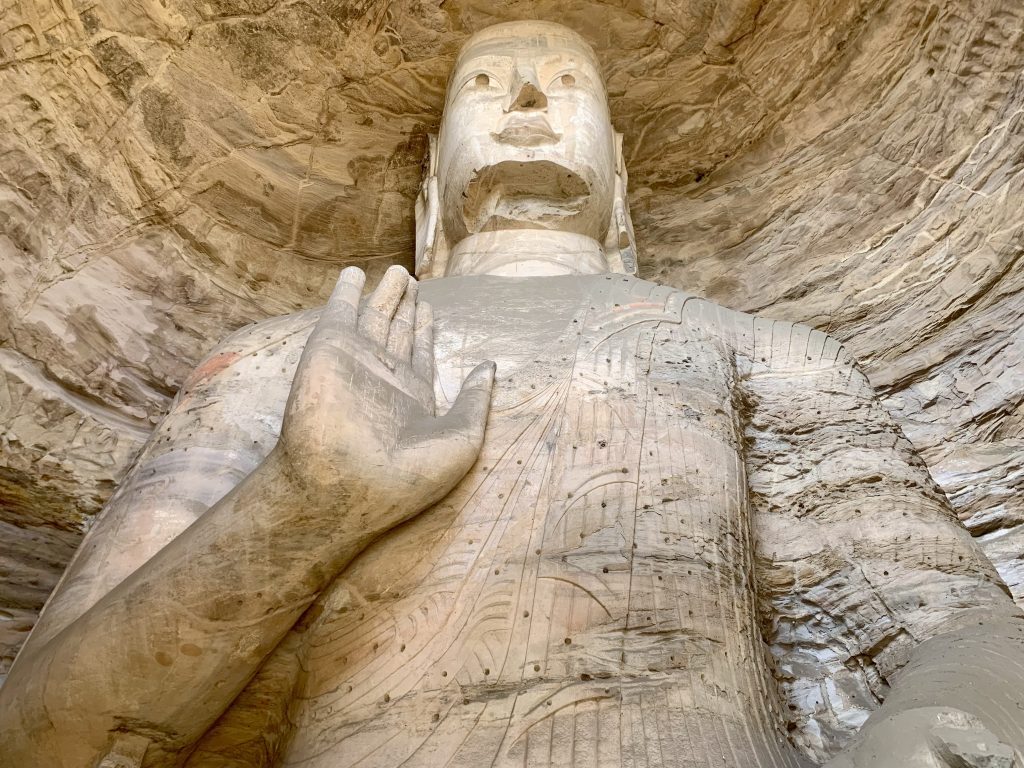
At the most basic level, the Yungang Grottoes are a vast complex of rock-cut Buddhist sanctuaries carved mainly during the 5th and 6th centuries, under the Northern Wei dynasty [bay-WAY] (北魏, the ruling house of northern China in the 5th and 6th centuries). But that dry description undersells the experience. In English, the word grottoes can sound like naturally formed caves later adapted for worship. Yungang is something else entirely: a deliberate stone world shaped by human hands, where caves, reliefs, niches, and colossal statues were carved directly into the cliff face.
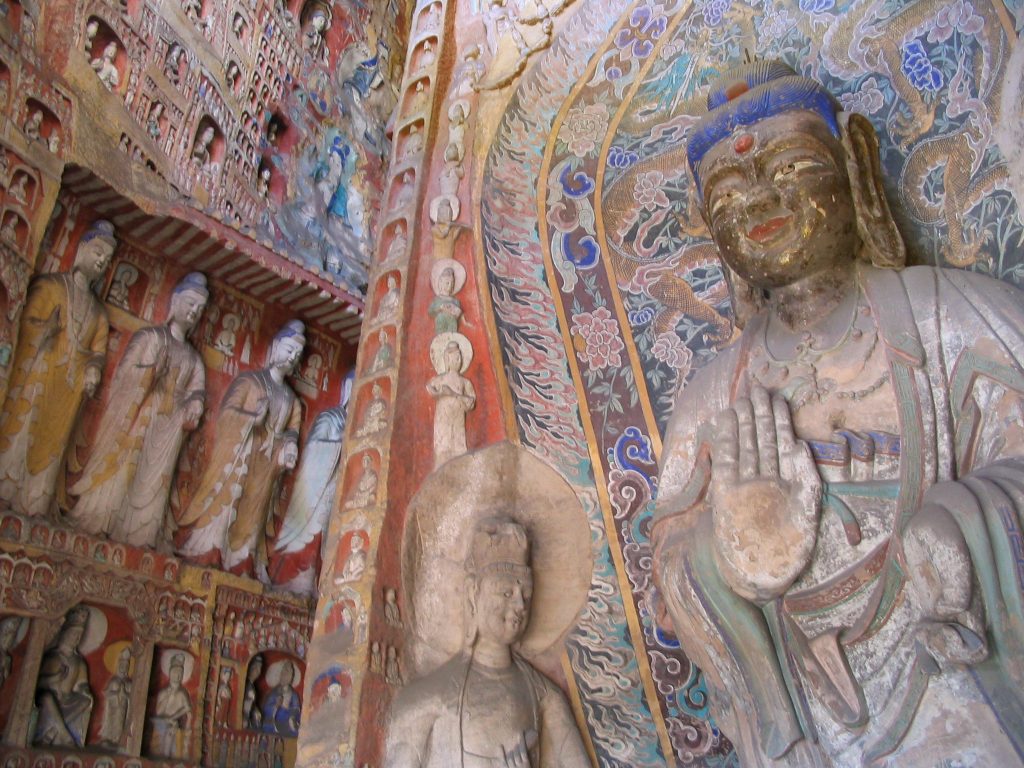
That matters because Yungang captures a major moment in world cultural history. Buddhism did not begin in China; it moved east from India through Central Asia exchange routes and changed as it entered new political and visual worlds. At Yungang, you can almost see that process happening in stone. Some figures preserve features that feel trans-Asian and cosmopolitan, while others already look more recognizably Chinese in proportion, clothing treatment, and facial expression. What you are seeing is not only faith, but cultural translation.
Why They Matter Beyond China
This is one reason the site resonates far beyond Chinese history buffs. Yungang is a place where religion, empire, and artistic exchange all become visible at once. The Northern Wei court was not funding small devotional objects; it was backing monumentality. These caves projected piety, authority, and political imagination on a massive scale. Even for readers who know very little about Buddhism, that combination is easy to grasp. Monumental art is never only spiritual. It is also a statement about power, patronage, and the worldview of the people who made it.
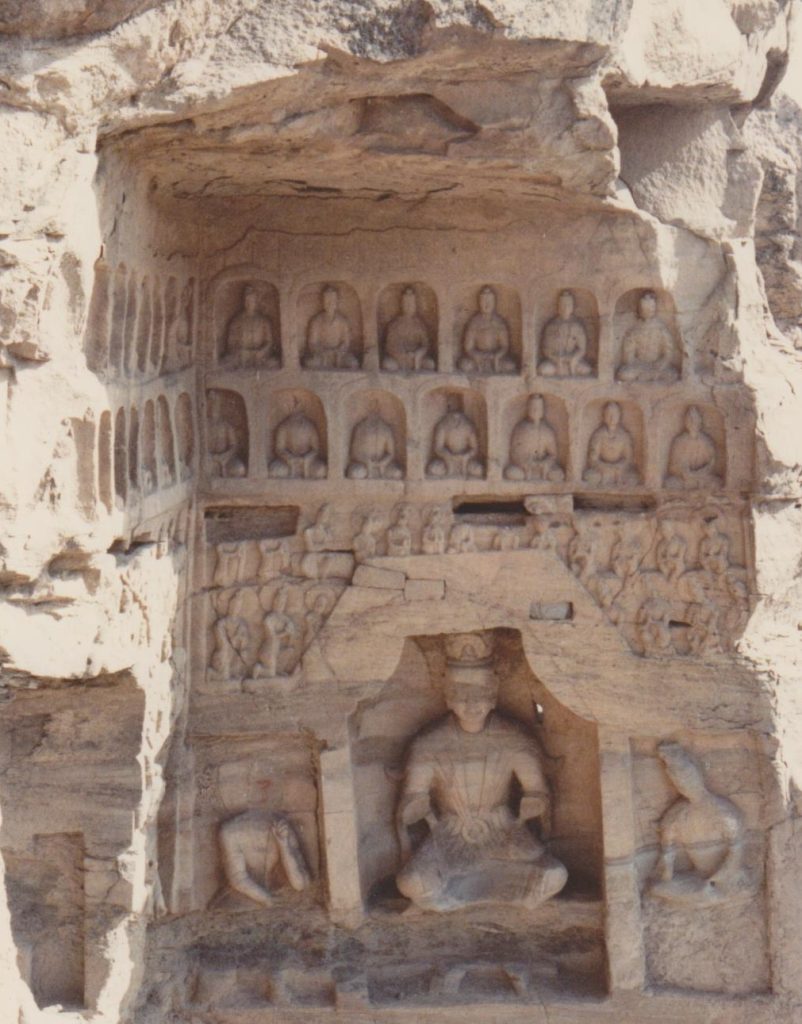
The site also rewards two very different kinds of looking. From a distance, you read it through scale. The cliff becomes a gallery on a civilizational level, and the giant figures force your eyes upward. Up close, the experience flips. Robe folds, facial expressions, attendant figures, carved bands, and wall details start to matter just as much as the colossal forms. Yungang works because it gives you both the shock of scale and the pleasure of scrutiny.
What You Actually See On Site
That makes it unusually friendly for international visitors. You do not need a working knowledge of Buddhist iconography to appreciate what is in front of you. You can approach Yungang through architecture, through craftsmanship, or simply through the emotional effect of seeing so much carved directly into living rock. Ask simple questions and the place opens up fast: why do some caves feel austere while others feel dense and ornate? How do repeated motifs stay visually alive instead of becoming repetitive? How does stillness become so expressive in stone?
The Black Myth: Wukong Hook
There is also a contemporary hook that makes Yungang easier to pitch to younger global readers. Since Black Myth: Wukong (the Chinese action game that sparked new travel interest in historic sites) exploded into mainstream international gaming culture, curiosity about China’s religious landscapes, cave temples, and myth-soaked historic sites has grown fast. It is safer not to claim Yungang as the game’s single most explicit one-to-one model, but the grottoes have clearly entered the broader travel conversation around “the real places behind that sacred Chinese fantasy atmosphere,” especially within Shanxi’s tourism wave. That makes Yungang a smart pop-culture bridge rather than a forced gimmick.
The connection matters because many readers now want to know where that feeling of sacred Chinese grandeur actually comes from. At Yungang, the answer is right in front of you. The weathered cliff, the solemn faces, the sense of ritual scale, and the carved density that feels almost supernatural in modern visual media all have a real historical source. The site does not need game culture to be impressive, but game culture gives editors a clean way to help new readers lean in.
How to Appreciate Yungang Even If You Know Nothing About Buddhism
If you know nothing about Buddhism, the best way to read Yungang is not to panic about symbolism. Start with three things: scale, variation, and adaptation. Notice how large the central figures are compared with the people around them. Notice how different caves shift in mood, density, and ornament. Notice how forms that came from a wider Buddhist world gradually become more local in character. That way of looking turns Yungang from an intimidating heritage label into a place you can actively decode for yourself.
Why It Is Worth the Detour
And that is part of why it still feels underrated in international travel culture. Datong is not the first Chinese city most overseas visitors think about, and Yungang has not been branded as aggressively as some headline landmarks. But that relative underexposure is part of the appeal. It still carries the thrill of genuine discovery. You are not visiting because it is compulsory; you are visiting because it rewards curiosity.
It also resists digital compression. Photos can suggest the site, but they flatten it. They cannot fully communicate the bodily sensation of moving along the carved cliff, the rhythm between open cave fronts and quieter recesses, or the way details keep surfacing after your eyes adjust. This is exactly the kind of place that justifies a detour because it gives you something that screens cannot finish delivering.
For travelers building a culture-heavy northern China route, Yungang pairs naturally with Datong and the wider heritage landscape of Shanxi. That gives it itinerary value as well as standalone power. It is not just a one-off photo stop. It is a place that helps travelers understand how Chinese religion, empire, frontier exchange, and visual culture intersected in a region that still feels underexplored by many global audiences.
That is why the Yungang Grottoes might be China’s most underrated wonder. Not because they are obscure, and not because they need hype for hype’s sake, but because they offer much more than many first-time readers expect. They are visually overwhelming, historically layered, and surprisingly legible even for visitors coming in cold. In a country crowded with extraordinary landmarks, that mix is rare.
Related journey: Shanxi · Sacred Stone & Merchant Heritage – 10 Days 9 Nights works well if you want Yungang to open into the rest of Shanxi’s cave, timber, frontier, and merchant landscape rather than sit as a one-off detour.
Image Credits
- Cave 19 exterior — Dudva / Wikimedia Commons (CC0)
- Grotto with Buddhist statues — BabelStone / Wikimedia Commons (CC BY-SA 3.0)
- Side wall statues in Cave 11 — Felix Andrews / Wikimedia Commons (CC BY-SA 3.0)