

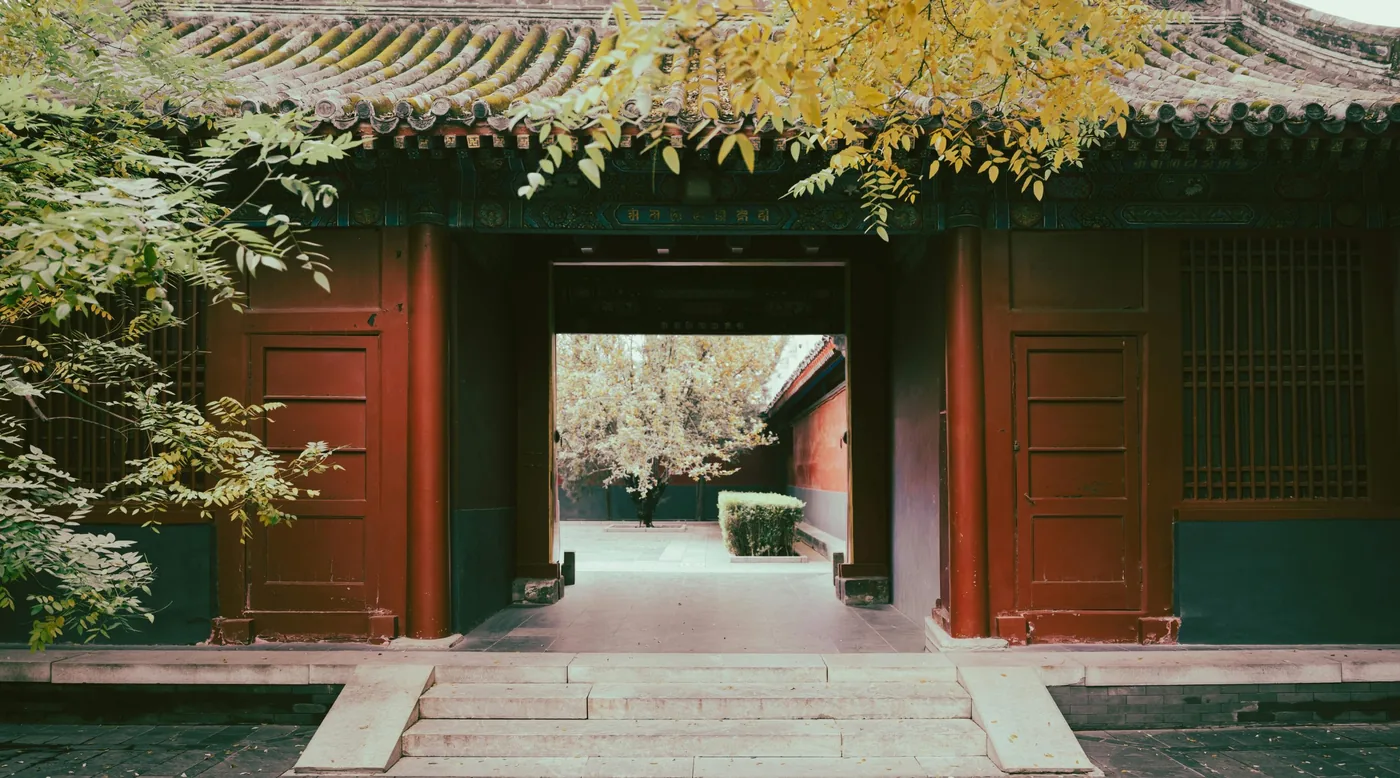
In 1718, the Qing court stationed a thousand soldiers in Chengdu [CHUNG-doo] and forbade them from doing any civilian work. So they drank tea, raised songbirds, and perfected doing nothing productive — and the garrison lanes now known as Kuanzhai Alley are where it all started.
Kangxi Sent Soldiers. Chengdu Got a Lifestyle.
The story begins with the Dzungar Rebellion. When Mongol forces threatened the empire’s western borders, the Kangxi Emperor dispatched Eight Banners troops to hold Sichuan. General Nian Gengyao oversaw the construction of Shaocheng [SHAOW-chung] (少城, the “Lesser City”), a walled compound inside Chengdu’s northern quarter. Over a thousand Manchu and Mongol bannermen moved in with their families, and the rules were strict: no commerce, no trade, no manual labour. They received government rice rations and were expected to remain combat-ready.
Combat-ready, however, assumed there would be combat. The frontier settled. Decades passed. And inside the walls of Shaocheng, a class of permanently idle soldiers with guaranteed income and nothing to do began filling their days. They grew flowers in pots along the lanes. They kept caged birds and carried them on bamboo poles. They sat for hours over lidded gaiwan [GUY-wahn] tea bowls, topping up the hot water until the afternoon light shifted. What tourists now experience as Chengdu’s signature “slow life” culture — the teahouse habit, the lane-side ease, the specific pace that makes this city feel different from Shanghai or Beijing — started as enforced unemployment behind compound walls.
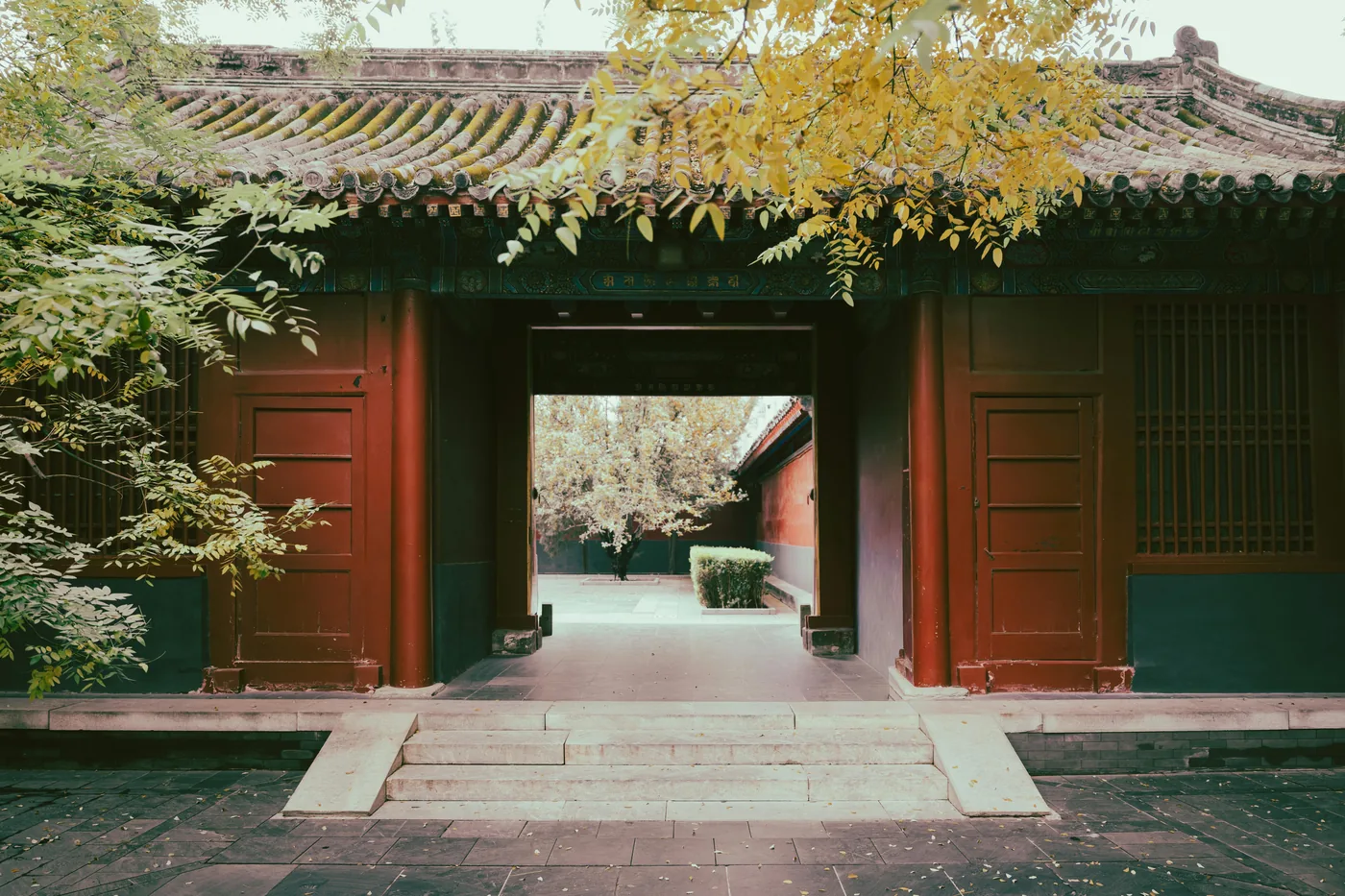
That origin story is what makes Kuanzhai Alley [kwahn-JAI shahng-zuh] (Kuanzhai Xiangzi, 宽窄巷子) more than a commercial walking street. The three parallel lanes are the floor plan of Shaocheng itself. Walk them and you are walking the footprint of a compound that accidentally became the birthplace of a city’s identity.
Three Alleys, Three Layers of the Same Impulse
The three lanes run parallel, spaced close enough that you can zigzag between them in a few minutes. But each one developed differently, and reading them in sequence turns a casual stroll into something more structured.
Wide Alley (Kuan Xiangzi) preserves the most intact architecture. The courtyard houses here still carry the proportions of the garrison compound — wide gates, deep setbacks, timber-framed interiors that open onto planted courtyards. This is where the tea culture is thickest. Sit in one of the teahouses, order a gaiwan, and listen: bamboo chairs scraping on flagstone, the clink of porcelain lids, a vendor across the lane singing a price. You are doing what bannermen were doing in the same footprint three centuries ago. The chairs are newer. The habit is not.
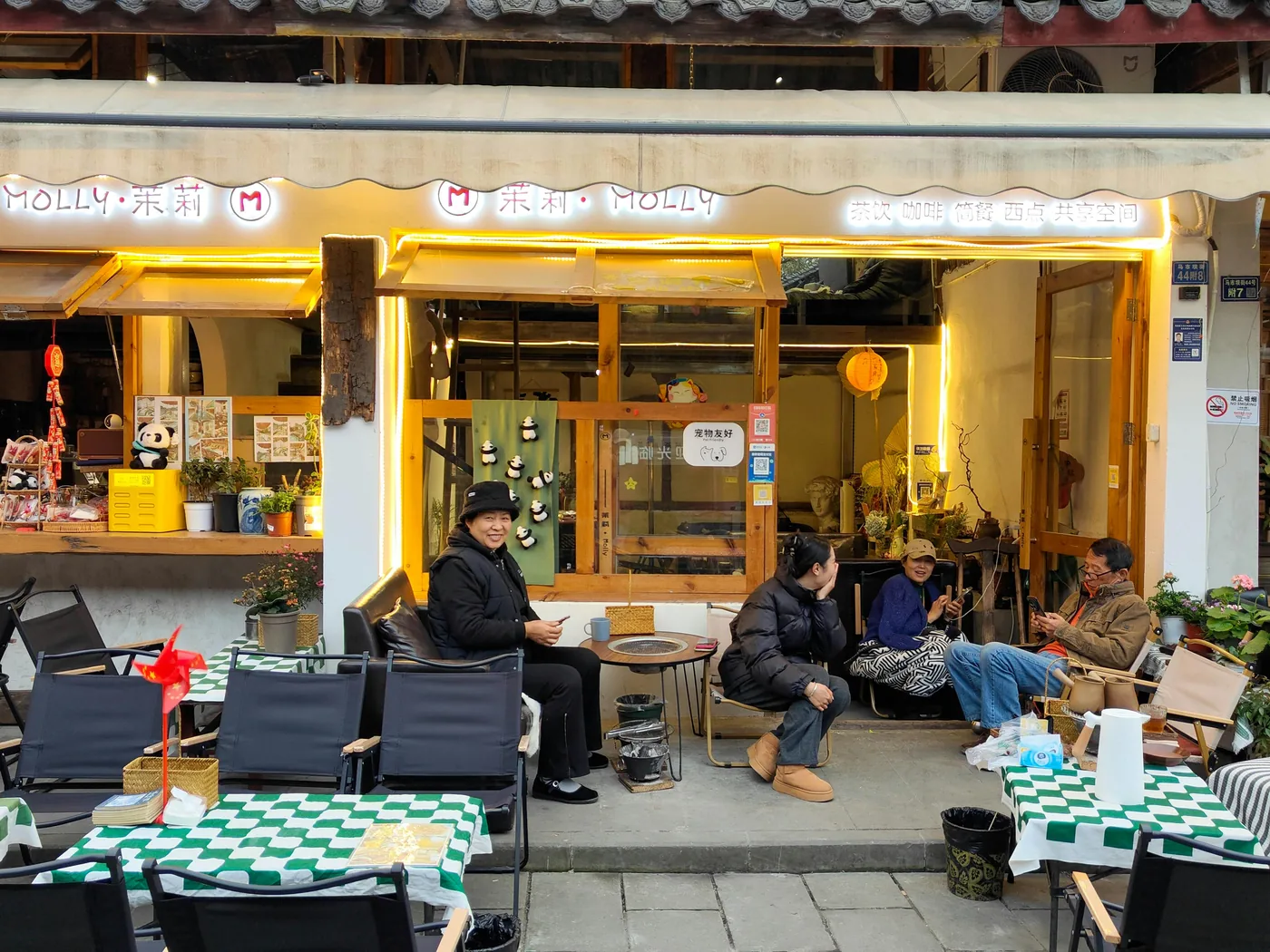
Narrow Alley (Zhai Xiangzi) reads as a different era entirely. After the Qing collapsed in 1911, the garrison walls came down and Chengdu’s wider cultural influences began seeping in. The architecture along Narrow Alley reflects that transition: Republican-period fusion buildings, Western-influenced facades mixed with courtyard plans, cafes and galleries where military dormitories once stood. If Wide Alley is Qing leisure, Narrow Alley is the moment Chengdu began absorbing the outside world.
Well Alley (Jing Xiangzi) is the youngest layer — the most openly commercial and the most Chengdu-today. You smell it before you see it: chili oil from skewered chicken, the sweet char of rice cakes on a griddle, peppercorn smoke drifting from a hotpot stall wedged between two souvenir shops. Vendors call prices over each other. Tourists jostle with selfie sticks. Halfway along, a 400-metre brick culture wall functions as an open-air timeline, its carved panels compressing three centuries into a single walkable surface — but most people are too busy eating to notice it on the first pass. This is the alley where the energy lives, and that energy is not a mistake. It is the latest expression of a place that has always been about how people fill their idle time.
The Authenticity Question Has an Honest Answer
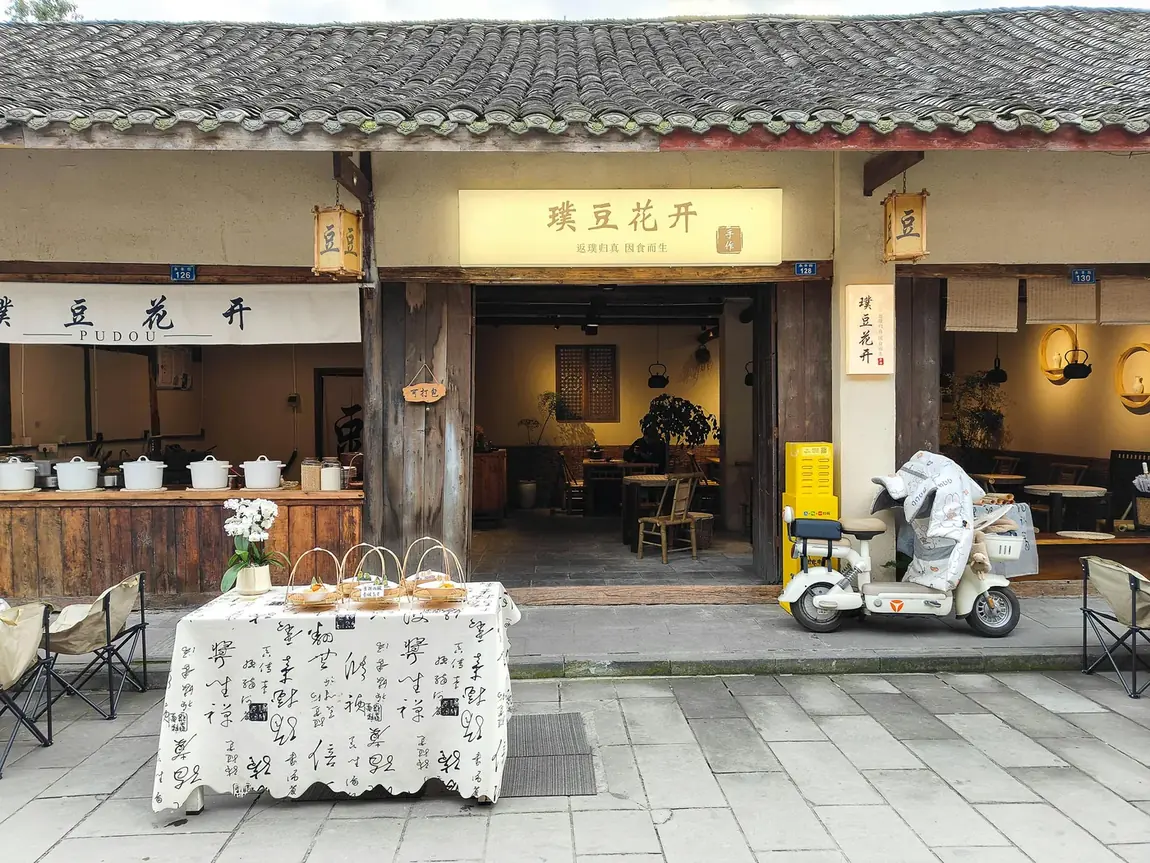
Any informed visitor will notice that Kuanzhai Alley does not look three hundred years old. It should not. Roughly 60 percent of the buildings were completely reconstructed during a major renovation project that ran from 2003 to 2008. The remaining 40 percent were renovated, not preserved in amber. Of the approximately 900 residents who once lived here, around 100 remained by the time the project finished. The critical line writes itself: the soul left with the residents.
That criticism is fair, and worth taking seriously. But it is not the full picture. What survived the reconstruction is more unusual than it first appears: the spatial layout of an eighteenth-century Manchu compound, complete with its alley widths, setback depths, and parallel lane structure. Southern China does not have hutong culture. Beijing does, and a few other northern cities. Kuanzhai Alley is the only fragment of that spatial grammar south of the Yangtze. The alleys are not a replica of something from elsewhere. They are the last surviving instance of something that was never supposed to be here in the first place.
The renovation also has a timing detail that most visitors never learn. Kuanzhai Alley reopened to the public in June 2008 — just weeks after the devastating Sichuan earthquake that killed nearly 70,000 people. The reopening was not an accident of scheduling. It was a deliberate civic signal: Chengdu was still here, still functioning, still inviting people in. The commercialism that followed — the souvenir shops, the chain cafes, the face-changing performance stages — is easy to dismiss as dilution. But framing it as betrayal misses the pattern. This district has been reinvented before. Garrison became garden. Garden became neighbourhood. Neighbourhood became cultural district. Each version replaced the last. The current one is louder and more commercial than what came before, but the cycle of reinvention is exactly what makes the place Chengdu rather than a museum.
Once you know the backstory, the souvenir shops stop being the point. The Shaocheng layout, the old proportions, the whole inherited habit of filling idle hours well — that is what you are actually walking through. Chongqing & Chengdu · Neon City & Sacred Mountain – 12 Days 11 Nights builds the visit around that layer, so the alleys read as cultural history rather than a shopping stop.
Morning Tea, Afternoon Crowds
Weekday mornings are the quietest window and the closest in atmosphere to what the alleys feel like without performance-level crowds. Start in Wide Alley and work south. The courtyard teahouses open early, and a gaiwan before the tour groups arrive is one of the more grounding experiences available in central Chengdu. Well Alley is better in the afternoon and evening, when the food vendors are fully set up and the energy matches the lane’s personality.
Do not skip the brick culture wall in Well Alley. It is easy to walk past in the food-stall commotion, but it is one of the few places in the district that tries to tell the Shaocheng-to-city story in a single continuous surface. If you have already read the history, the wall becomes a checklist of things you now recognize. If you have not, it serves as a compressed introduction.
The tea is still being poured. The birds are still singing in their cages along Wide Alley. The chili smoke is still drifting through Well Alley at dusk. The leisure culture those bannermen started out of sheer boredom is now the thing that makes Chengdu feel like Chengdu — and this is a better story than most historic districts anywhere in China can tell.