

In 857 CE, a timber hall rose on a mountainside in northern China. It is still standing. Not rebuilt, not reconstructed in historical style, not replaced by a concrete replica with old-looking paint — still standing, its original wooden frame holding weight after more than eleven centuries. That hall sits in Shanxi [shahn-SHEE], the north China plateau west of Beijing where temple halls, pagodas, shrines, and fortified cities preserve an unusually deep building record. The region holds more than 28,000 ancient structures, and by some counts more than 70 percent of China’s surviving buildings from before or during the Song period remain here. That is not a heritage statistic. It changes what the place feels like under your feet.
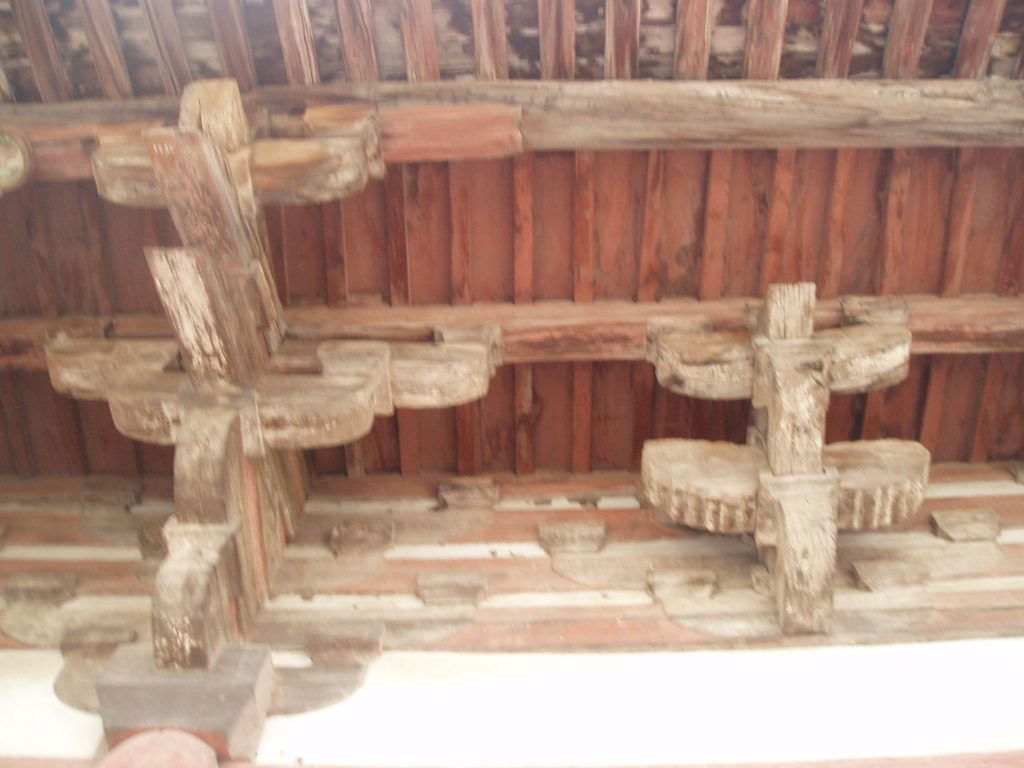
The easiest mistake is to reduce all of this to “old buildings.” The phrase is too light. It makes Shanxi sound quaint, nostalgic, or merely photogenic. What Shanxi actually preserves is a timber world: structural habits, repair traditions, roof weight, ***dǒugǒng*** [doh-GONG] (interlocking wooden bracket clusters that transfer roof weight to columns without nails), hall proportion, and the darker visual calm that comes from wood surviving long enough to carry time in its surface. Run your hand along a column in one of these halls and you feel it — the grain raised by centuries of humidity and dryness, cool to the touch even in summer, the surface somewhere between stone and velvet.
“Old Buildings” Undersells What Shanxi Has
When travelers say they want to see old buildings in China, they often mean they want atmosphere, carved detail, or roofs that look unmistakably Chinese. Shanxi offers something stricter and more valuable. It offers continuity. In many places, the architectural image survives while the material chain has been broken by fire, war, rebuilding, demolition, or tourism-led replacement. In Shanxi, the conversation can still begin with actual timber survival.
Consider Jinci Temple [jeen-TSUH], where 3,000-year-old painted clay maids still guard a sacred spring southwest of Taiyuan. It is not one building but an entire compound layered across dynasties — Song-era halls shoulder-to-shoulder with Ming additions, each generation’s timber logic visible if you know where to look. Walking through Jinci Temple, you stop thinking about architecture as something frozen. You start reading it as accumulation.
That shift matters because architecture is more than silhouette. It is load, joinery, rhythm, and accumulated repair. Once you start noticing that, Shanxi stops being a region of “pretty old sites” and becomes one of the clearest places in China to understand how wooden architecture actually worked, aged, and stayed standing.
The Geography That Kept Shanxi’s Timber Standing
There is no single neat answer, but part of the explanation lies in the region’s setting and historical path. Shanxi is a plateau bordered by mountains, with inland dryness in many areas and a settlement pattern that did not modernize at the same speed or in the same way as richer eastern cores. Add to that powerful local traditions of temple patronage, compound building, and repair, and you get conditions that helped more timber remain legible across time.
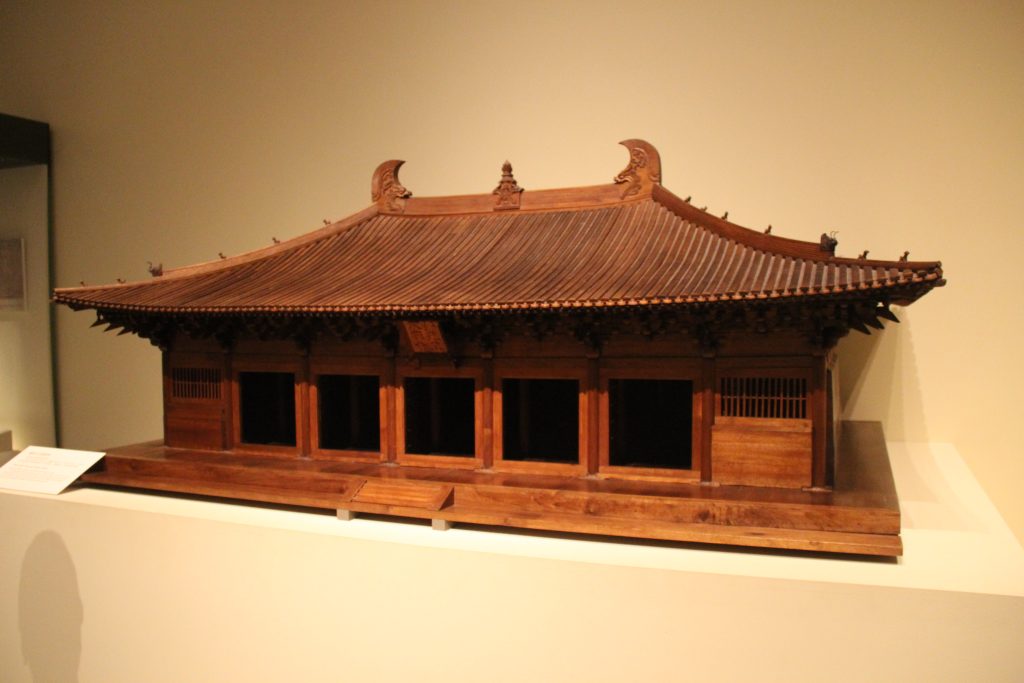
The survival of Foguang Temple [foh-GWAHNG] (佛光寺), whose East Hall from 857 CE is the oldest verified timber building in China, is a case in point. Tucked into the Wutai Mountains far from any major trade route, the temple escaped the waves of demolition and reconstruction that swept through wealthier, more accessible sites. Step inside the East Hall and the air thickens. Massive timber beams — some nearly twelve centuries old — cross the dim interior in clean parallel lines, and the light filtering through lattice screens catches dust motes drifting between ancient columns. It is the kind of silence that has physical weight.
Shanxi did not escape damage. It did not. But it preserved more chains of continuity. That is the difference. Elsewhere you may encounter a handful of famous isolated survivors. Here, you feel a whole regional habit of building and maintaining in wood — masterpieces, yes, but also sheer density.
Survival Is Not the Same Thing as Restoration
This distinction is crucial for visitors. In China, restoration can mean many things: careful repair, partial replacement, reconstruction after damage, or near-total rebuilding in historical style. To the casual eye, these can all blur together. Shanxi matters because it keeps forcing a more serious question: how much of the underlying structural logic is still there?
A surviving timber building may have undergone repairs and still remain profoundly important, because its frame, proportions, and craft lineage continue across time. A reconstructed “old-style” building may look convincing and still teach you much less. Shanxi repeatedly rewards travelers who learn to ask not only whether a site is beautiful, but whether its material and structural continuity still speaks. That shift in attention is one of the region’s great gifts.
Worth noting: The timber halls, pagodas, and architectural depth in this article are part of the route inside Shanxi · Sacred Stone & Merchant Heritage – 10 Days 9 Nights.
Yingxian Wooden Pagoda and the Temple System: Beyond Age Labels
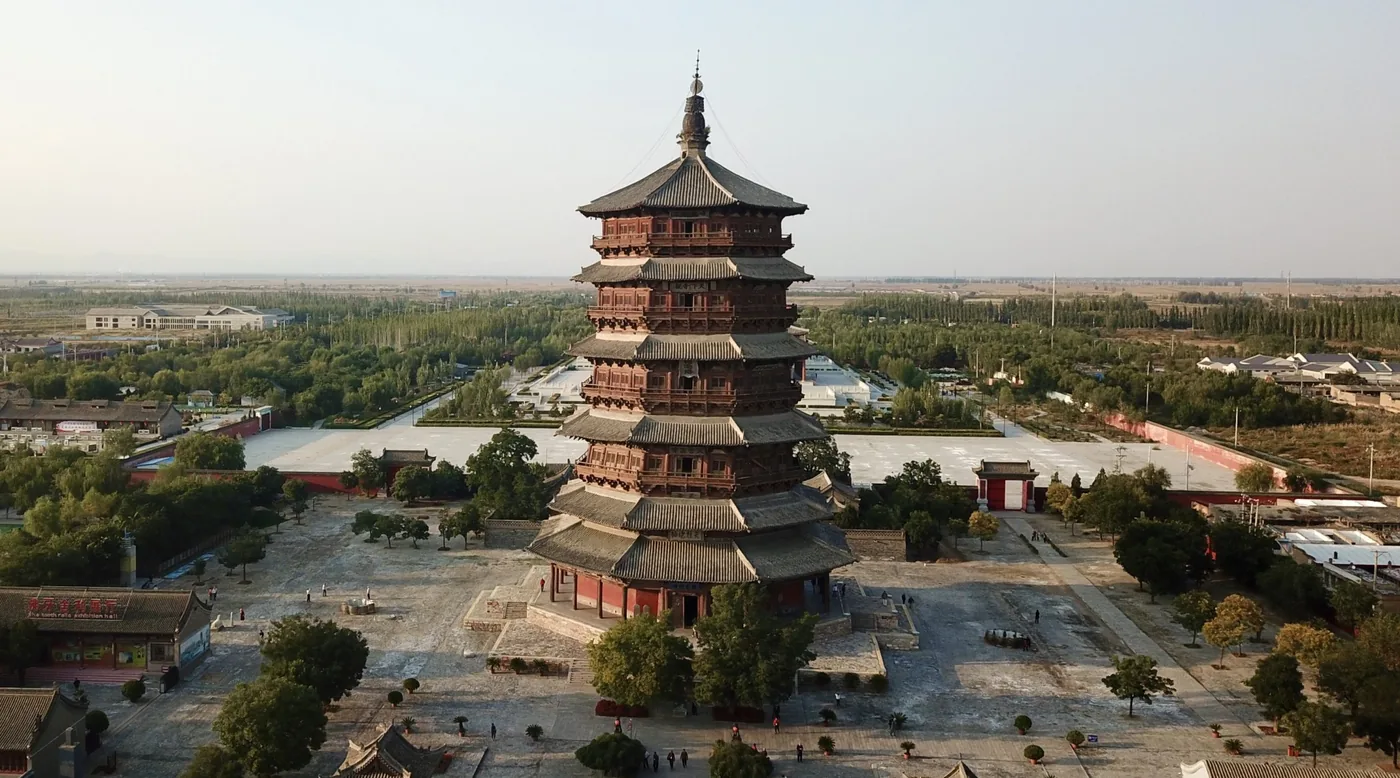
Yingxian Wooden Pagoda [YING-shyen] (应县木塔, the 67-meter, fully wooden pagoda built in 1056 that still stands in Ying County) is the headline example because it proves the scale of what timber architecture in Shanxi could achieve. It is important because it still makes structural ambition visible. Stand at its base and tilt your head back: five visible stories of dark, interlocking wood rise against the sky, the dougong clusters at each tier fanning outward like wooden hands bracing for weight. You do not need a technical manual to understand that wood here was trusted with height, permanence, and nerve.
But Shanxi’s real strength is wider than one pagoda. The region’s temple world includes surviving timber halls, monastery compounds, shrine complexes, and building traditions that stretch from the Tang and Song periods into later dynasties. Foguang Temple, Jinci Temple, the lesser-known halls scattered through county seats that rarely appear in guidebooks — together they form a system. Even when travelers do not visit every one of these sites, the knowledge that such a network survives changes how they read the place. Shanxi is not famous for one miracle object. It is famous for keeping a whole architectural language alive long enough to remain teachable.
From Symbol to Structure
For many first-time visitors, Chinese architecture first arrives as an image: sweeping rooflines, painted beams, layered eaves, and ornamental detail. Shanxi deepens that image into structure. Once you have seen enough surviving timber here, you stop reading buildings only by profile. You begin to notice the interval between columns, the quiet authority of dougong clusters overhead, the way old wood absorbs light, and the difference between a living hall and a decorative copy.
Shanxi can feel so clarifying precisely because of this. It does not simply show you beautiful relics from the past. It lets you encounter the logic that made them possible. What survives here is not the appearance of an older world. It is the timber intelligence that held that world up.