

Some places preserve monuments. Shanxi [shahn-SHEE] (山西, the north China province where shrines, merchant institutions, compounds, fortifications, and city walls still survive in unusual concentration) preserves relationships. That is the deeper reason the province feels so strong once you are actually in it. A temple is not left floating as an isolated relic. A merchant city is not reduced to storefront nostalgia. A gate is not merely picturesque. They still read as parts of one social world.
For travelers trying to understand what “old China” could have looked like before modern flattening, that matters enormously. Many destinations can offer one famous masterpiece. Shanxi offers something rarer: a chance to see how ritual space, finance, family order, defense, and movement once reinforced one another across a province. Its heritage can feel less theatrical and more convincing because it is not performing for you. It is simply still there.
Shanxi Did Not Keep Only Relics. It Kept a Structure.
The usual travel habit is to separate categories. Temples belong to religion. Banks belong to commerce. City walls belong to military history. Courtyard compounds belong to domestic life. In Shanxi, those distinctions are useful but incomplete. The surviving places keep revealing how tightly linked these systems once were. Ritual institutions organized legitimacy and memory. Fortified routes protected movement. Merchant wealth funded architecture and social authority. Family compounds turned success into durable hierarchy. The province’s surviving spaces still let you read those links on the ground.
Shanxi often feels more coherent than provinces with equally famous individual sites. It has not only preserved beautiful objects. It has preserved enough of the surrounding framework that those objects still make sense where they are.
Merchants, Banks, and Courtyards Still Sit Inside the Same Story
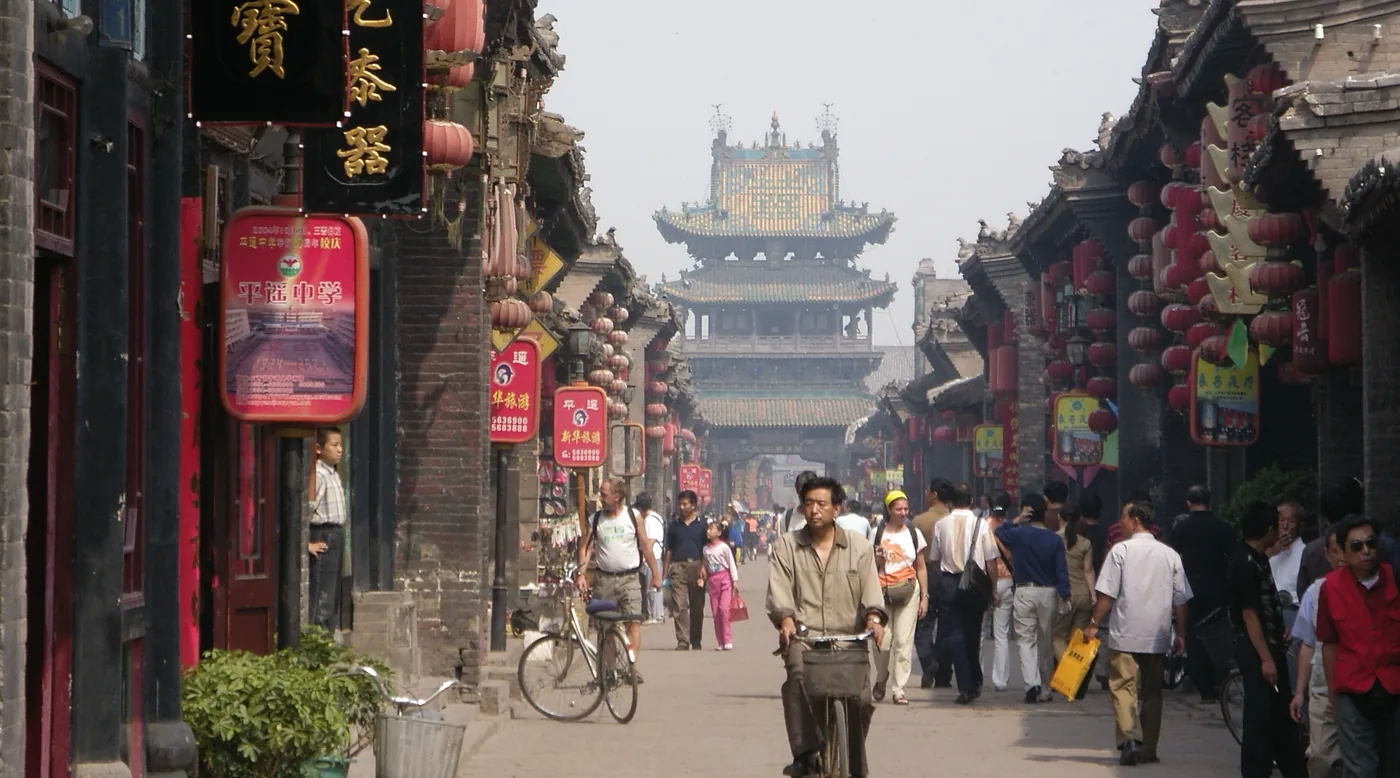
Pingyao Ancient City [PING-yow] (平遥古城, the walled city where late imperial banking and merchant life remain unusually legible at street level) is the clearest starting point. Shanxi merchants dominated long-distance commerce in the Qing period (1644–1912), and the province’s famous piaohao [pyow-how] (draft banks that moved money, credit, and fiscal transfers across China) grew out of this environment. The point is not just that Shanxi once got rich. The point is that wealth here left built form behind: institutions, courtyards, street hierarchies, and habits of order. Walk the main commercial street today and the hierarchy is still legible in doorway scale, signboard placement, and the way banking halls face the road with a kind of institutional composure that shopfronts beside them do not attempt.
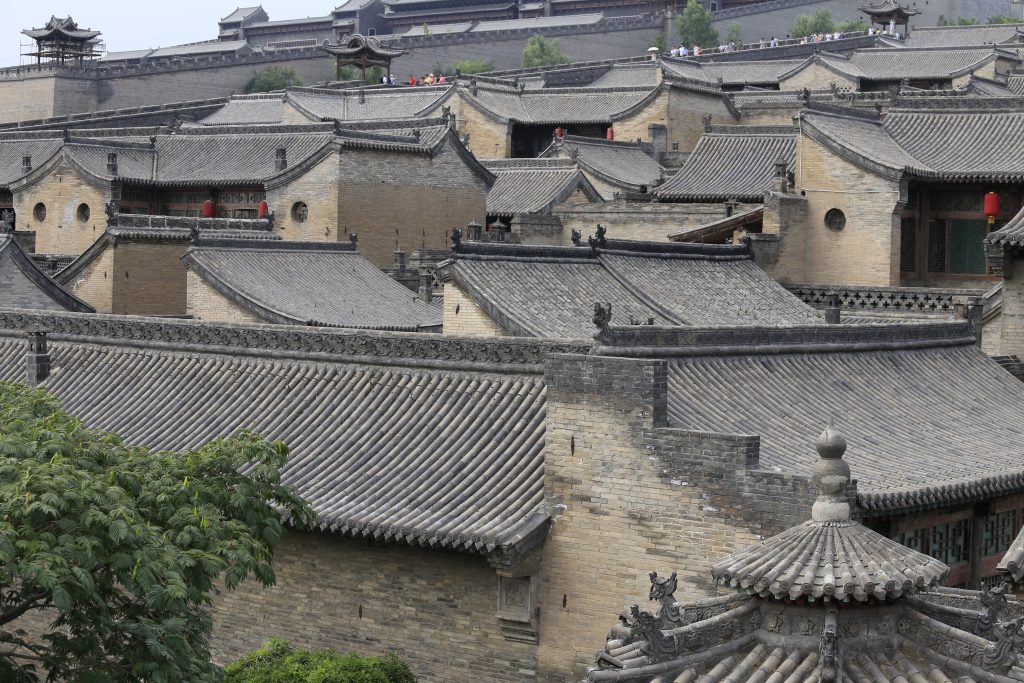
Wang Family Compound [wahng] (王家大院, the enormous courtyard estate where merchant success hardens into lineage discipline and spatial hierarchy) belongs in the same sentence. Pingyao Ancient City shows capital in circulation. Wang shows capital domesticated into family structure. Step through the entrance and the compound keeps opening — courtyard after courtyard, axis after axis — until the sheer depth of it recalibrates your sense of what one family’s ambition could build into a hillside. You can see the movement from public finance to private order without leaving the province’s own architectural language.
Temples, Passes, Gates, and Fortified Settlements Complete the Map
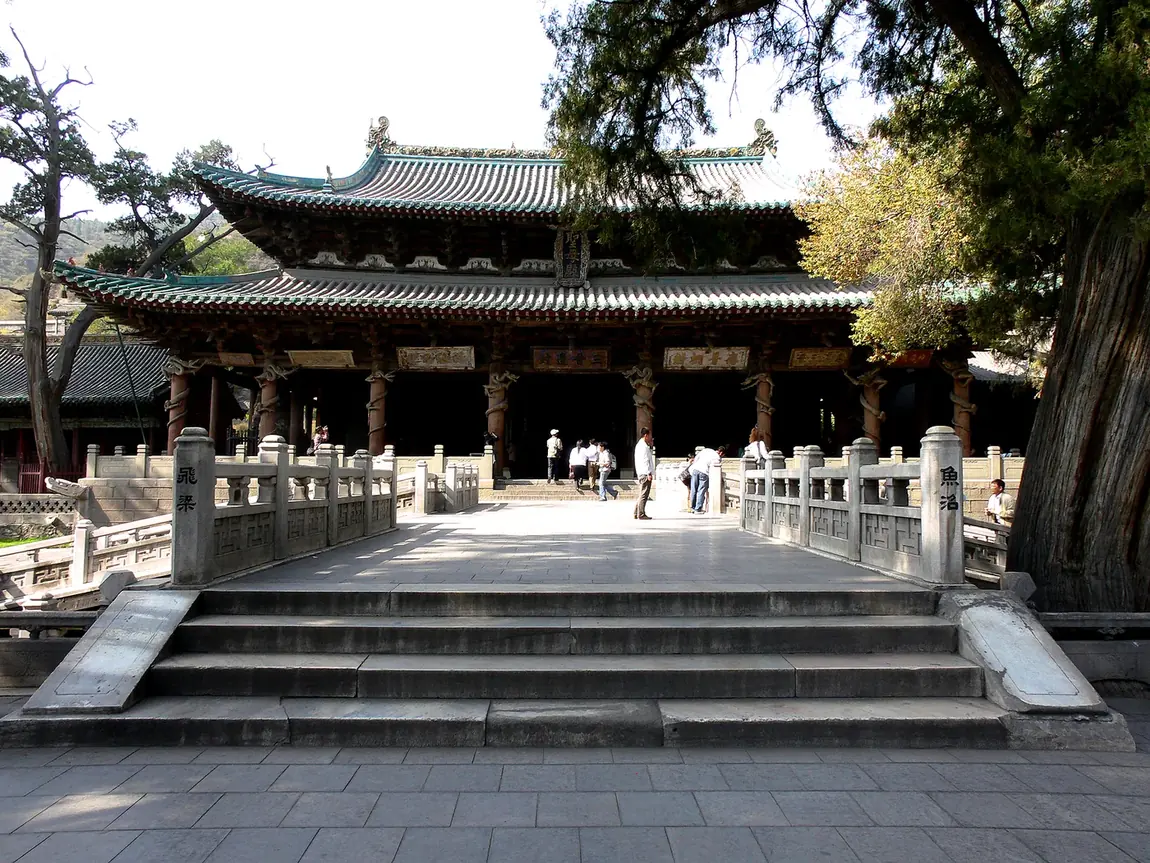
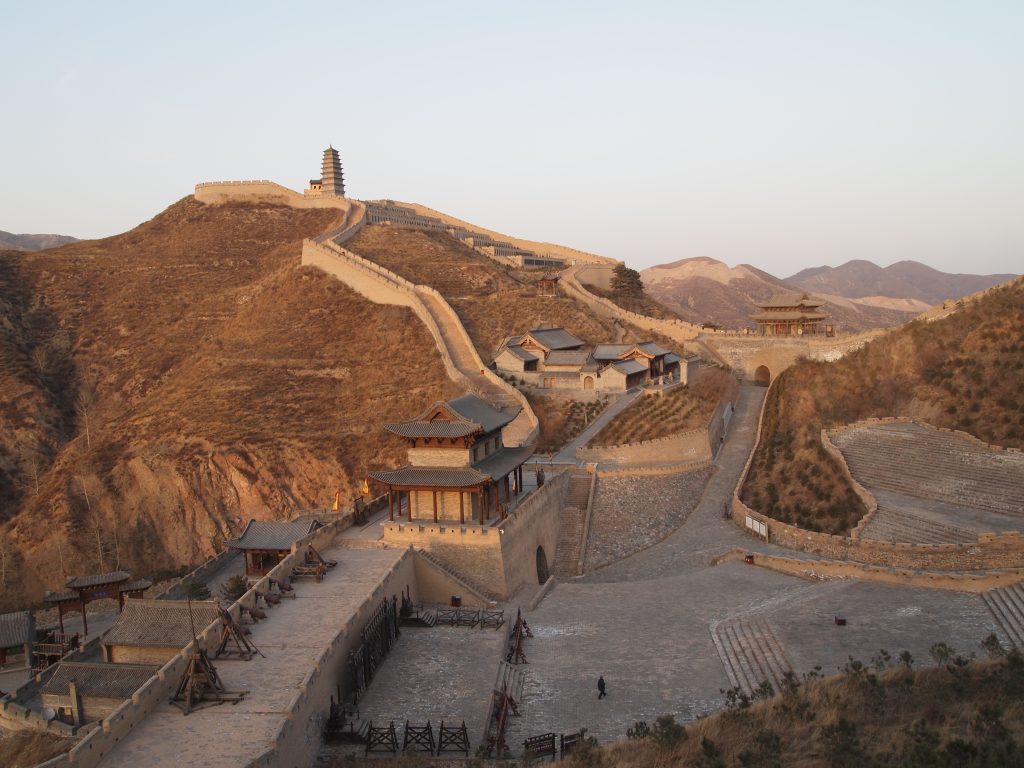
The system becomes even stronger when religious and defensive spaces enter it. Jinci Temple [JIN-tsuh] (晋祠, the shrine complex near Taiyuan where Song clay attendants and spring water still anchor a ritual landscape) reminds you that legitimacy and memory were not abstractions. They were housed, maintained, and spatially organized. Yanmen Pass [yen-men] (雁门关, the frontier gate where movement and defense met under real pressure) adds the harder truth that trade and travel only worked where routes could be held.
Then places such as Zhangbi Castle [jahng-BEE] (张壁古堡, the compact fortified settlement whose tunnels and walls make everyday security feel built into ordinary life) sharpen the overlap. In Shanxi, defense was not hidden far away in a separate military zone. It could sit close to residence, worship, transport, and market life. City gates, village fortifications, temple precincts, and compound walls all belonged to the same geography of risk and order.
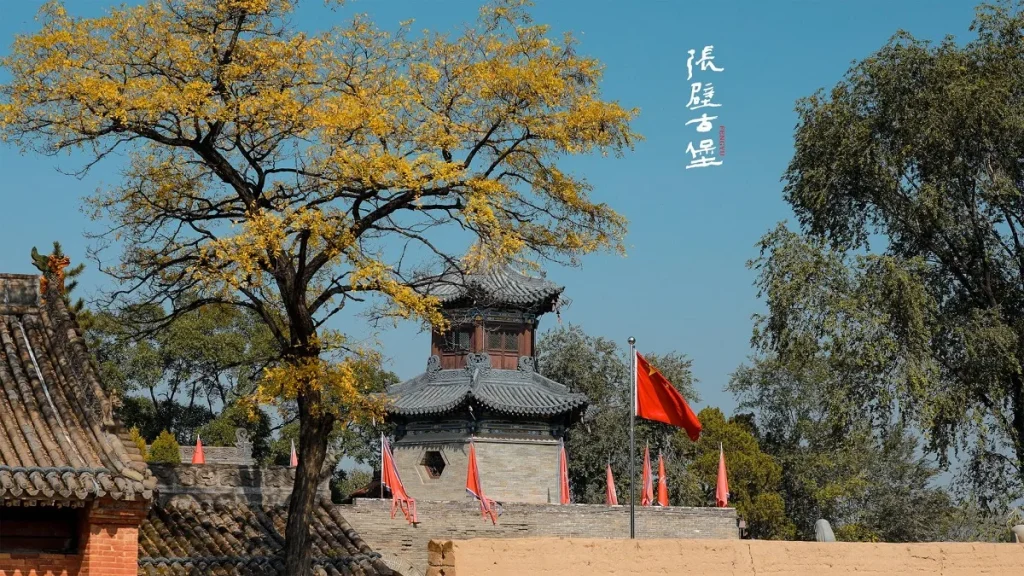
“Old China” as a Place You Can Walk Through
Shanxi can feel more explanatory than places with more famous branding. “Old China” is often offered to visitors as an idea made of dynasties, antiques, and vague nostalgia. Shanxi makes it spatial instead. You walk from a shrine to a walled street, from a banking hall to a courtyard estate, from a pass to a fortified settlement, and the relationships remain visible. The old order does not survive only in texts or glass cases. It survives in adjacency.
That changes the quality of understanding. You no longer have to imagine how belief, money, family, and defense might once have connected. Shanxi keeps enough of the old spatial grammar in place that the connection still reads — a more persuasive education than any single museum label or isolated national treasure can provide.
What Visitors Arriving Without Context Actually Gain
If your main reference points for China are mega-city modernity or headline monuments, Shanxi complicates both. It shows a world that was organized, layered, and deeply local without becoming provincial in the weak sense. Chinese history was not only imperial spectacle radiating from the center outward. It was also sustained by regional systems that linked ritual, trade, infrastructure, and survival in durable ways — and Shanxi is where those systems left their clearest physical record.
That is why Shanxi’s greatest strength is not one single national treasure. It is the fact that the whole arrangement still reads. Temples, banks, and city gates are still there, and they still help explain one another. That is what makes the province so convincing once you step inside it.
Worth noting: Every site in this article — from Pingyao Ancient City’s banking streets to Wang Family Compound, Jinci Temple, Yanmen Pass, and Zhangbi Castle — appears inside the Shanxi · Sacred Stone & Merchant Heritage – 10 Days 9 Nights route, sequenced so the connections between them build as you travel.