

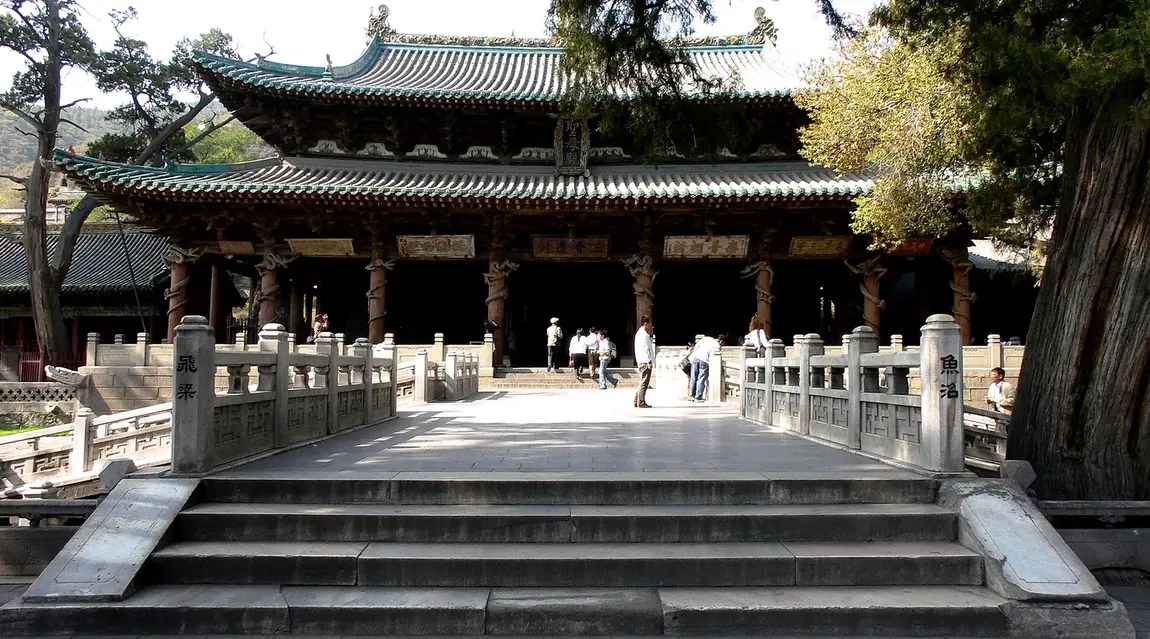
Jinci Temple [JIN-tsuh] (晋祠, a historic temple-garden complex near Taiyuan [tie-YWEN] (太原), the capital of Shanxi [shahn-SHEE] (山西), the north China province west of Beijing) is not the kind of place you visit just to say you have been. If it lands properly, it changes the way the rest of Shanxi reads. What looks at first like a temple visit turns into something slower and more spatial: water before monument, timber before spectacle, atmosphere before checklist.
That makes it a good beginning, even if it arrives in the middle of an itinerary. Shanxi is full of places that can overwhelm first-time visitors with labels — grottoes, merchant compounds, fortress gates, cliffside monasteries, dynastic histories. Jinci Temple is gentler and, in some ways, more useful. It teaches your eye how to move through the province. Instead of asking you to memorize facts first, it asks you to notice rhythm: the way water keeps the site alive, the way old trees soften masonry and tile, the way dark wooden halls hold depth instead of shouting for attention.
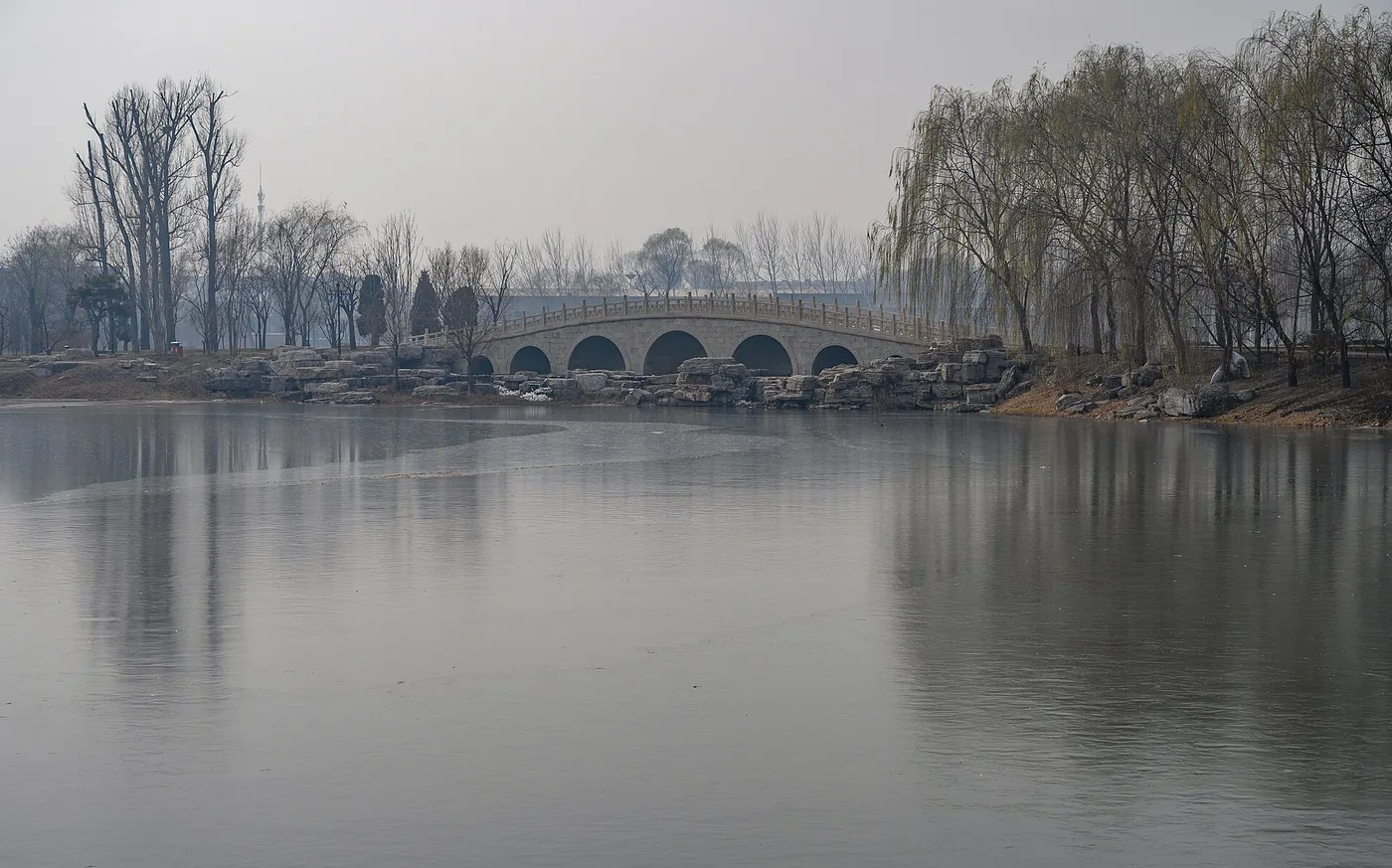
At Jinci Temple, Water Comes First
Many travelers expect Jinci Temple to behave like a hall-centered temple visit: walk in, aim straight for the most famous structure, take the key photographs, and move on. But the place does not really reveal itself that way. The first thing that gives Jinci Temple its character is movement. Springs, channels, pools, damp stone, reflections, and the feeling of water being threaded through the grounds do more than decorate the site. They set its emotional temperature. Even before you start thinking about architecture, the landscape tells you that this is not a dry relic frozen behind ropes. It is a place where built form and natural circulation still work together, and where the sound of running water keeps interrupting the instinct to treat it like a static monument.
That matters because so much of Shanxi can be misread by first-time visitors as severe: cave sculpture, fortress walls, dark courtyards, northern weather, solemn labels. Jinci Temple offers another entry point. It shows that the province’s historical world is not only austere or monumental. It can also be fluid, cultivated, and quietly restorative. If you begin by noticing the water, you read the rest of the site less like an object and more like an environment.
Then the Eye Adjusts to Timber and Age
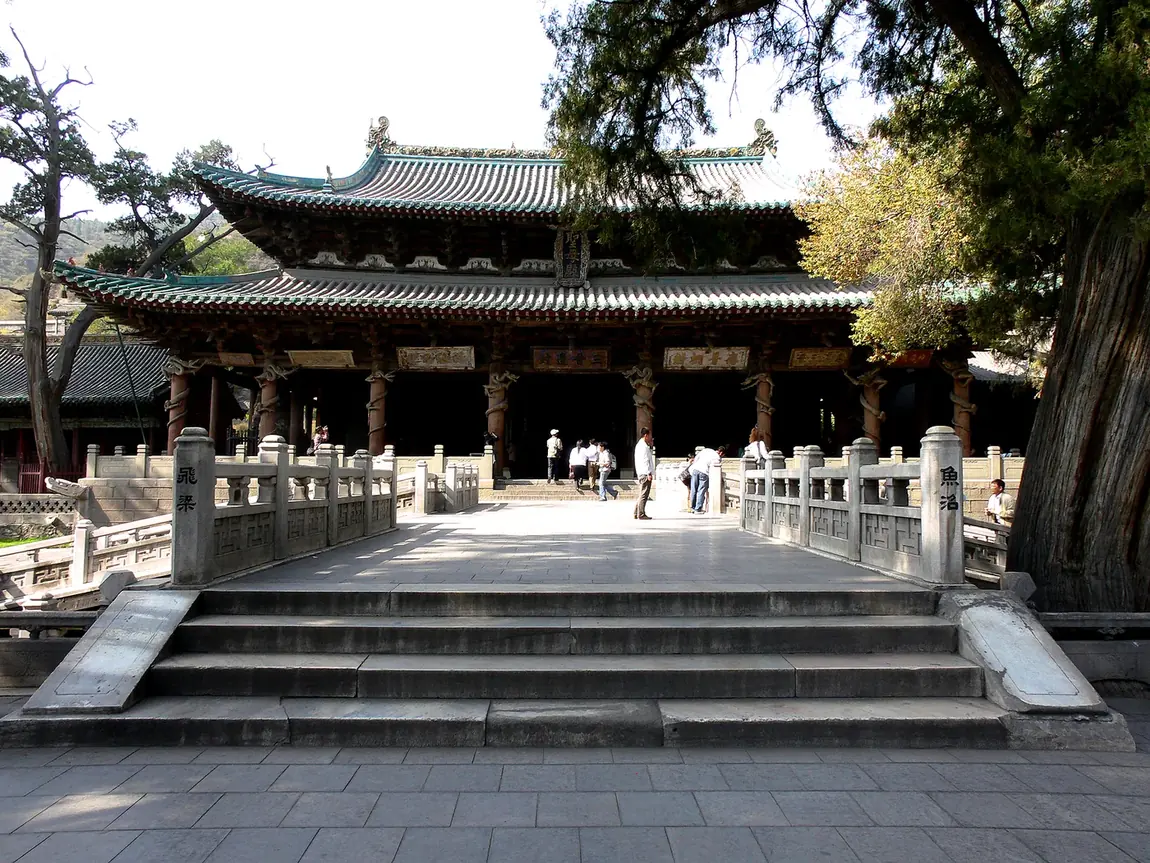
Once that slower rhythm sets in, the material beauty of Jinci Temple starts doing the real work. The dark timber, layered rooflines, older hall spaces, and weight of the trees around them create a depth that many faster-paced visitors never quite let themselves feel. Jinci Temple is not impressive because it is loud. It is impressive because it holds itself back. The site rewards lingering rather than scanning.
The trees matter here for the same reason. They are not ornamental extras. They make the buildings feel inhabited by time instead of isolated from it. The same is true of the wood, which absorbs light rather than reflecting it back in postcard fashion. In a travel culture that often trains people to chase bright icons and instantly legible views, Jinci Temple does almost the opposite. It asks for a slower kind of seeing, and it gives more back when you accept that pace.
After Jinci Temple, the Rest of Shanxi Reads Differently
This is why Jinci Temple matters beyond Taiyuan. If you rush it, the rest of Shanxi risks becoming a collection of better-known names: the Yungang Grottoes [YOON-gahng] (云冈石窟, the great Buddhist cave-art complex outside Datong [DAH-tong] (大同), the historic northern Shanxi city built around the site), Pingyao Ancient City [PING-yow] (平遥古城, the remarkably preserved merchant-era walled town in central Shanxi), Hukou Waterfall [HOO-koh] (壶口瀑布, the Yellow River’s most dramatic cataract on the Shanxi–Shaanxi [shaan-SHEE], the neighbouring province to the west, border). But if you let Jinci Temple set the pace, those later places stop feeling scattered. You start to see the province as one long conversation between water, wood, stone, ritual space, and patience.
That is a useful correction for Western travelers, because Shanxi is not always an instantly legible destination. It does not sell itself as easily as Beijing or Xi’an. Its pleasures accumulate. A courtyard becomes more interesting when you have already learned to read shadow and timber. A temple feels richer when you are no longer expecting only spectacle. A historical route starts to hold together when you realize that quietness is not emptiness. Jinci Temple is one of the places that teaches that lesson fastest.
How to Walk Jinci Temple Without Flattening It
The best way to move through Jinci Temple is to resist the urge to convert it into a highlight reel. Do not arrive with a mental checklist that says hall, photo, tree, next stop. Let the site assemble itself in order. Notice the water before you explain it. Notice the trees before you rank them. Notice how the darker halls feel from the outside before you begin translating them into dates and dynasties. When you walk this way, the site becomes less like a monument to be consumed and more like a tone-setter for the whole trip.
This is also why Jinci Temple works so well for travelers who say they want “culture” but do not want to spend the whole day decoding wall text. You can feel the place before you fully understand it. That is a strength, not a weakness. The atmosphere gives you an entry point, and the history deepens the experience afterward. In practical terms, it means Jinci Temple works for serious heritage travelers, but it also works for people who simply respond to space, material, and quiet continuity.
A Better Beginning for a Shanxi Journey
That is what makes Jinci Temple such a natural bridge into a larger Shanxi route. It does not try to overwhelm you on day one. It calibrates you. After Jinci Temple, the province’s bigger landmarks stop feeling like isolated trophy stops and start reading as parts of one cultural landscape. If the appeal of Shanxi lies in sacred stone, merchant memory, old architecture, northern light, and a travel rhythm that rewards slowing down, Jinci Temple is one of the clearest places to begin — before the Flying Rainbow Pagoda [gwahng-SHUNG] (广胜寺飞虹塔, the glazed-ceramic tower at Guangsheng Temple in southern Shanxi) or the province’s better-known big-name stops have to carry that weight alone.
If this is the kind of slower, more layered north-China travel you want, the route that ties Jinci Temple together with Yungang Grottoes, Pingyao Ancient City, Hukou Waterfall, the Flying Rainbow Pagoda, and the wider province is Shanxi · Sacred Stone & Merchant Heritage – 10 Days 9 Nights.
Image Credits
- Featured image and body image of Jinci Temple — Wikimedia Commons exact-source material archived in the Jinci knowledge-base folder