

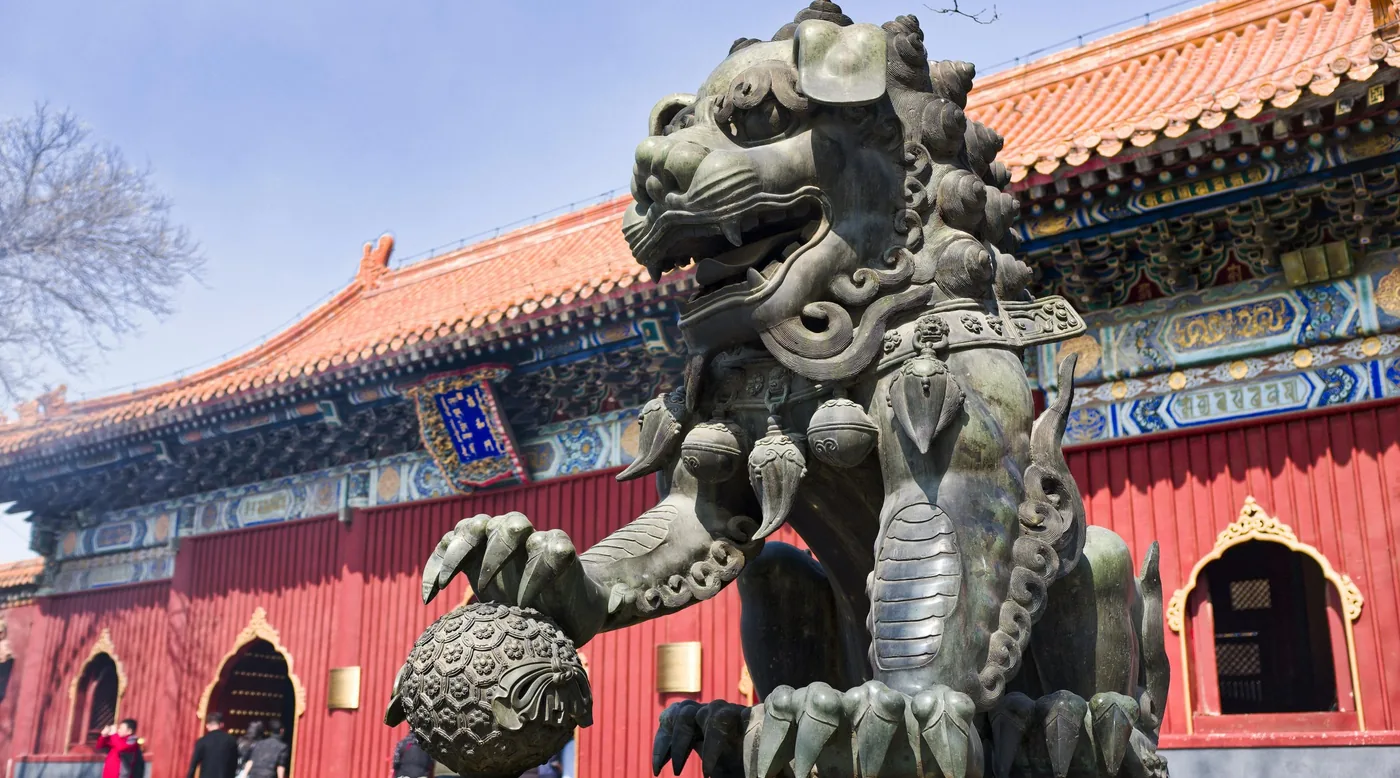
There is a moment on some Beijing [bay-JING] (China’s capital) itineraries when the city needs to stop performing grandeur for a while. Lama Temple [yong-huh-GONG] (雍和宫, the Lama Temple in Beijing) is where that shift can happen. The scale is still there, but the feeling changes: incense drifting through courtyards, worshippers moving with purpose, and a rhythm shaped less by imperial display than by living devotion.
That is exactly why Lama Temple works so well on a smarter Beijing itinerary. It gives foreign travelers a different register of the city. Instead of another lesson in imperial order, you get a place where ritual, architecture, and everyday devotion meet at human speed. For visitors who want more than a checklist of famous names, that shift in pace matters almost as much as the temple itself.
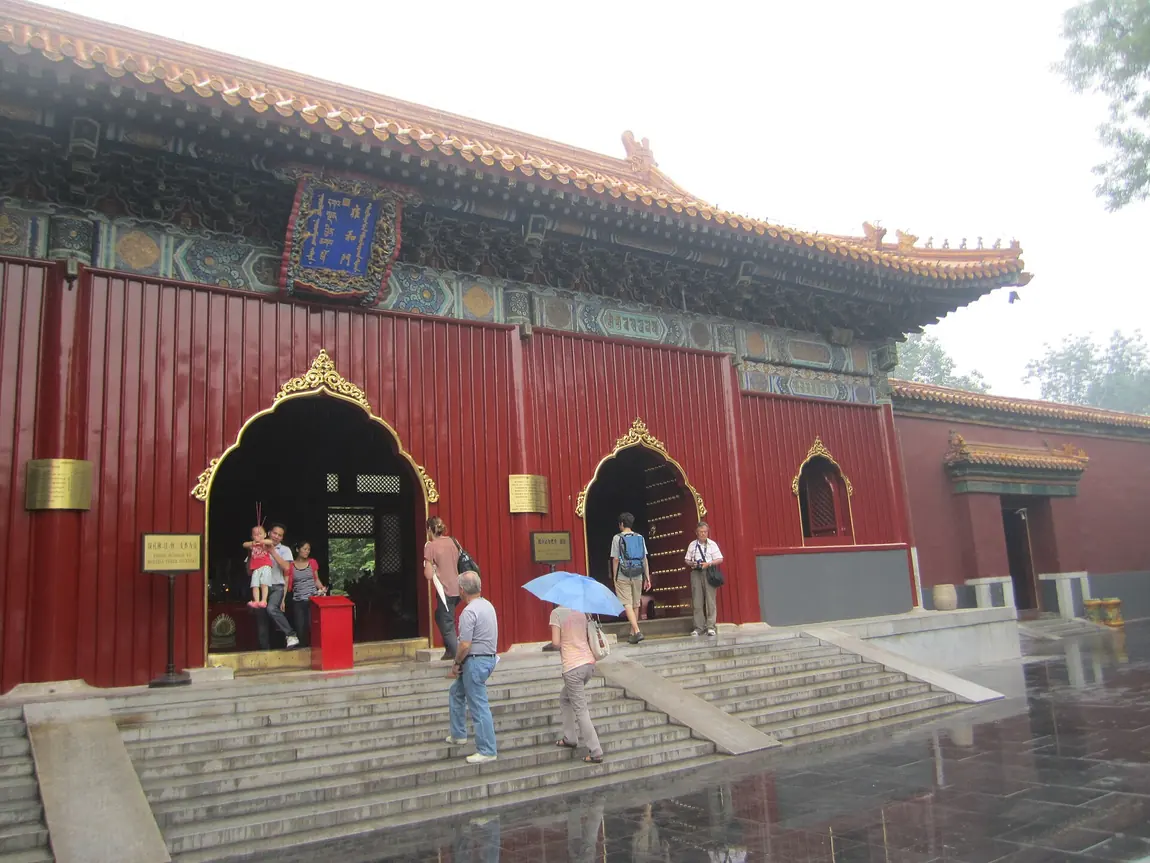
Not another imperial spectacle
Lama Temple stands out because it is not only beautiful; it is legible. You can feel how the courtyards tighten and release. You can see how smoke, prayer, color, and carved detail work together to create an experience that is solemn without becoming remote. As one of the most important Tibetan Buddhist monasteries outside Tibet, the site carries real religious weight, but you do not need specialist knowledge to respond to it. The place explains itself through mood before it explains itself through doctrine.
That mood is shaped by xianghuo [shyahng-hwaw] (incense offerings and the devotional atmosphere around them). Foreign visitors often notice the smoke first, but the more revealing detail is the behavior around it: the pauses, the gestures, the small acts of attention. Lama Temple becomes much more interesting when you stop reading it as “ornate temple décor” and start reading it as a space people still use to focus intention, ask for blessing, and move through the city with a different mental pace.
Lama Temple matters because it changes the temperature of a Beijing day. The city stops feeling ceremonial for a moment and starts feeling inhabited again.
How to be there without treating it as scenery
- Slow down in the courtyards instead of racing toward the most photogenic hall.
- Watch how visitors handle incense and prayer before lifting your camera.
- Keep voices low, because the site is still used for worship rather than staged purely for tourism.
- Pay attention to sequence: gates, courtyards, smoke, then interior space. That rhythm is part of the visit.
Many overseas travelers misread Lama Temple in one of two ways. They either treat it as an “exotic” visual detour, or they rush through it as a secondary stop before getting back to bigger headline attractions. Both approaches miss the real value. The temple is not important because it is decorative. It is important because it gives a Beijing trip a different emotional register—less imperial, more attentive, more grounded in living practice.
Then walk east to Wudaoying
This is also why Lama Temple fits so naturally with Wudaoying Hutong [woo-dow-YING HOO-tawng] (五道营胡同, a historic lane just east of the Lama Temple). The pairing works because the two stops continue the same conversation at different scales. Lama Temple gives you concentration, incense, and religious architecture. Wudaoying gives you street texture, cafés, courtyard walls, and the everyday neighborhood life that makes Beijing feel readable again after its grander landmarks.
That sequence is especially strong for travelers who do not want Beijing to feel like a parade of giant sites. A heritage journey needs contrast. After the Forbidden City, monumental gates, and broad ceremonial axes, Lama Temple narrows the focus. Wudaoying then relaxes it further. Together they create a day that feels curated rather than crowded, which is one reason this combination fits Dragon Discover’s Beijing product direction so well.
Pair it properly: Beijing · Heritage Craft & Hutong Rhythms – 10 Days 9 Nights places Lama Temple before Wudaoying, which is exactly the kind of pace shift that turns a famous-city itinerary into something more memorable.
Where it belongs in a Beijing day
Lama Temple does not need to compete with the Temple of Heaven or the Forbidden City to earn its place. In fact, it is better when it does the opposite. It acts as a counterweight to those more overtly imperial experiences. That makes it especially valuable for first-time visitors who want a Beijing itinerary with texture rather than pure monument accumulation. You come away not only with another landmark checked off, but with a better sense of how the city’s spiritual, neighborhood, and historical layers can still speak to each other in a single day.
That is the real travel value of Lama Temple. It is not just a beautiful temple, and not just a famous name near a good lunch stop. It is the place where a Beijing heritage trip finally slows down on purpose. For Western travelers especially, that makes it more than a side visit. It makes it one of the stops that quietly changes how the rest of the city is understood.
Image Credits
- Yonghe Temple main gate — Regina800809 / Wikimedia Commons (CC BY-SA 3.0) (used for the inline view and the featured crop)
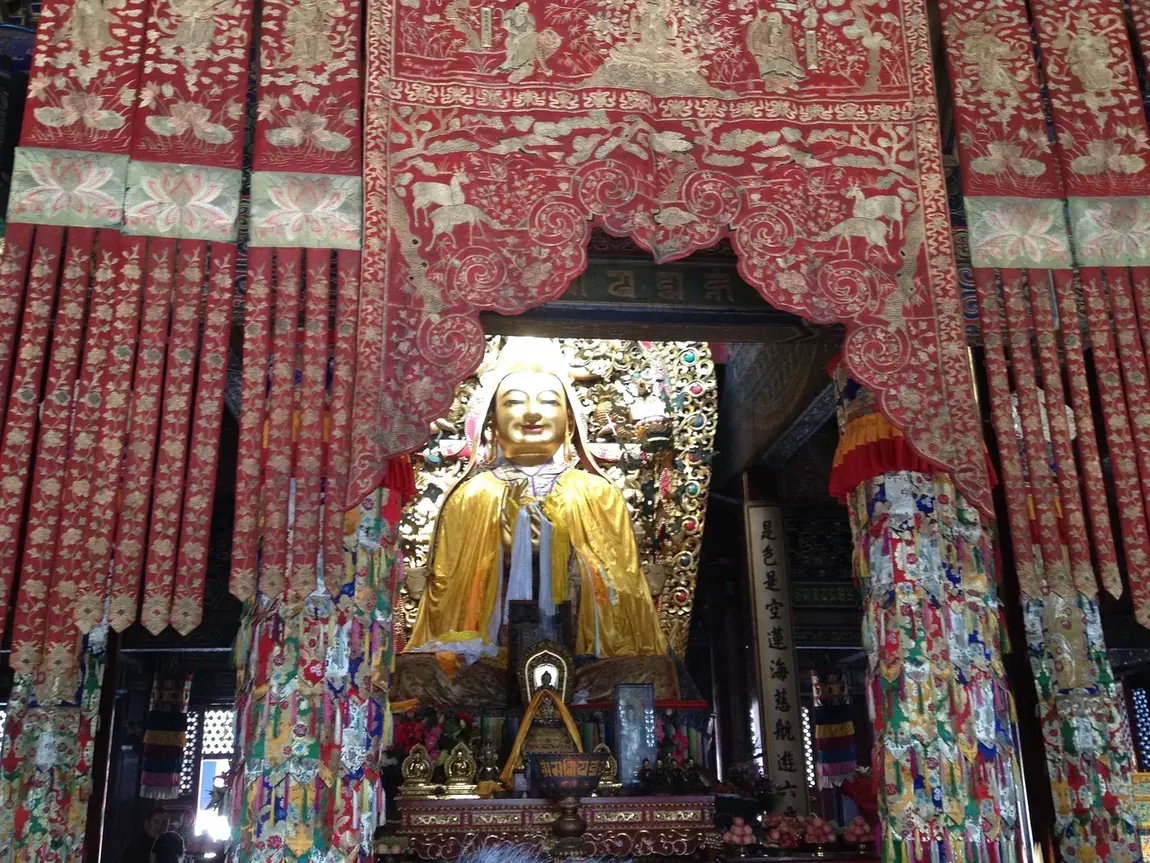
- Lama Temple interior statue — Rewindat / Wikimedia Commons (CC BY-SA 3.0)