

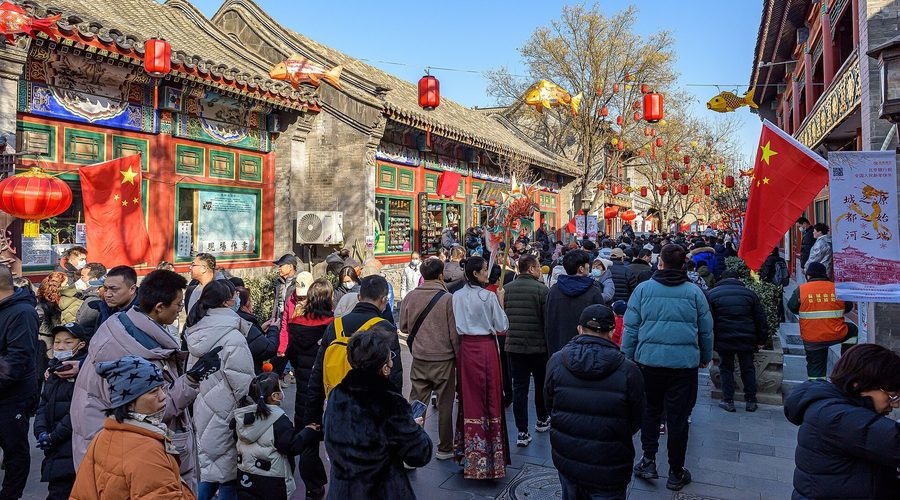
Not every revealing walk in Beijing [bay-JING] (China’s capital) arrives with imperial scale. Some work by lowering the volume. Liulichang Culture Street [LYOH-lee-chahng] (琉璃厂, Beijing’s old culture-and-antiques street near Qianmen Street) is one of those places. Instead of gates, axes, and ceremonial space, it teaches the city through paper, ink, shopfronts, and the slower habits of looking closely.
For Western travelers, Liulichang Culture Street matters because it offers a side of Beijing that rarely leads the postcard. This is not the city of ceremonial spectacle. It is the city of scholars’ tools, framed calligraphy, seal stones, old-shop atmosphere, and the long cultural afterlife of the written word. Even when you arrive with no plan to buy anything, the street still explains what kinds of refinement and memory once circulated through the capital beyond the imperial center.
More than an “old street”
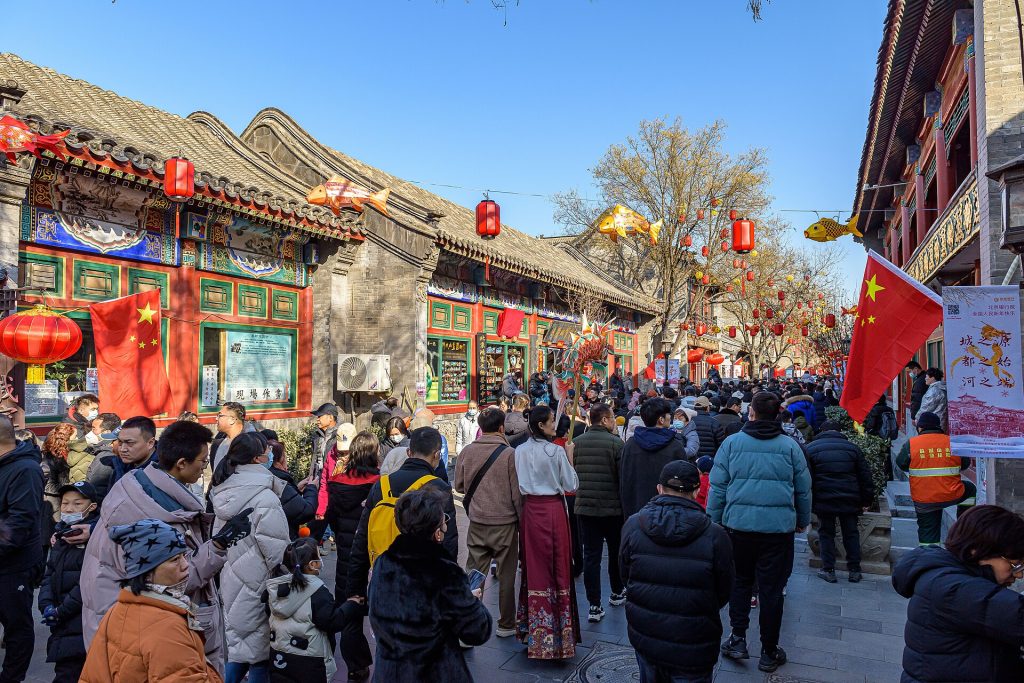
The easiest mistake is to think Liulichang Culture Street is just another “old street” with decorative façades. It is more specific than that. Historically, this area became associated with books, calligraphy, paintings, rubbings, antique objects, and the commercial world that supported literate culture. That background still shapes the atmosphere today. Instead of a street designed around quick consumption, you get one built around browsing, comparing, studying, and noticing detail.
That distinction is exactly what makes Liulichang Culture Street valuable for foreign visitors. Beijing’s biggest landmarks show how power was staged. Liulichang Culture Street shows how culture was handled, collected, and circulated. It turns the city from something merely monumental into something intellectual and tactile. The pace changes. Your eyes move from skyline and gate towers to paper texture, carved wood, ink color, hanging scrolls, and shop windows arranged for people who once expected to look carefully rather than glance and move on.
You can feel that older world in references to the wenfang sibao [wun-fahng suh-bow] (the Four Treasures of the Scholar’s Studio: brush, ink, paper, and inkstone). Even if you are not shopping for any of them, the idea matters. It reminds you that Chinese urban culture was shaped not only by architecture and ritual, but also by writing, copying, study, and material tools of thought. Liulichang Culture Street keeps that memory visible in a way many heritage districts no longer manage.
What To Look For If You Do Not Read Chinese
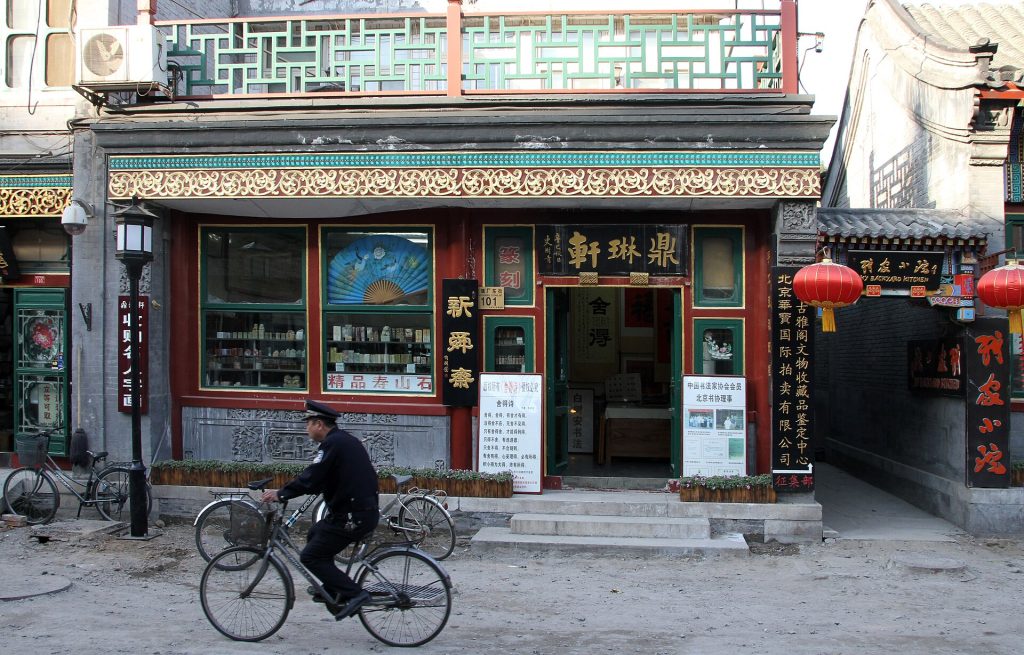
A lot of overseas travelers worry that a culture street will be wasted on them if they cannot read the signs. Liulichang Culture Street is actually quite forgiving. You can read it visually. Notice how brush shops stage their goods. Notice the framing of calligraphy scrolls. Look at the density of carved seals, hanging couplets, ink paintings, and older decorative objects. Even without language, you can tell this is a district built around text as an art form, not just text as information.
That becomes even clearer when you encounter duilian [dwee-LYEN] (paired poetic couplets written on matching vertical strips) or a carved yinzhang [yin-jahng] (a personal seal stamp used to sign or mark works). These objects make Chinese literary culture feel less abstract. They are not museum labels describing a vanished world. They are physical things still bought, displayed, commissioned, and appreciated. Liulichang Culture Street works because it keeps scholarship and ornament on speaking terms.
Beijing can explain itself through power. Liulichang Culture Street explains it through taste, tools, and the patient culture of reading and writing.
Where it fits in a Beijing heritage day
Dragon Discover’s current Beijing product is built around cultural immersion, heritage landmarks, and local-life texture rather than checklist tourism. Liulichang Culture Street fits that logic very naturally, even if it is not the headline stop on the brochure. After major sites like the Forbidden City or the Temple of Heaven, a street like this does useful work. It lowers the scale, slows the rhythm, and gives travelers a more human way to understand what elite and educated urban life once looked like in the capital.
It also pairs well with Qianmen Street [chee-YEN-mun] (前门, Beijing’s historic Front Gate district) without duplicating it. Qianmen Street explains flow, commerce, and arrival. Liulichang Culture Street explains taste, study, and cultural aspiration. Put them together and Beijing becomes more than a city of walls and tourist icons. It becomes a place where movement, trade, ritual, and literary culture all occupied neighboring ground. That kind of pairing is exactly what helps a longer guided route feel coherent rather than fragmented.
For travelers who already know they enjoy bookstores, museums, design shops, paper goods, or historical crafts, Liulichang Culture Street can become one of the most memorable hours in the city. Not because it is loud, and not because it tries to compete with Beijing’s greatest monuments, but because it offers a different form of access. It lets you feel the capital through attention rather than scale.
How To Walk Liulichang Culture Street Well
- Go in a patient mood. This is a browsing street, not a race between photo spots.
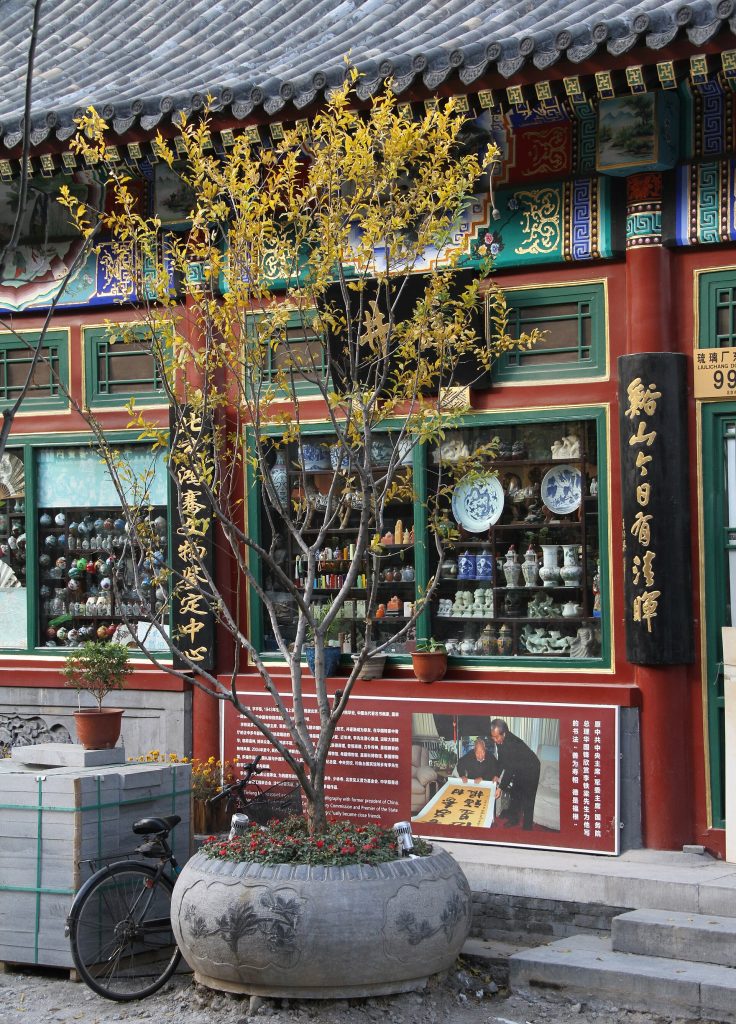
- Look for materials as much as objects: paper, wood, stone, brush hair, ink color, and carved surfaces.
- If a shop feels serious and quiet, treat it like a gallery or study room rather than a souvenir stall.
- Pair Liulichang Culture Street with a larger old-Beijing day so its slower atmosphere becomes a contrast, not an isolated errand.
That slower atmosphere is the whole point. Liulichang Culture Street does not overpower you. It teaches you how to pay attention. For travelers who want Beijing beyond monuments, beyond skyline-scale grandeur, and beyond the obvious “must-see” list, that is exactly why the street still matters.
Image Credits
- Liulichang Culture Street East Street during the Changdian temple fair — Wikimedia Commons (CC BY-SA 4.0)
- Traditional storefront on Liulichang Culture Street East Street — Wikimedia Commons (CC BY-SA 4.0)
- Shops on Liulichang Culture Street East Street — Wikimedia Commons (CC BY-SA 4.0)