

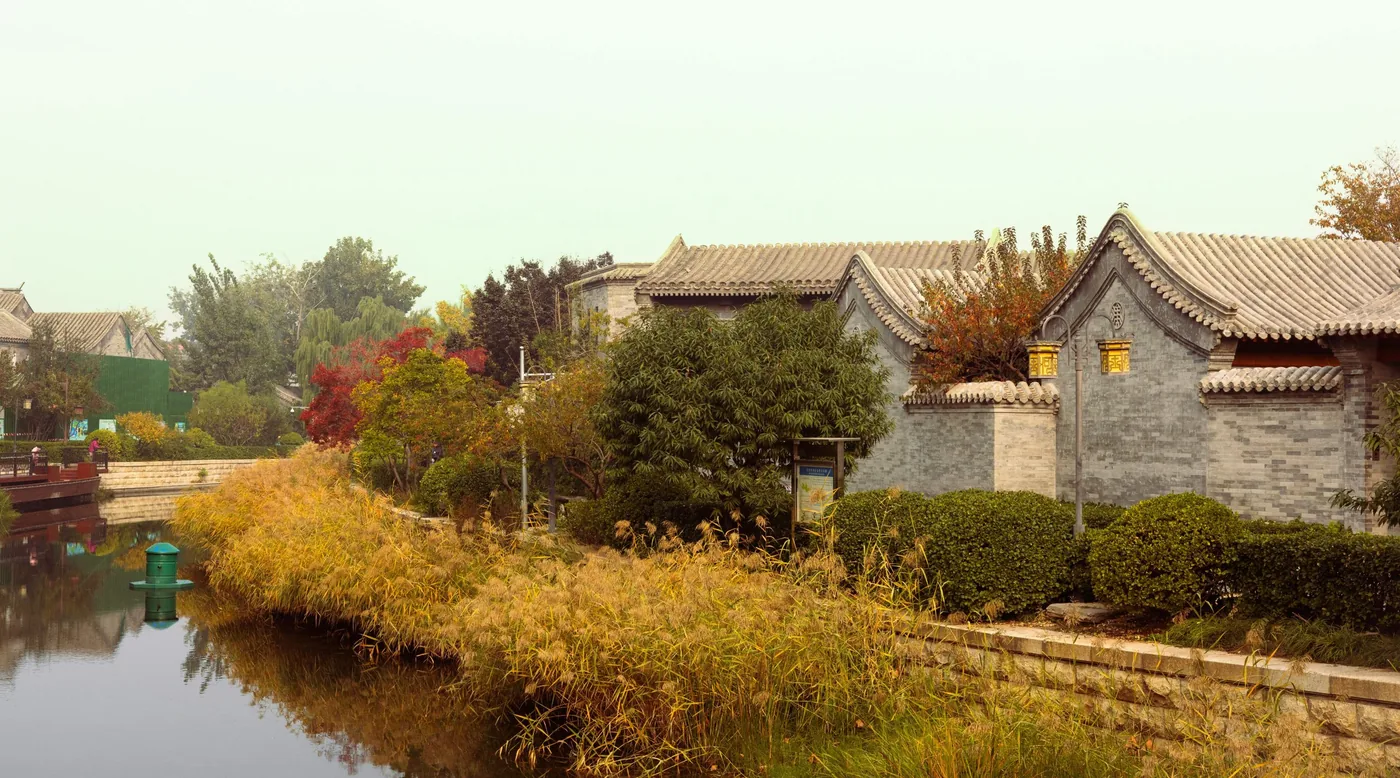
By the last stretch of a Beijing [bay-JING] (China’s capital) trip, even excellent sightseeing can start landing a little heavily. Another grand axis, another famous gate, another monument that asks for full historical attention. That is why Gubei Water Town [goo-bay shway-jen] (古北水镇, Gubei Water Town) works so well late in an itinerary. It does not try to out-monument the city. It gives the trip a softer final movement: water, lamplight, mountain air, and a chance to end on atmosphere rather than accumulation.
Worth noting: Dragon Discover now uses this logic inside Beijing · Wellness Retreat & Health Discovery – 10 Days 9 Nights, where Gubei arrives after the city’s denser days and lands as a genuine reset of water, hot springs, and night air.
A different ending for a Beijing itinerary
A lot of visitors dismiss Gubei too quickly because the town is curated and polished. But that misses the travel logic. After imperial axes, temple compounds, and the urban seriousness of central Beijing, the point is not to deliver another lesson in monumental history. The point is to shift the sensory register. Stone bridges, canal reflections, workshop courtyards, local-food smells, and a slower walking pace make the stop feel different enough to reset your attention.
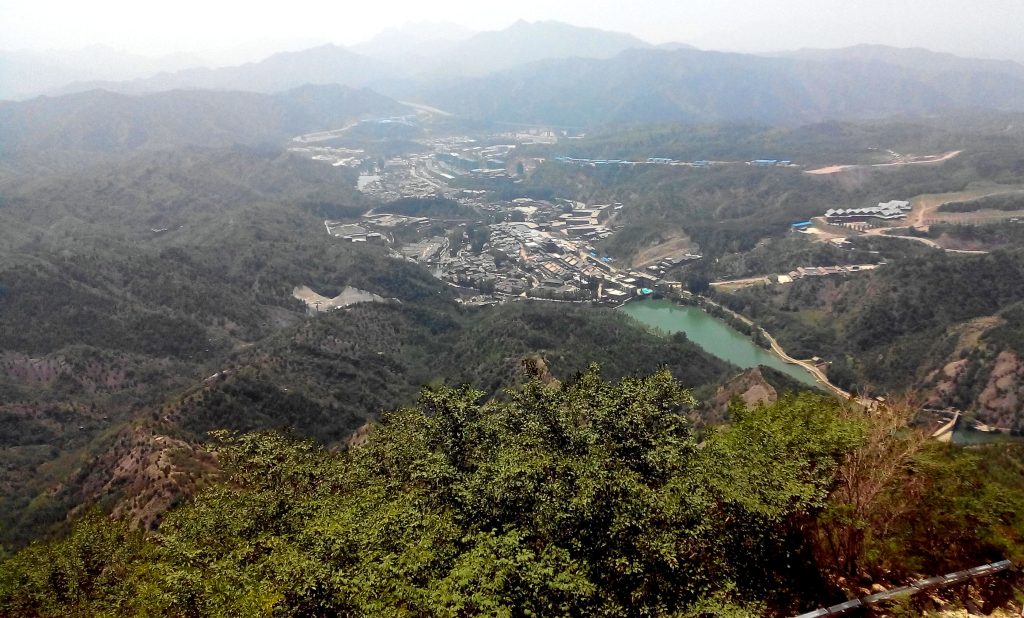
That difference becomes even clearer because the town sits beneath Simatai Great Wall [sih-mah-tie chahng-chung] (司马台长城, Simatai Great Wall, a dramatic eastern wall section known for steep ridgelines). You are not looking at an isolated themed village in the abstract. You are moving through a softer foreground that sets up one of the sharpest mountain silhouettes on the Beijing circuit.
Stay past sunset and it starts making sense
If you only picture Gubei as a daytime stroll, it can feel skippable. The mood changes after dark. Warm reflections gather along the canals, the mountains recede into a darker frame, and the lit wall above Simatai Great Wall gives the whole place a sense of distance from central Beijing. The effect is memorable not because it screams for attention, but because the evening lets the trip loosen into something calmer and more scenic.
That is also why the best versions of the stop do not rush back to the city. A late cable-car ascent, an evening wall view, and an overnight stay give the experience room to breathe. The Dragon Discover itinerary gets this right by pairing the town with hot-spring time and a night-wall visit instead of flattening everything into a fast turnaround.
Timing matters more than the authenticity argument
Some travelers hesitate because Gubei feels managed. That reaction is understandable, but it can also ask the wrong question. The more useful question is when the place enters your itinerary and what kind of energy you need at that point. If you go looking for rough edges and urban spontaneity, central Beijing and its hutong neighborhoods do that job better. If you need one final stop that feels scenic, legible, and easy to inhabit after several heavier heritage days, Gubei starts to look much stronger.
That matters especially for foreign visitors traveling with parents, children, or anyone who enjoys culture but does not want every memorable day to feel physically dense. Gubei still gives you architecture, history-adjacent atmosphere, and a clear sense of place, but it delivers them through comfort and pacing. In other words, it works not because it replaces Beijing’s major landmarks, but because it prevents a good trip from ending in the same emotional key it used at the beginning.
Seen that way, Gubei is less a stand-alone “must-see” than a sequencing tool. Put it too early in the trip and it may feel almost too tidy. Put it near the end and the water, distance, and evening light begin to do real work. They let the itinerary widen out, breathe, and finish with memory rather than fatigue.
Who gets the most out of it
- Travelers who love Beijing but do not want the last full day to feel like a repeat of the first three.
- Couples and families who want a lower-pressure evening with scenery, light, and shorter decision-making.
- Photographers who care more about atmosphere and layered views than about collecting one more daytime postcard.
- Visitors who like heritage routes best when they alternate intensity with comfort.
Best when it gets one full evening
The mistake is to treat Gubei Water Town as a disposable add-on. In itinerary terms, it works best as a release valve before departure: the place where the trip loosens its shoulders, not the place where you prove you can still squeeze in more. That makes it a strong fit for longer Beijing journeys, especially when the day is designed around pacing rather than volume.
So if you are deciding whether Gubei belongs in a Beijing plan, the better question is not whether it is the city’s most historic stop. It is whether your itinerary needs one final scene that feels warm, legible, and different from downtown monument-hopping. For many travelers, that is exactly what makes it memorable.
See the route: Beijing · Wellness Retreat & Health Discovery – 10 Days 9 Nights uses Gubei Water Town as a late-trip reset, with hot springs and the night-lit Simatai Great Wall doing exactly the softening this article argues for.
Image Credits
- Gubei Water Town from Simatai Great Wall — Aaron Zhu / Wikimedia Commons (CC BY-SA 3.0)