
If you travel in China during Lunar New Year, you quickly learn that the holiday does not look the same everywhere. In some places it is all lantern fairs, temple markets, and family banquets. In others, the celebration spills into the streets with drums, firecrackers, banners, and entire neighborhoods moving as one. That is the world you enter in Fuzhou [foo-JOH] (the capital of Fujian [foo-JYEN], on China’s southeast coast) and its surrounding districts when people talk about youshen [YOH-shen] (a local deity procession).
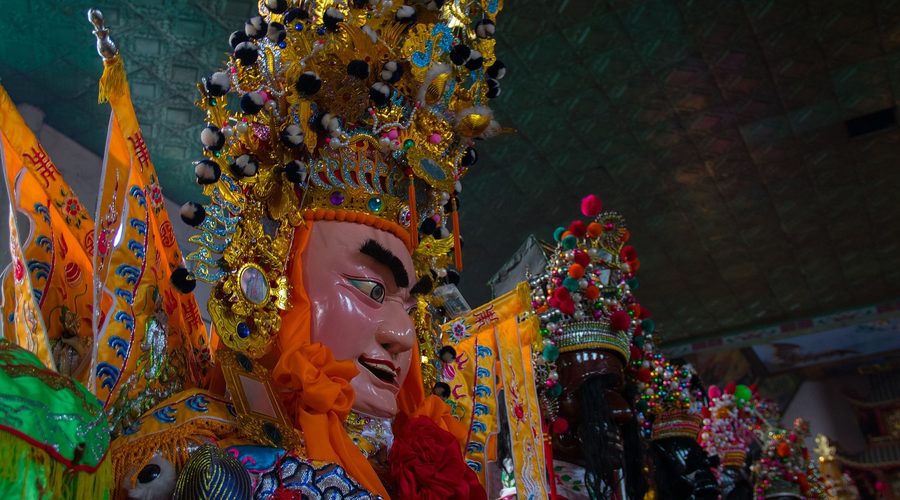
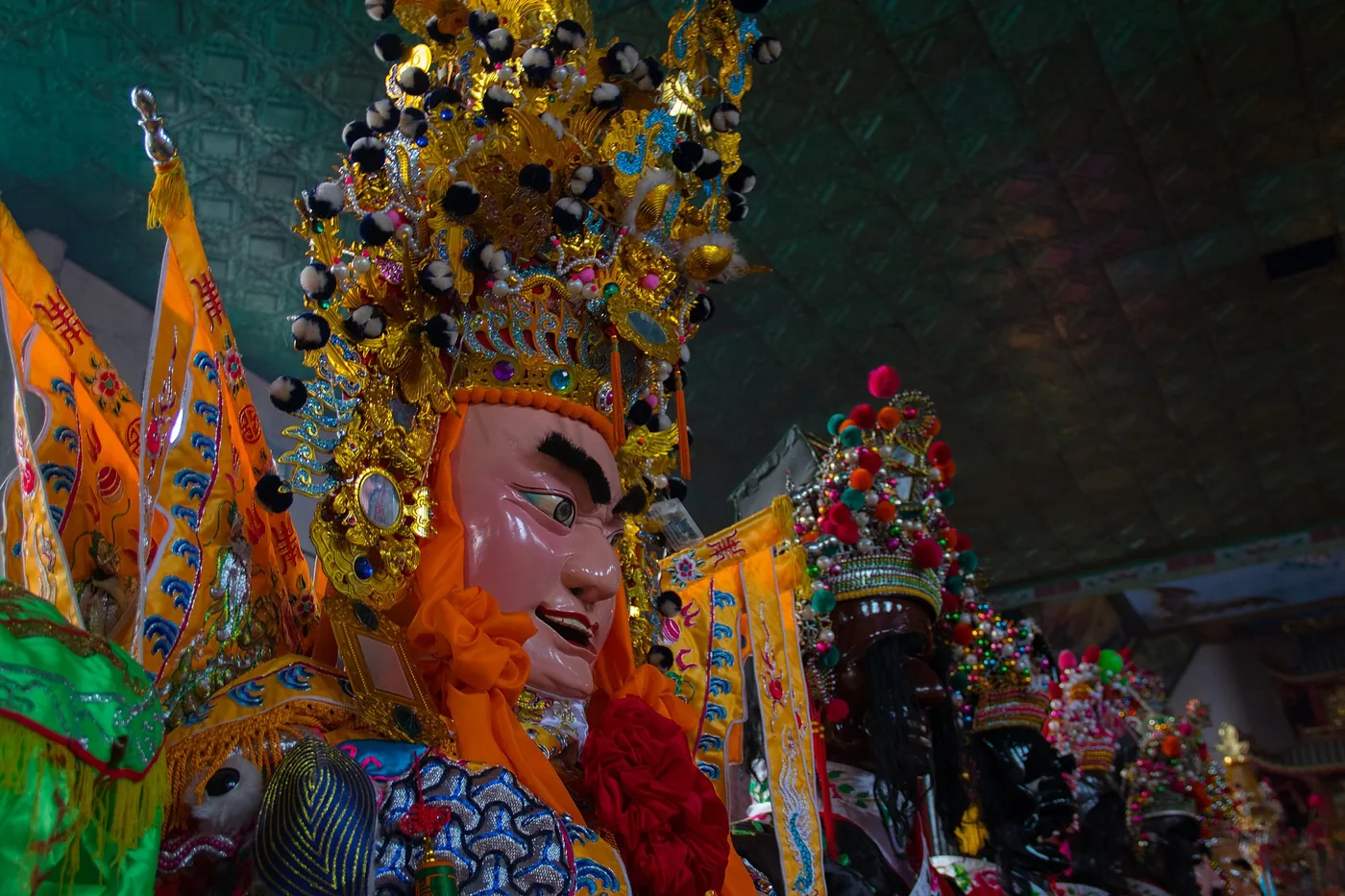
For outsiders, the first temptation is to treat Fuzhou’s youshen as a spectacle. And to be fair, it is spectacular. There are processions winding through lanes and village roads, richly dressed deity images, towering attendants, music, incense, fireworks, and crowds waiting for the parade to pass. But if you stop at the visual drama, you miss the real point. In Fuzhou, especially in places such as Changle [CHAHNG-luh] (a district of Fuzhou), these processions are not random street theater and not a tourist performance invented for social media. They are a living New Year ritual that sits somewhere between religion, neighborhood tradition, seasonal celebration, and community self-organization.
That mix is exactly what makes them so interesting for foreign travelers. One reason the tradition can be hard to explain in English is that there is no perfect one-word translation. “Parade of the gods” gets close, but it sounds more theatrical than devotional. “Temple procession” is useful, but too narrow, because the event is not always confined to a temple precinct. “Folk religious procession” is probably the safest description, because it captures what is really happening: local communities escort deities or divine representatives through the places where people live, work, and gather, asking for blessing, protection, order, and a good year ahead.
Why Fuzhou’s Processions Feel So Different
In the Fuzhou area, these events are especially associated with the first lunar month, though timing varies by district, village, and temple. That variation matters. There is no single master schedule for “the Fuzhou procession.” What visitors encounter is a patchwork of local traditions, each shaped by its own patron deity, village history, temple network, and community habits. Changle became especially famous online in recent years because its processions were filmed and shared so widely. But even there, no two communities do things in exactly the same way. That is part of the charm: what you are seeing is not a standardized festival product, but something still rooted in local ownership.
To understand why that matters, it helps to think of youshen not simply as religion, and not simply as entertainment. It is also a way of mapping community onto space. The procession moves through roads, alleys, temple fronts, ancestral areas, and gathering points that matter locally. A deity on the move symbolically visits the community, while the community in turn comes out to receive the deity. Families prepare offerings. Firecrackers are set off. Onlookers gather not just to watch, but to participate in a shared moment of recognition: this is our place, these are our people, and this is how we begin the year together.
The most memorable part of Fuzhou’s deity processions is not just the noise or the costumes, but the feeling that an entire community is moving through the New Year together.
That may be why the tradition has remained so resilient even in an era of smartphones and short attention spans. Outsiders noticed the aesthetic power first: the faces of divine generals, the embroidered robes, the bamboo-framed figures, the noise, the movement, and the sheer density of visual detail. But locals are responding to something deeper. In many Fuzhou communities, processions continue to function as social glue. They connect temple culture, village identity, kinship networks, neighborhood memory, and intergenerational participation. They are one of the few kinds of public ritual where elders, organizers, musicians, costume makers, temple volunteers, and very young participants all still have visible roles.
Why Changle Became the Best-Known Example
The intergenerational side is one of the most interesting things about Fuzhou’s recent youshen boom. A lot of outside coverage focused on the processions “going viral,” but the better story is how younger people have stepped into old forms without making them feel dead. In Changle, younger participants have helped with performance, design, logistics, and online visibility. That does not mean the ritual has become fake. If anything, it shows how living traditions survive: not by freezing in one perfect historic form, but by staying meaningful to the people who inherit them.
At the same time, it is important not to romanticize the tradition into something timeless and unchanging. Fuzhou youshen is local, which also means it is specific. Some communities are centered on one principal deity, others on a more complex lineup. Some processions are relatively compact, others far larger. In some places, the atmosphere feels closer to temple devotion; in others, it becomes almost carnival-like, though still grounded in ritual seriousness. For a traveler, the safest approach is to assume variation rather than expecting one universal script.
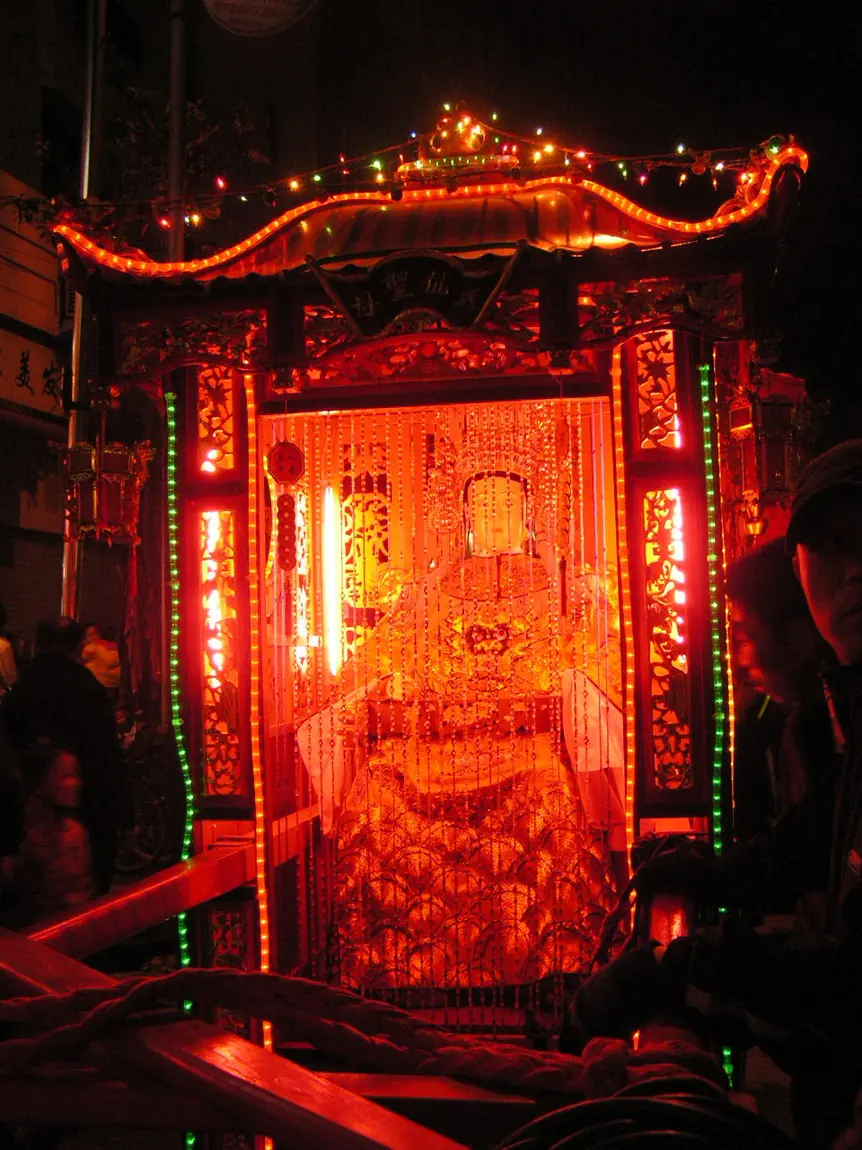
That is also why Changle works so well as an entry point for foreign readers. It gives you a vivid, contemporary example without pretending to represent all of Fujian (a southeastern coastal province of China). In recent years, many of the images that circulated online from the Fuzhou area came from Changle communities, where processions can be large, loud, and visually unforgettable. Reporting on the area often describes how entire villages mobilize, with neighborhood associations, local lineages, temple groups, and volunteers all helping to organize the event. In practical terms, that means what you are watching is not just a ritual performance; it is a coordinated expression of local society.
How to Read the Ritual as a Traveler
Once you see it that way, details that might otherwise look exotic begin to make more sense. The procession route is not only a route. It is a statement about whose streets are being blessed. The offerings are not just decoration. They are part of a reciprocal relationship between people and the sacred. The music and firecrackers are not background noise. They create ritual presence. Even the famous deity attendants and towering figures, which often attract the most phone cameras, are not there simply to be photogenic. They help produce the emotional force of the event — awe, excitement, protection, and collective attention.
For foreign visitors, that is probably the most useful shift in perspective. Do not ask only, “How impressive is it?” Ask instead, “What kind of relationship between community and ritual am I looking at?” That question opens the door to a more interesting experience. You begin to notice how residents react when the procession passes, how people make room, how older spectators watch with familiarity rather than surprise, and how children absorb the event as something not staged for them but inherited by them.
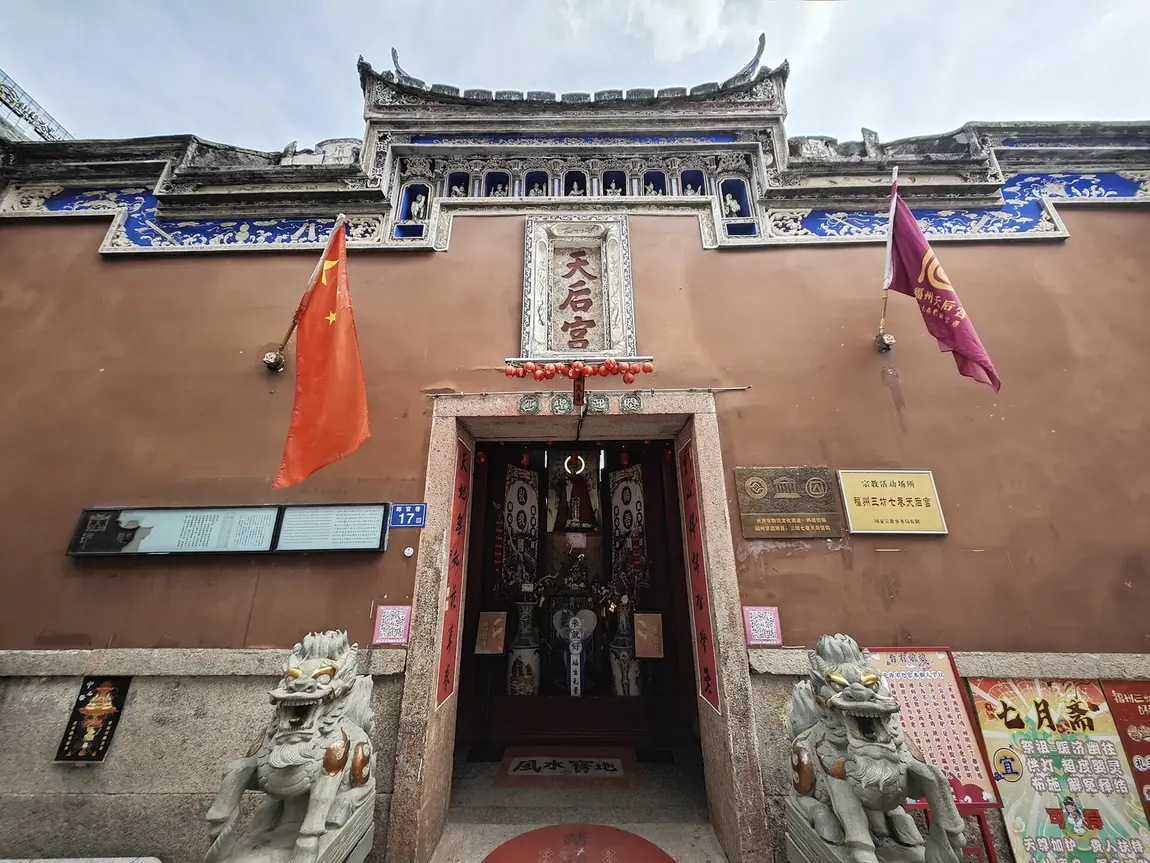
There is also a practical travel reason to care about Fuzhou’s processions: they offer a very different entry into Chinese New Year from the versions most international travelers already know. Many overseas visitors arrive in China with a mental picture built from Beijing temple fairs, lion dances, red lanterns, or big-city fireworks. Those are real parts of the holiday, but they do not tell the whole story. Fuzhou’s deity processions reveal another side of the season — one that is more localized, more devotional, and more embedded in neighborhood life. It is less about a city putting on a show for the public, and more about a community renewing itself in public.
The Etiquette Matters Too
That difference is also why etiquette matters. Visitors are usually welcome to watch, photograph, and appreciate the atmosphere, but this is not the place to behave as if you are at a cosplay convention or a themed parade. Do not block the route for a perfect shot. Do not treat deity figures as props. Do not imitate sacred roles for attention. If locals are praying, making offerings, or clearing space, take that as a cue to observe respectfully. The rule is simple: enthusiasm is fine, irreverence is not.
The good news is that respectful watching can be deeply rewarding. Even if you know very little about local religion, the emotional logic of the event is easy to understand. People want a safe year, a prosperous year, and a healthy year. They want protection from misfortune and continuity with the generations before them. They want the place they call home to be blessed. That emotional structure is not hard for foreign visitors to grasp. In fact, it may be one of the easiest parts of the tradition to connect with.
Why It Resonates Beyond Fujian
Another reason the tradition resonates so strongly today is that it brings together things that modern travel audiences often look for separately: authenticity, visual drama, and a strong sense of place. In many destinations, “traditional culture” is packaged into a performance slot, timed for visitors, and detached from daily life. Fuzhou’s youshen feels different because it still belongs first to the communities that stage it. Outsiders can witness it, photograph it, and even travel specifically for it, but the ritual logic is not designed around them. That gives the experience a different emotional texture. It feels less like a show and more like stepping briefly into a local calendar that was already moving before you arrived.
That local grounding also helps explain why social media did not create the popularity of youshen so much as reveal it to people outside Fujian. Online clips made the processions legible to audiences who had never seen anything like them: divine generals striding forward, drums rolling, fireworks cracking overhead, whole roads packed with residents and returnees filming on their phones. But the clips only captured one layer. On the ground, what matters just as much is the reunion element. New Year is when people come home. In overseas hometowns with strong Fujian roots, that emotional pull is especially powerful. Public reports on Fuzhou-area processions often note the return of overseas Chinese and the way livestreams allow absent family members to follow events from abroad. Seen that way, youshen is not only a religious custom. It is also part of how a dispersed community reconnects with home.
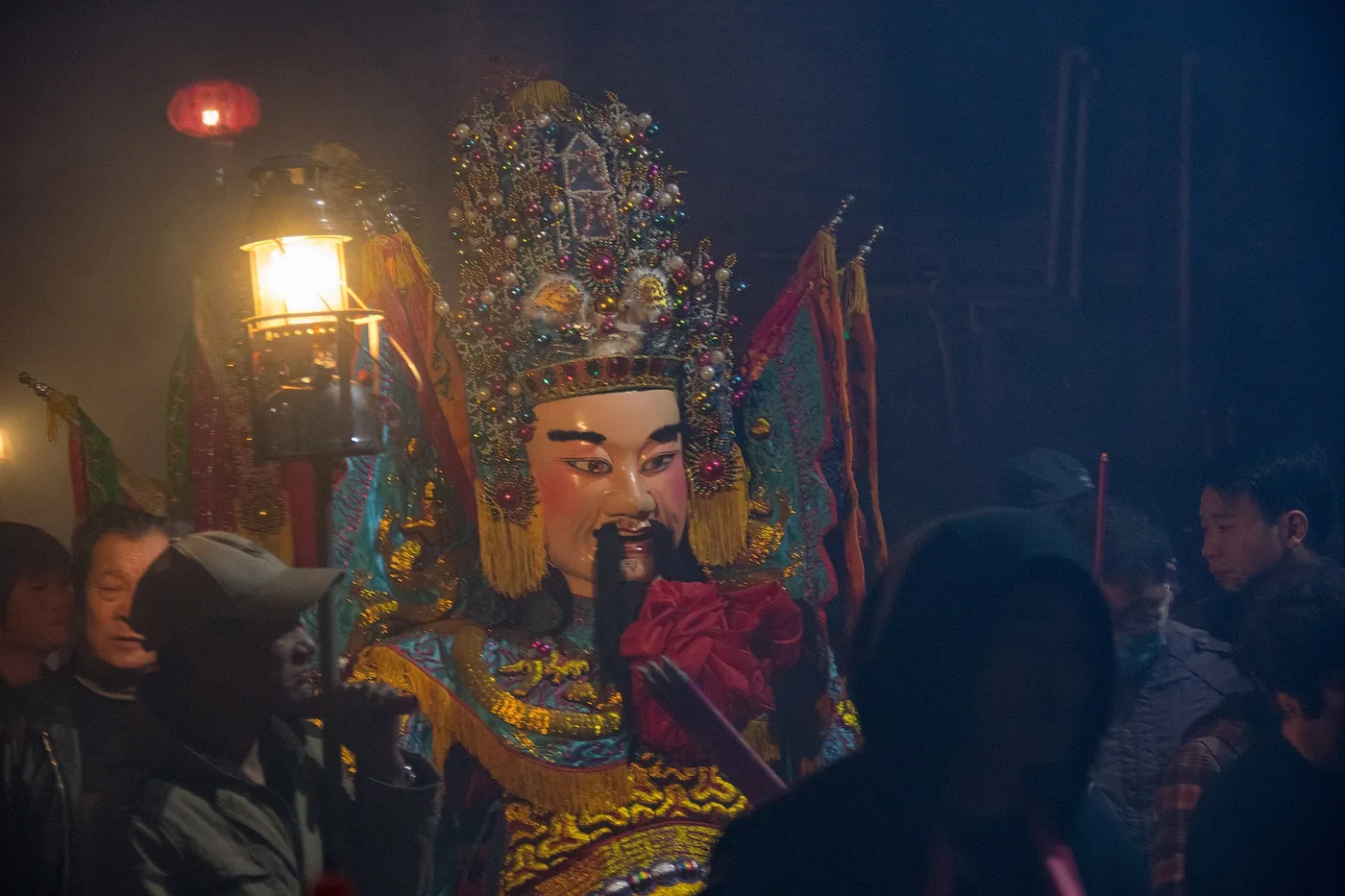
For a travel article, that is worth emphasizing because it prevents the tradition from being flattened into “colorful folklore.” What makes Fuzhou’s deity processions memorable is not just the costumes or the scale. It is the way they collapse different layers of meaning into one event: blessing, reunion, performance, neighborhood order, memory, and celebration. You can hear that in the noise, but you can also feel it in the pauses — the moments when people stop joking, step aside, and let the procession pass with a seriousness that reminds you this is still sacred ground, even in the middle of a festive crowd.
And that is why Fuzhou’s New Year deity processions deserve more careful attention from travelers. Not because they are the loudest Spring Festival custom in China, and not because they went viral, but because they preserve something many places have lost: a public ritual that still clearly belongs to the people who carry it. In an age when so many cultural experiences are packaged, ticketed, and flattened into content, youshen still feels stubbornly local.
For travelers willing to look past the headline images, that is the real gift. Fuzhou’s youshen is not just about gods moving through the streets. It is about memory moving through a community, year after year, in forms that are noisy, beautiful, improvised, and deeply felt. If you happen to be in Fuzhou during the New Year season — especially in the wider orbit of Changle and other districts where these traditions remain strong — you may not witness one neat, citywide festival. What you may find instead is something better: a living ritual culture still close to the ground.
Related journeys: browse Dragon Discover cultural tours if you want more China trips shaped by local ritual, festival life, and lived tradition.
And that, in travel terms, is far more memorable.