
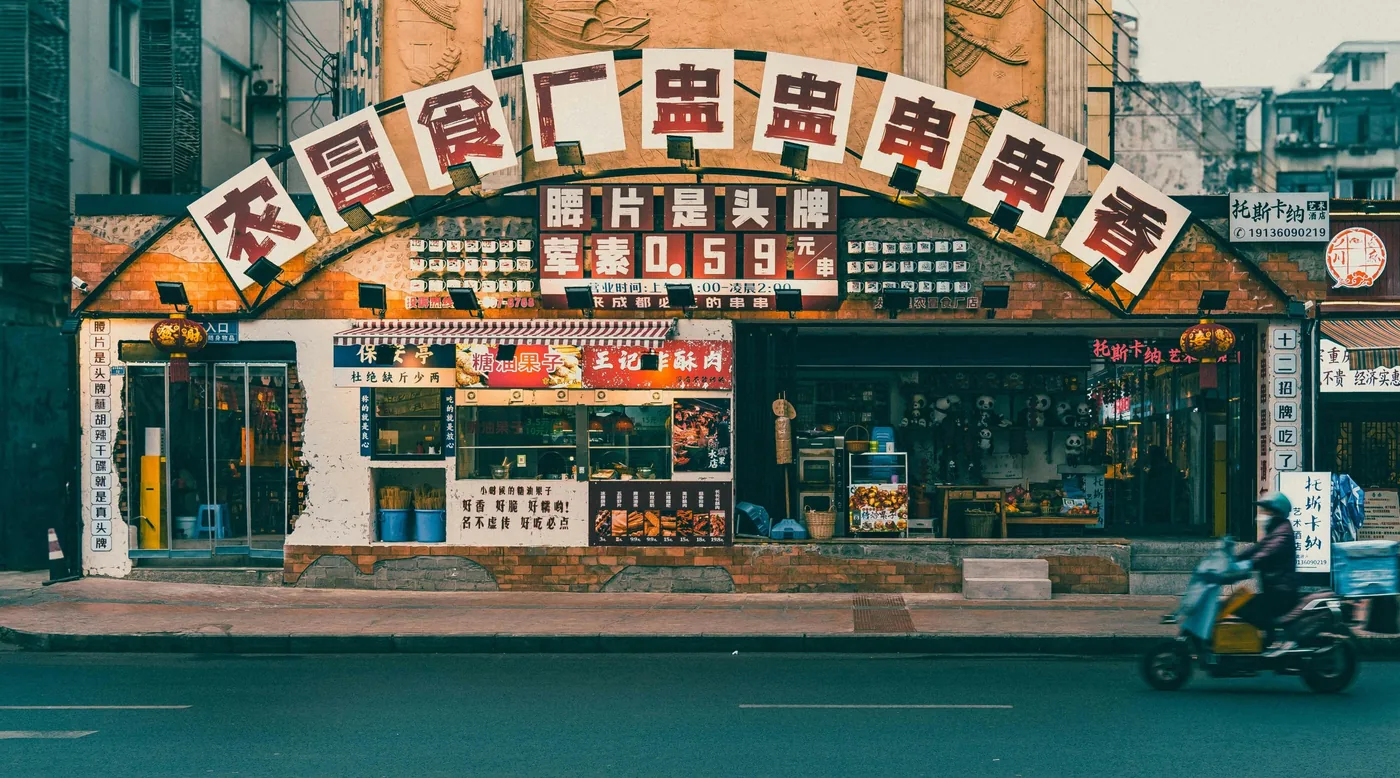
No sign out front. Plastic stools on the sidewalk, a handwritten menu taped to a greasy wall, and a line of people in office clothes waiting for a table that seats four. Your instinct says keep walking. Every local’s instinct says sit down.
The Insult That Became a Recommendation
The name alone should stop most appetites. Cangying guanzi [TSAHNG-ying GWAHN-zuh] (苍蝇馆子, literally “fly restaurant” — small, family-run eateries where the food far outweighs the decor) started as late-1970s Sichuan slang, a blunt hygiene complaint aimed at hole-in-the-wall joints where the cook cared more about the wok than the walls. The insult stuck because it was accurate: these places were tiny, greasy, and unregulated.
Then the internet arrived. By 2005, forum threads titled “Complete Guide to Chengdu’s Fly Restaurants” were drawing thousands of clicks. In 2006, a Chengdu magazine published a “Top 50 Fly Restaurants” list — its online version drew 5,000 readers in a week, a remarkable number for China’s internet at the time. The label flipped. What once meant “dirty and small” started to mean “authentic and worth the trip.”
The concept is not new. Song Dynasty records describe unlicensed food stalls that operated from late night until dawn, sometimes outprofiting the licensed restaurants they sat beside. A thousand years later, the economics have barely changed: low rent, no staff, daily ingredients, and a cook whose reputation is the only marketing budget.
Strip Out the Decor and Read the Wok
Walk into a fly restaurant and strip away everything a Western diner uses to evaluate quality: the lighting, the menu typography, the table settings, the uniforms. What remains is the signal that actually matters — the wok, the crowd, the speed, and the fact that the ingredients arrived that morning.
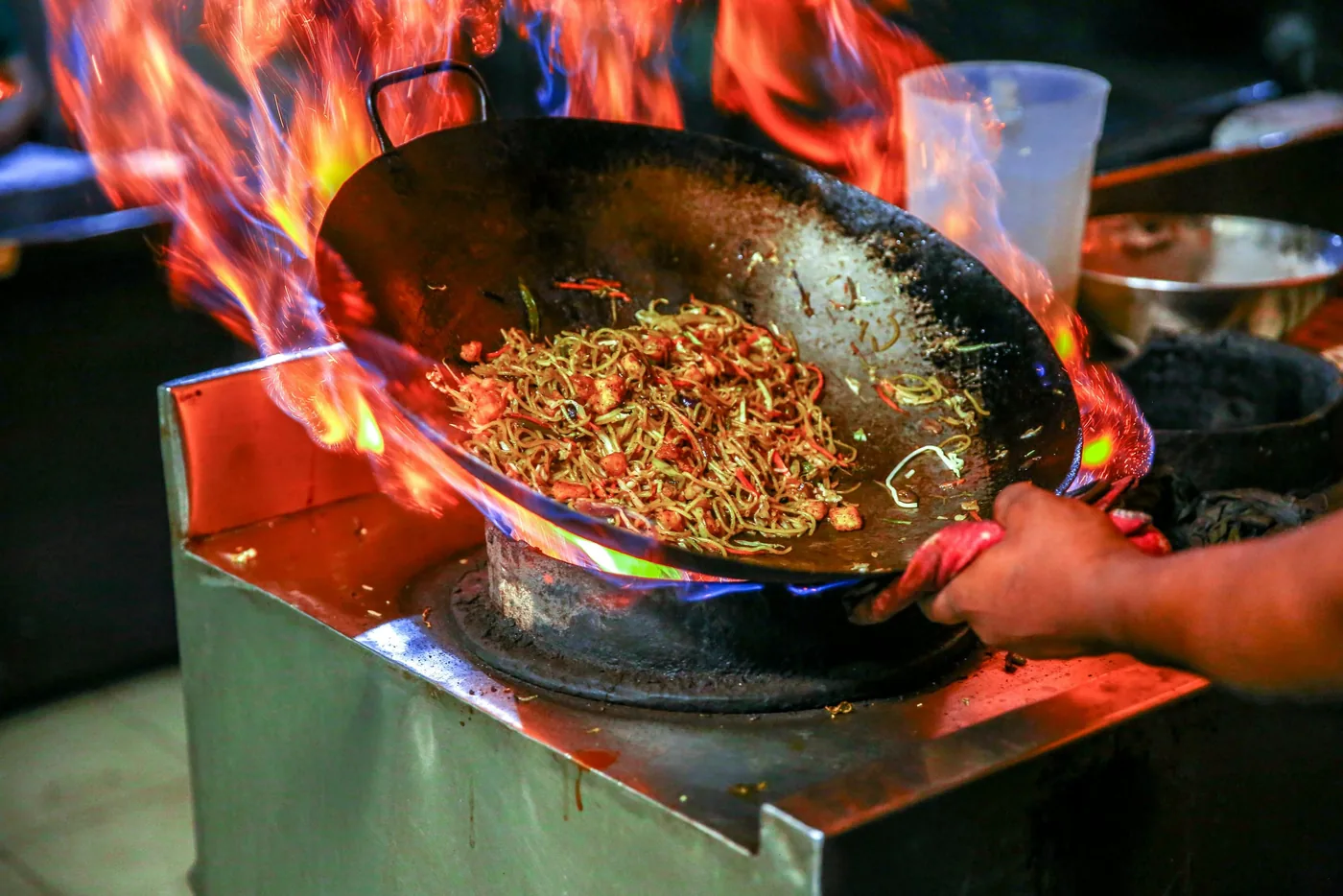
The plastic stools are not a failure of ambition. They are a business model optimized entirely for the plate. A folding table can be hosed down in thirty seconds. A handwritten menu changes when the cook finds better greens at the morning market. The gas burner is visible because the kitchen is the dining room — there is nowhere to hide and no reason to.
Listen for guoqi [GWOH-chee] (锅气, the searing breath of the wok — the complex flavor that only comes from food hitting metal at the right temperature, at the right speed). That sound — a sharp hiss, then a roll of smoke — is the single best quality indicator in Chinese cooking. When you hear it from the sidewalk, you are in the right place.
The Crowd Is the Review
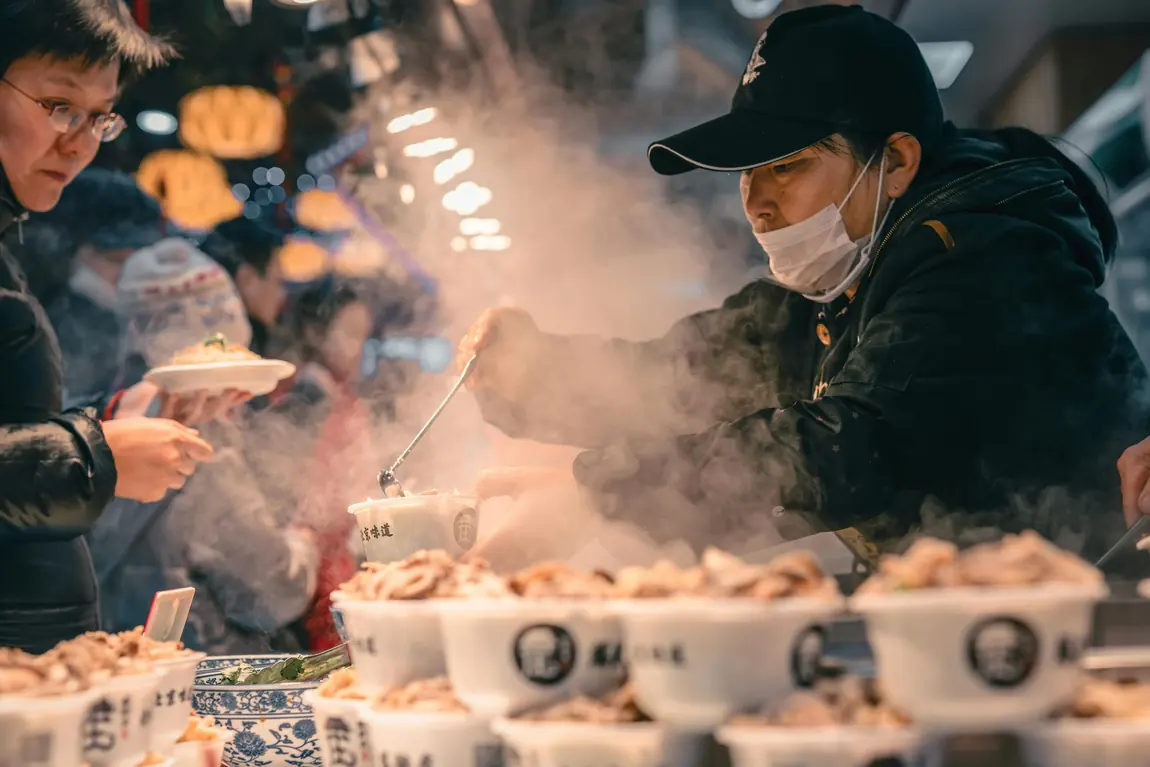
There are no Yelp stars here, no Michelin inspectors. The quality-control mechanism is the line out the door and the people coming back tomorrow.
At one Chengdu fly restaurant specializing in rabbit hot pot, a 22-year-old regular told a China Daily reporter back in 2012: “My mom used to take me here, and now I take my friends here.” Generational loyalty, passed along like a family recipe. Another diner at the same spot offered the honest version: “It’s a great joy to come here — eating, sweating, and taking a shower back home.”
The crowd also levels. A Bentley pulls up next to a delivery moped. Both drivers squeeze onto identical low stools for the same bowl. Fly restaurants are classless in a way almost nothing else in a modern Chinese city is — no VIP room, no dress code, no price tier that separates who gets the good table. Everyone gets a plastic stool.
Four Dishes That Make the Case
The point is not to catalog every plate. It is to show that the food behind the grimy facade is precise, inherited, and technique-driven — not thrown together.
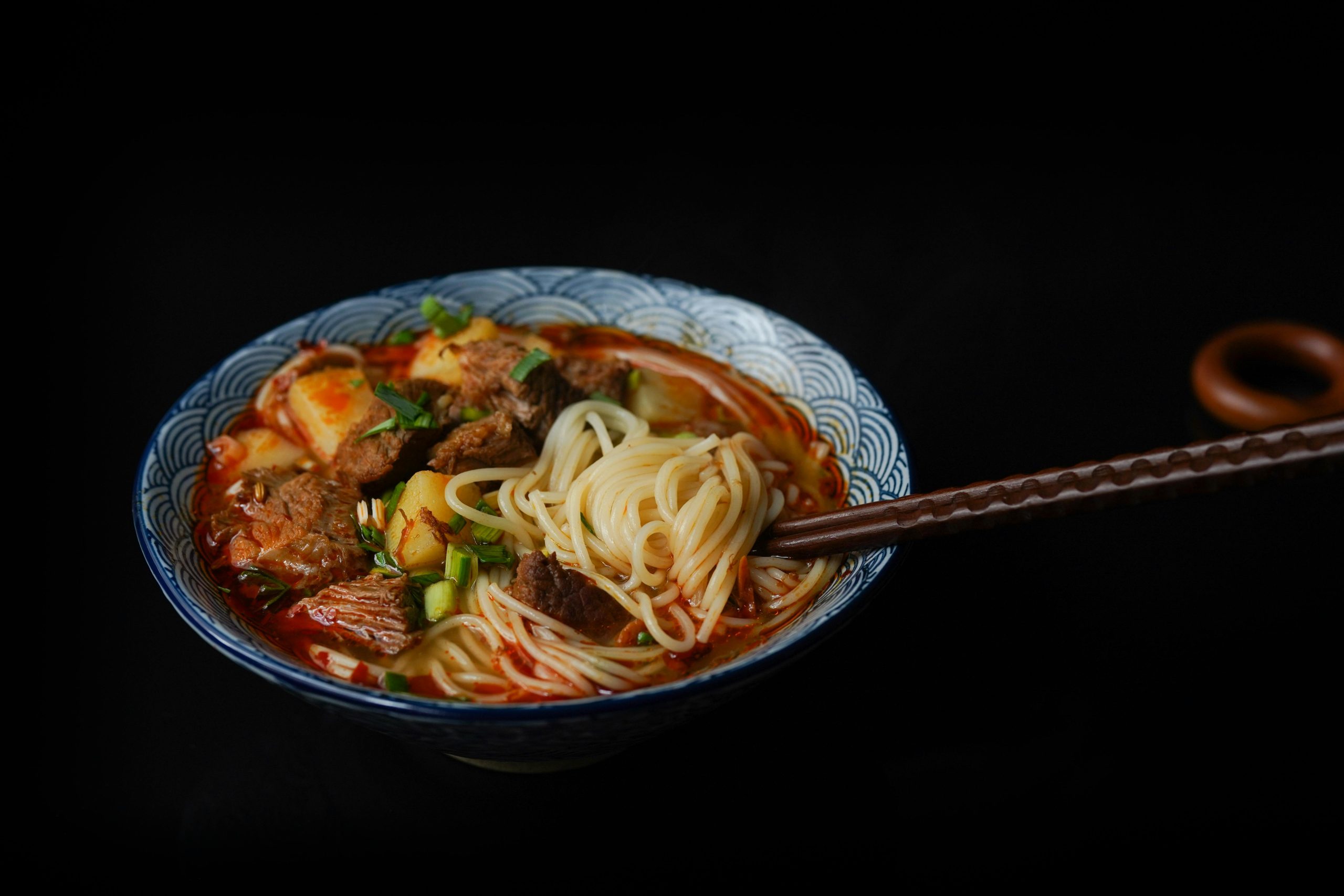
Dan dan mian [DAHN dahn MYEN] (担担面) — named for the shoulder pole street vendors once used to carry the broth and noodles through Chengdu’s alleys. A small bowl, rarely bigger than a rice bowl, built on minced pork, preserved mustard greens, chili oil, and Sichuan pepper. The ratio is everything.
Liangfen [LYAHNG-fuhn] (凉粉) — cold jelly noodles, sliced from a trembling block of mung bean or pea starch, then dressed in chili oil, garlic, and vinegar. At Chenshi Liangfen [CHUHN-shir LYAHNG-fuhn] near Wenshu Monastery [WUHN-shoo], they have been cutting the same jelly for decades, some of it still hawked from wheelbarrows.
Naohua doufu [NOW-hwah DOH-foo] (脑花豆腐) — silken tofu studded with chopped pig brain, swimming in numbing mapo sauce. For Chengdu locals this is comfort food, the texture of custard with the heat of fermented bean paste. At Ming Ting [MING ting] Restaurant, it became the dish that put fly restaurants on magazine covers. First-time visitors may need a moment. The flavor usually handles the rest.
Rabbit hot pot — whole rabbits simmered in a bath of dried chilis and Sichuan peppercorns, the broth brick-red and fragrant enough to smell from the alley. Peng Zhiqiong started serving it in 1995 after losing her railway-canteen job. Thirty open-air tables, plastic stools, and a neighborhood that never stopped showing up.
The Fake and the Real
By 2020, investors had cracked the formula. Take one cranky older owner who does not speak Mandarin. Add minimal decor, a hidden location, a few bold dishes, and a social media account. Total startup cost as of the early 2020s: 30,000 to 70,000 yuan, plus a marketing spend. The manufactured fly restaurant became an internet category — and the backlash was immediate. “The most viral ones on Douyin taste the worst,” became a standard consumer verdict. Behind the best-performing accounts, dozens of shareholders. The aesthetic of authenticity, stripped of the thing that made it authentic.
The genuine ones survive on what they have always had: a cook who goes to the market every morning, a neighborhood that already knows the address, and a reputation built one plastic stool at a time. You cannot manufacture thirty years of regulars. On the Chengdu-Chongqing twin cities itinerary, Day 5 sits you at exactly this kind of table — a hole-in-the-wall lunch where the food does all the talking.
The restaurant with no sign and a line out the door is not failing at presentation. It has made the oldest bet in Chinese food culture: put everything into the wok and let the plate speak for itself.
Day 5 of Chongqing & Chengdu · Neon City & Sacred Mountain – 12 Days 11 Nights puts you at one of these tables — a hole-in-the-wall lunch where the wok, the crowd, and thirty years of regulars do all the talking.