Login

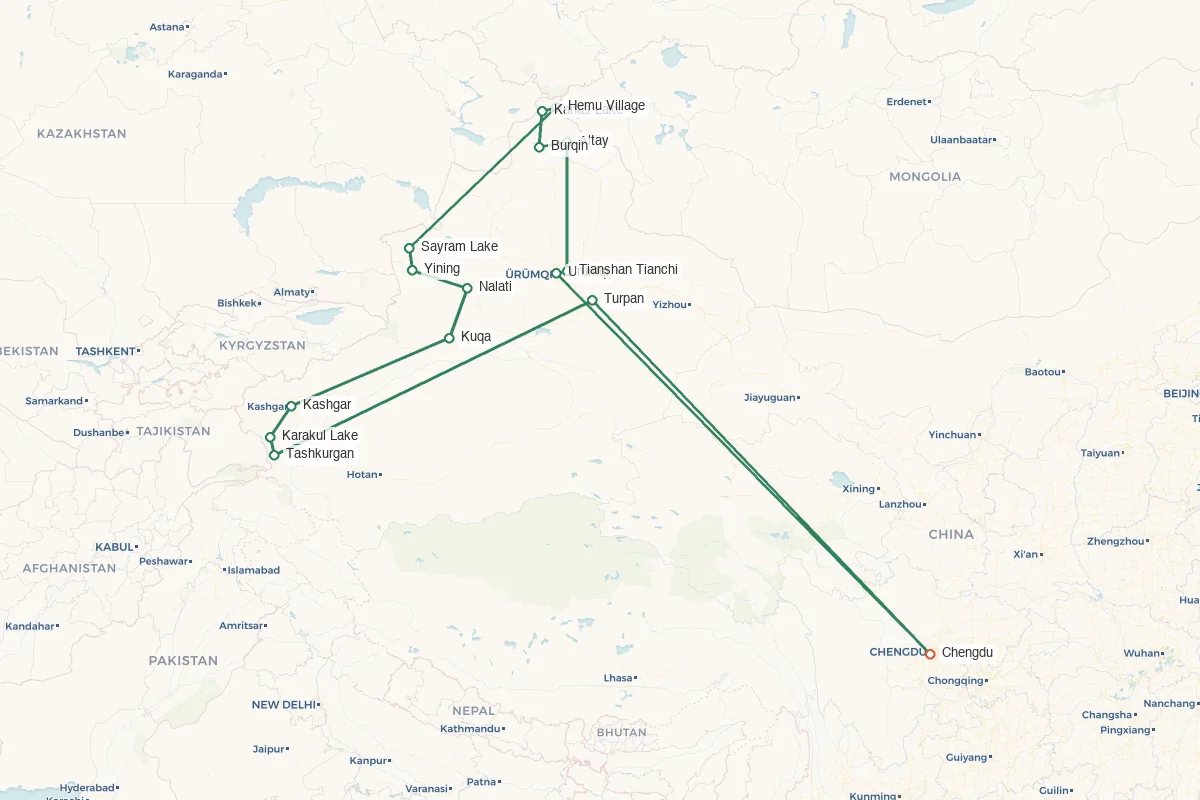
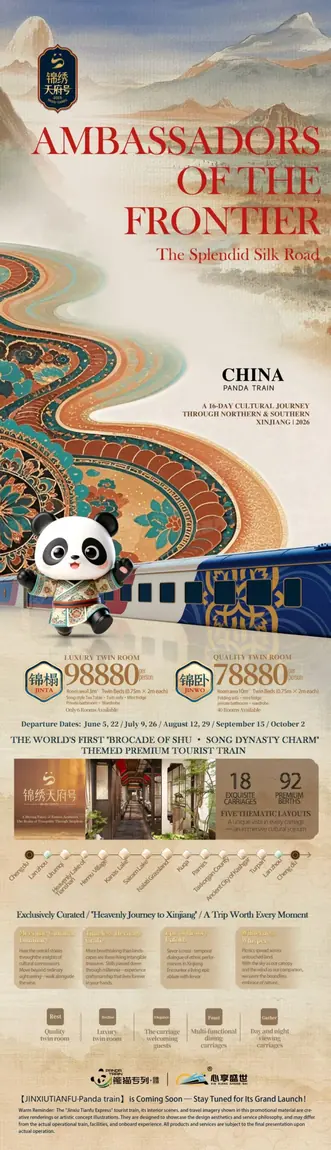
Sixteen days across Xinjiang by luxury tourist train, from the alpine lakes of Kanas to the Pamir Plateau and the ancient Silk Road cities of Kashgar and Turpan.
The Panda Train Jinxiu Tianfu carries you between regions overnight while ground days bring Tuvan villages, the Duku Highway across the Tianshan, a sunset concert inside a ruined Silk Road fortress, and a Tajik family visit at the edge of three countries. Seven overnight train legs and eight hotel nights — every major transit is handled while you sleep, so you wake up in a different landscape each morning without the fatigue of long road days.
<p>Your journey begins at the designated train station in Chengdu or Lanzhou, where you board the Panda Train Jinxiu Tianfu — a luxury Oriental-themed tourist train that will be your mobile home for the next sixteen days. At the boarding gate, staff welcome you with a travel kit and a brief orientation before you settle into your sleeper cabin.</p><p>As the train pulls out of the station, the opening evening unfolds on board: a welcome ceremony, a live band performance, and a Xinjiang song and dance show that sets the tone for everything ahead. Dinner is served in the train’s dining car — the first of many on-board meals. The train runs through the night toward Xinjiang.</p>
<p>The train crosses the vast Gobi Desert and northwestern mountain country throughout the day. From your window, the landscape shifts from green lowlands to the stark, desolate beauty of the Gobi — silver-grey gravel plains stretching to the horizon, punctuated by wind-sculpted rock formations and distant snow-capped ridges.</p><p>On board, the day is shaped by the train’s own rhythm: a reading corner, a cocktail gathering, and themed sightseeing check-in activities organized by the crew. Meals are served in the dining car. The train arrives in Urumqi in the evening, where you check into a 5-star city hotel for the night.</p><p>Guests choosing to join in Urumqi: staff meet you at the airport with a sign reading “Jinxiu Tianfu Train VIP” and transfer you to the same hotel.</p>
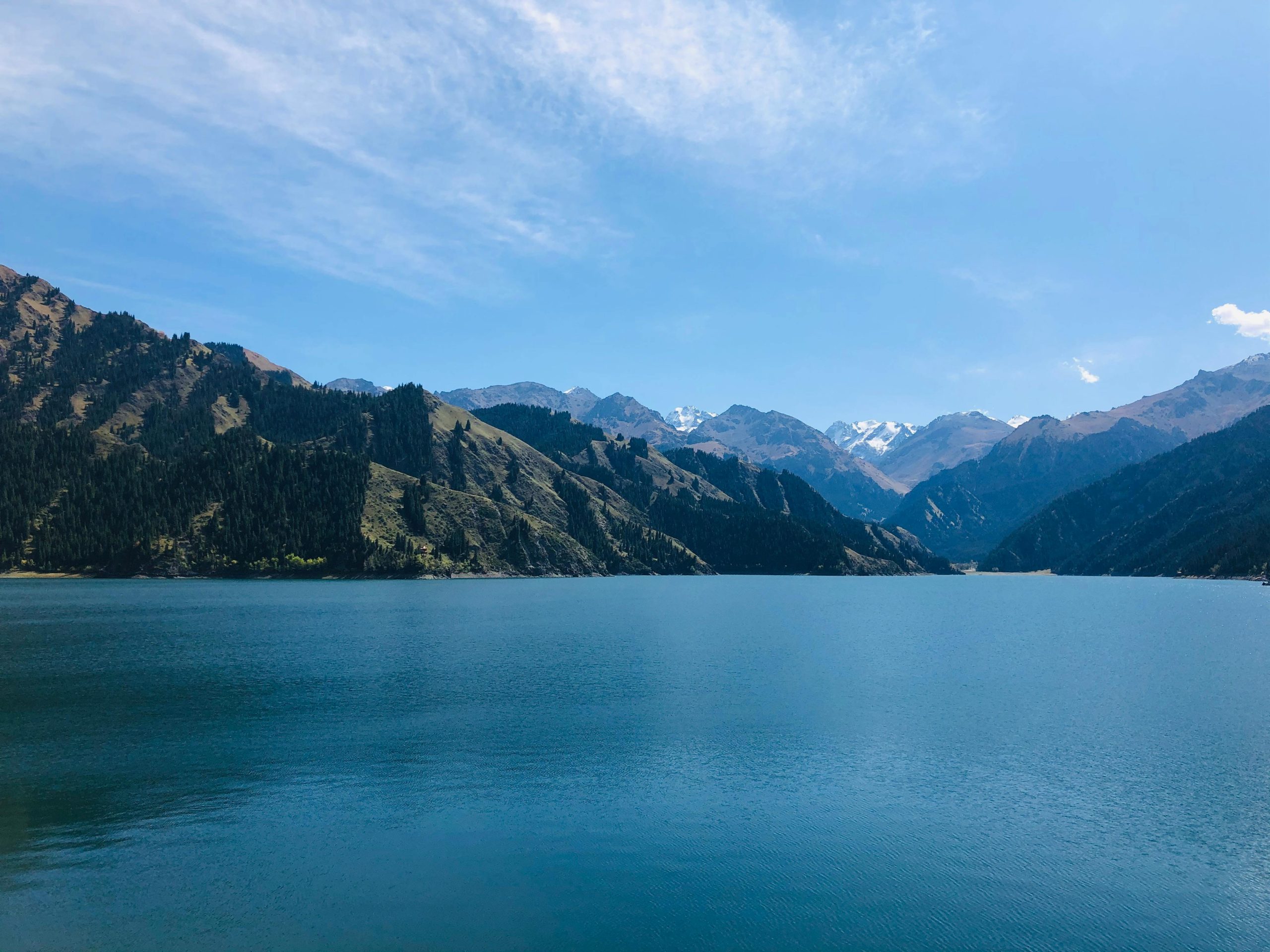
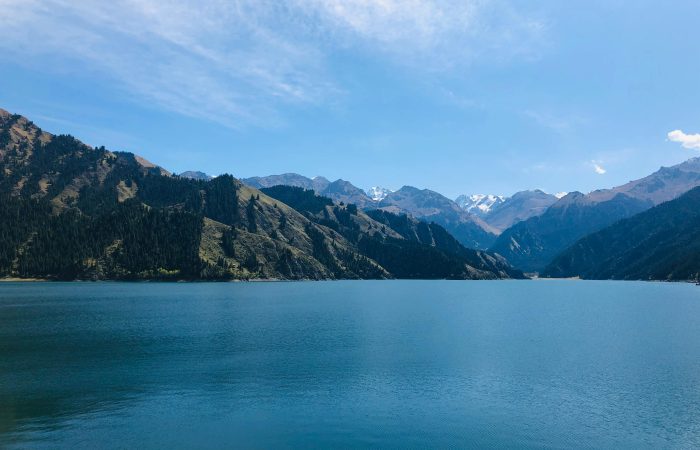
<p>After breakfast at the hotel, the day opens with the Xinjiang Welcome Banquet — a festive meal accompanied by a traditional Xinjiang song and dance performance that officially launches the ground touring. This is your introduction to Xinjiang’s hospitality: warm, musical, and generous with food.</p><p>In the afternoon, the group drives approximately 1.5 hours to Tianshan Tianchi (*tee-EN-chee*) — the Heavenly Lake, a turquoise alpine pool at 1,900 metres beneath the snow peak of Mount Bogda. The visit lasts about three hours, with time to walk the lakeside boardwalk and take in the scale of the Tianshan range rising behind the water.</p><p>After dinner, you transfer to the train station and board the Panda Train bound for Altay in Xinjiang’s far north. The train runs overnight.</p>
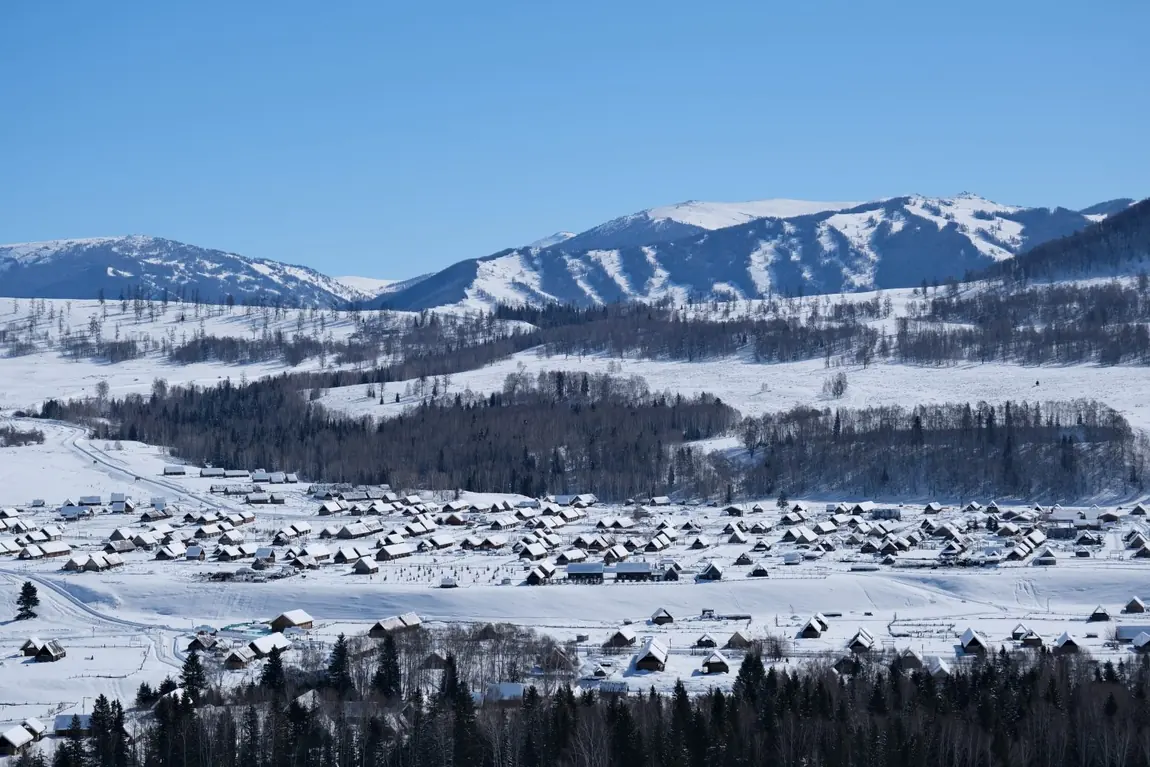
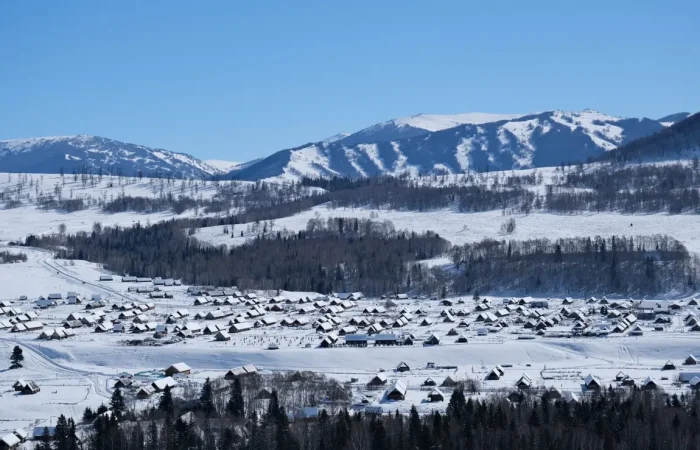
<p>The train arrives in Beitun early in the morning. After breakfast, the group transfers by road toward one of Xinjiang’s most remote and beautiful corners — Hemu Village (*huh-MOO*), a Tuvan settlement deep in the Altay Mountains. The drive takes approximately five hours, with rest stops and meals arranged along the way.</p><p>Hemu is known as “God’s Back Garden” — a village of hand-built log cabins set among birch forests and alpine meadows, where the Tuvan people still live a semi-nomadic life. The Hemu River Valley unfolds below the village, with a wooden footbridge crossing the river and flower-covered grasslands at Jiadengyu above. The pace here is deliberately slow: walk the boardwalk, watch the light shift through the birch trees, and let the remoteness settle in.</p><p>You stay overnight in a Hemu-style guesthouse — rustic but warm, with the valley right outside your window.</p>
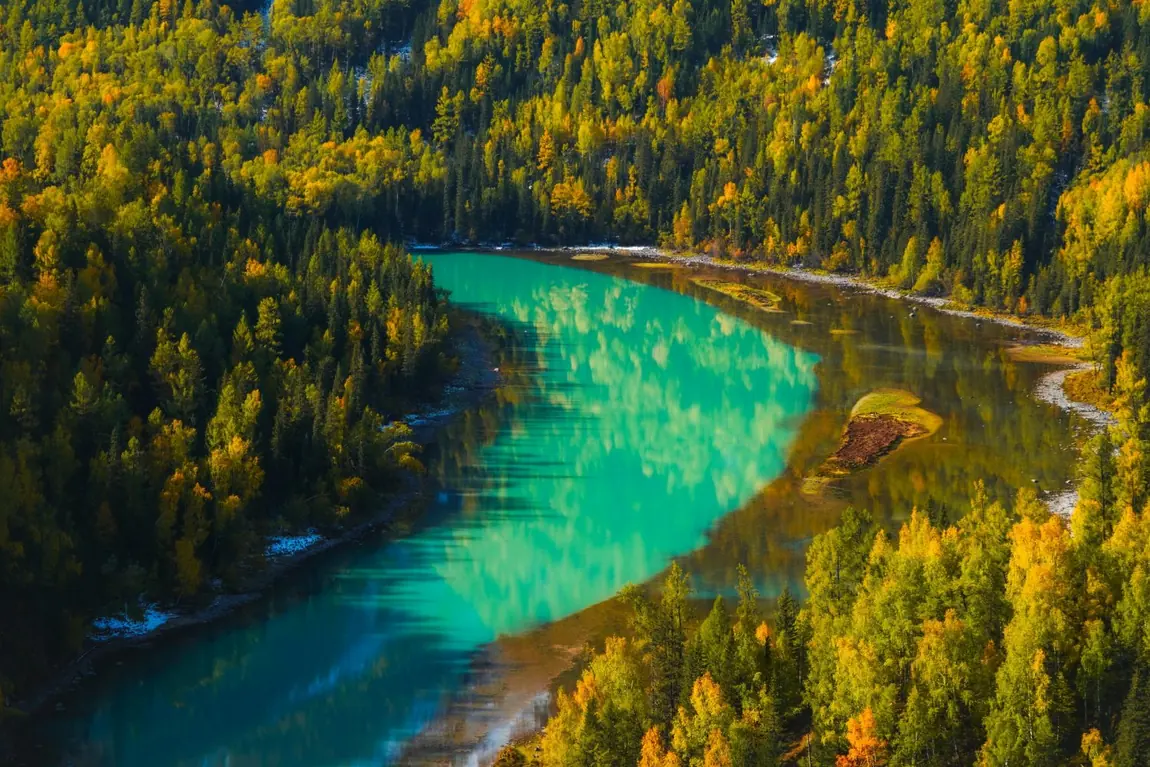
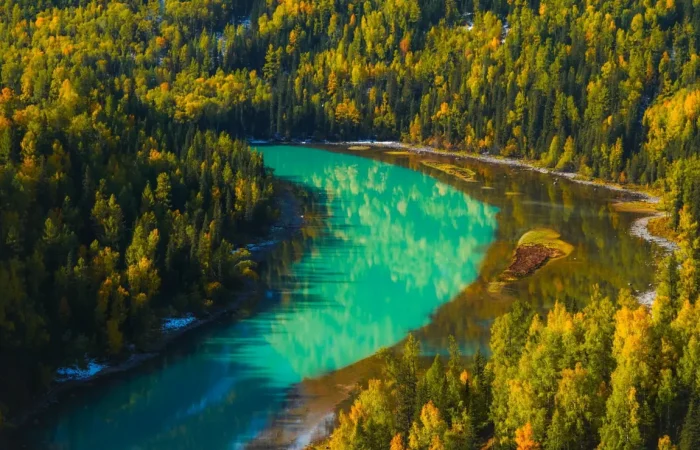
<p>For those willing to rise early, Hemu at dawn is worth the effort. The morning mist rolls through the valley in thin veils, threading between log cabins and birch trunks until the village looks like something half-remembered from a dream. Sunrise here is quiet, cold, and extraordinary.</p><p>After breakfast, the group drives approximately two hours to Kanas Lake (*KAH-nahs*) — the centrepiece of Xinjiang’s northern alpine country. Often called Asia’s only Swiss-style natural scenery, Kanas is a glacier-fed lake whose colour shifts from emerald to sapphire depending on the season and the angle of light. The visit includes a boat cruise across the lake surface, bringing you close to the forested slopes that drop steeply into the water.</p><p>After lunch, the group climbs to the Guanyu Platform (*gwahn-YOO*) on Camel Peak — a viewing terrace that looks out over the entire lake and the mountain ridgeline beyond. On a clear day, the panorama is vast enough to feel less like a viewpoint than a different altitude of silence.</p><p>Dinner and overnight in the Kanas scenic area.</p>
<p>The morning is free to wake naturally and take a last stroll along the lakeside boardwalk at Kanas — no schedule, just the sound of the water and the changing light on the mountains.</p><p>On the way down from the scenic area, the route passes through three of Kanas’s signature viewpoints: Moon Bay, where the river bends into a crescent shape beneath the forest canopy; Fairy Bay, wrapped in mist and legend; and Wolong Bay, where the still water reflects the surrounding slopes like a mirror. Each is a short walk from the road.</p><p>The group continues to Burqin, a small Altay town, for the day’s signature meal — a cold-water fish feast (*leng shui yu*) featuring freshwater fish from the glacier-fed rivers of northern Xinjiang. The flavour is clean, delicate, and unlike anything from warmer waters.</p><p>After dinner, you transfer to Beitun Station and board the Panda Train for the overnight journey south toward Yining.</p>
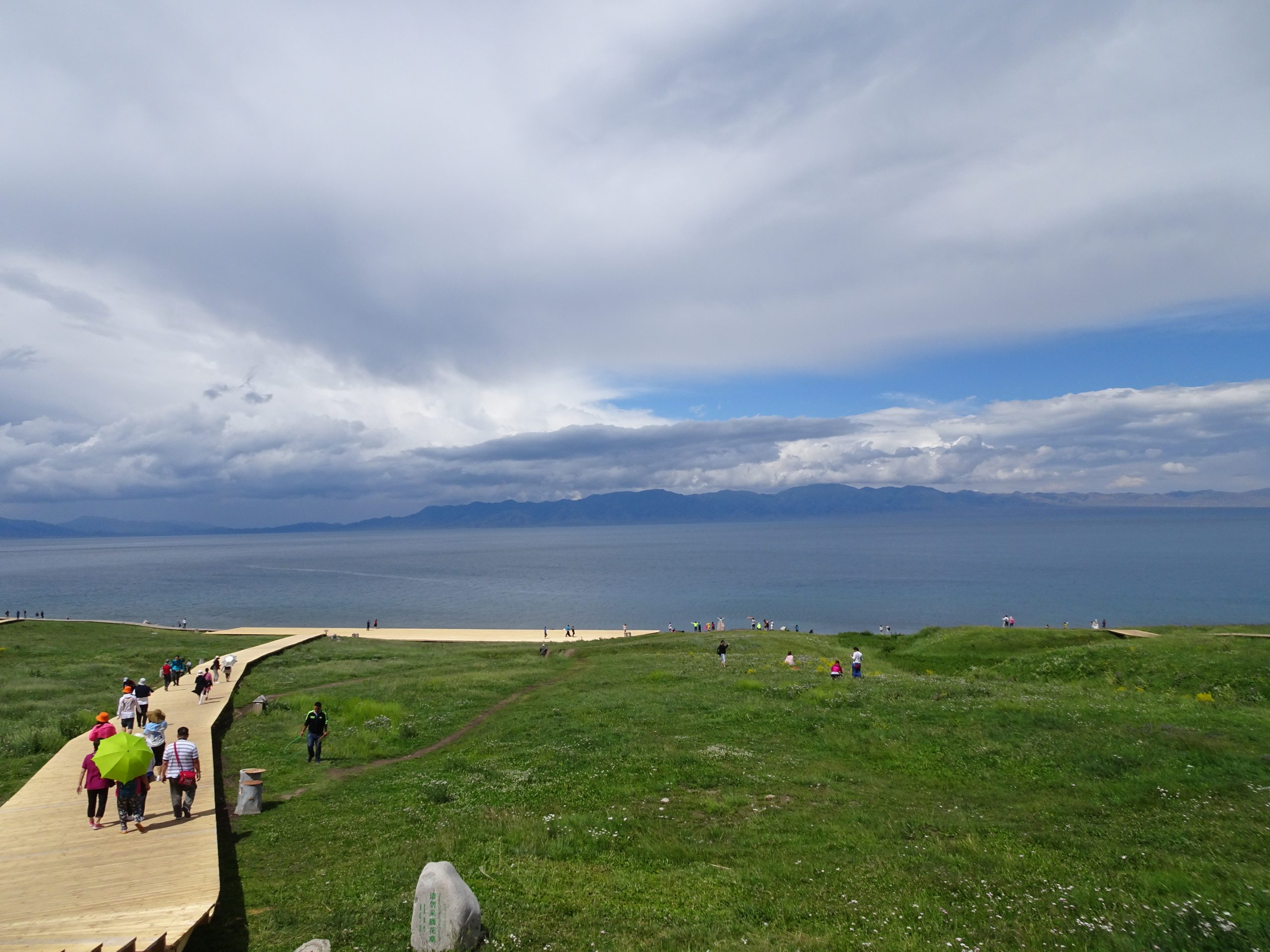
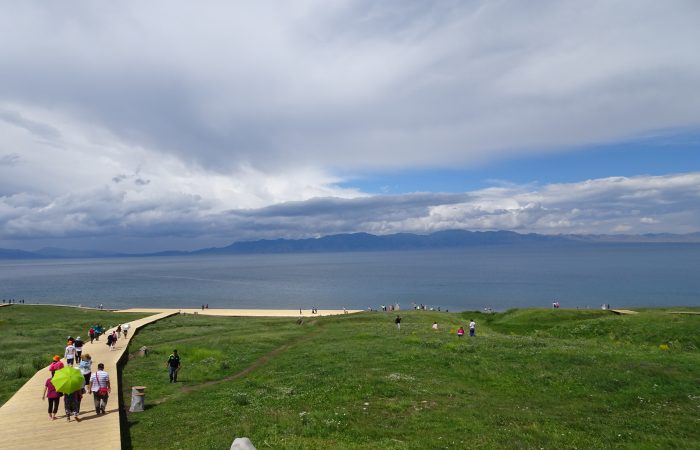
<p>The train arrives at Jinghe South Station or Yining Station in the morning. A local welcome ceremony greets the group before you transfer by road to one of Xinjiang’s most striking bodies of water.</p><p>Sayram Lake (*SAI-rahm*) — known as the “last drop of the Atlantic” — is the largest alpine lake in Xinjiang. Fed by moisture carried across the entire Eurasian continent from the Atlantic Ocean, the lake sits at over 2,000 metres with turquoise water so clear it looks dyed. Snow-capped mountains rise behind the far shore. The visit lasts about two hours, with time to walk the lakeshore and absorb the scale.</p><p>After the tour, the group drives to Yining, the main city of the Yili Valley. Dinner at a local restaurant, then check-in at a 5-star hotel for the night.</p>
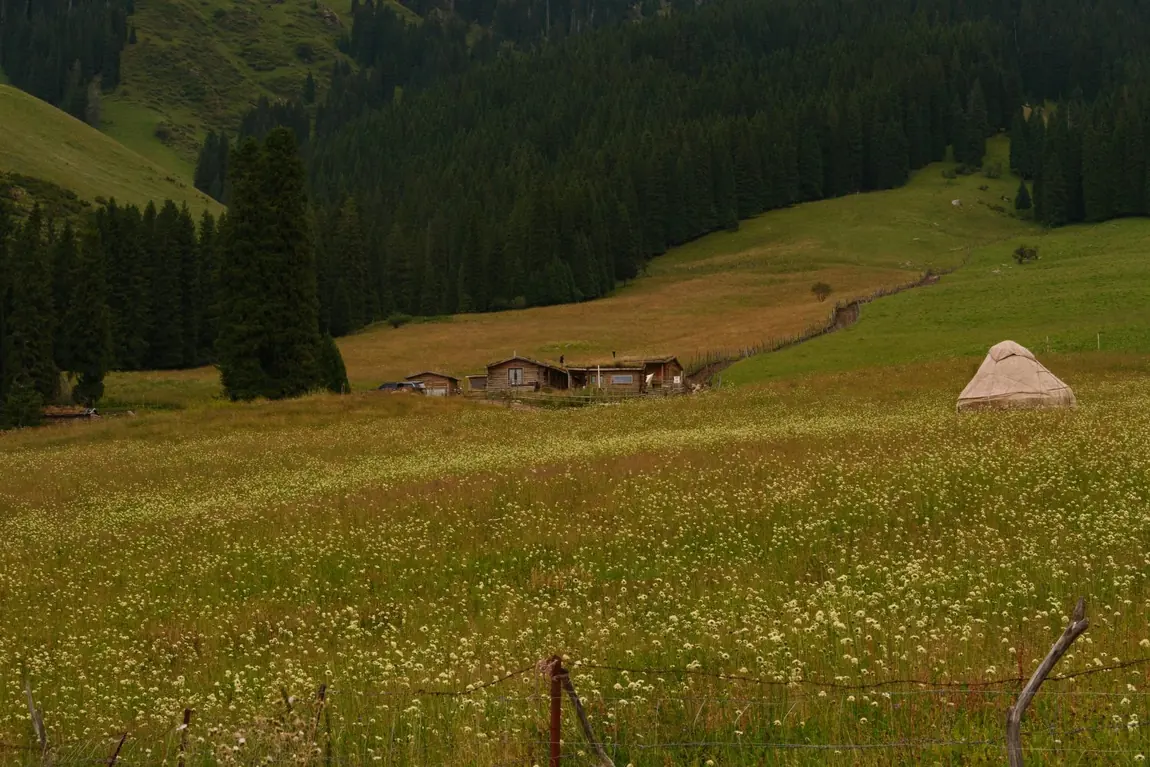
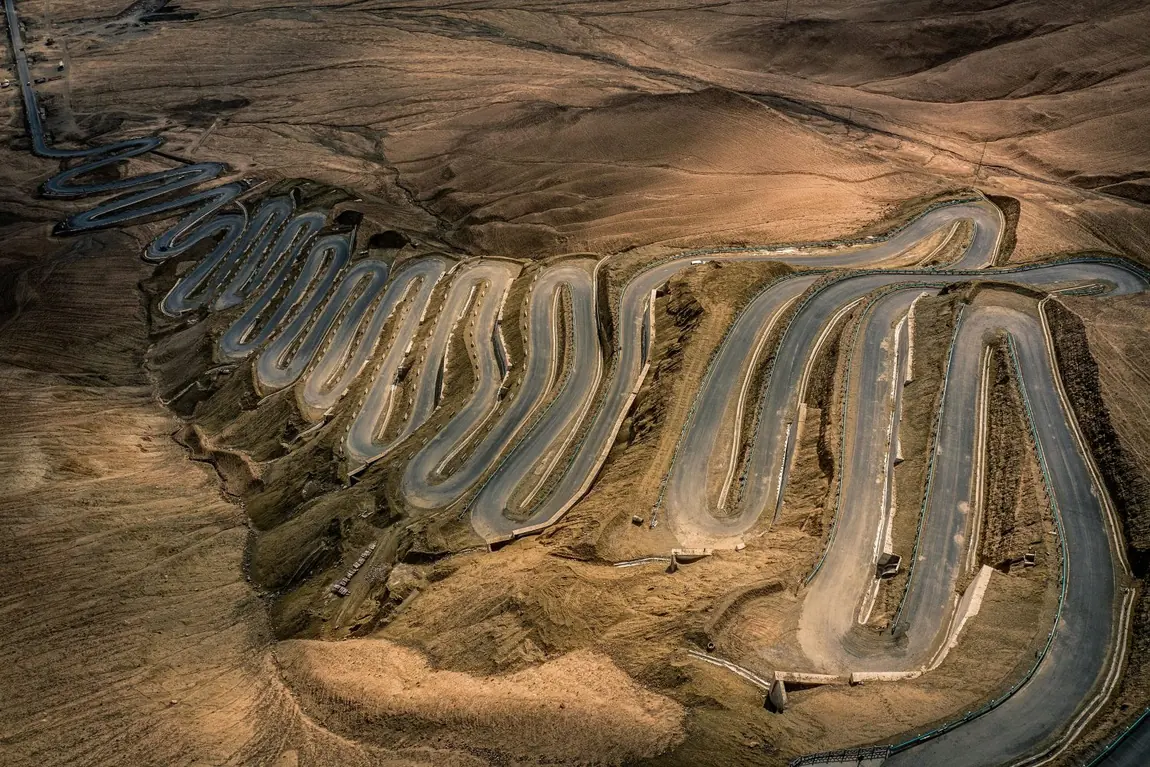
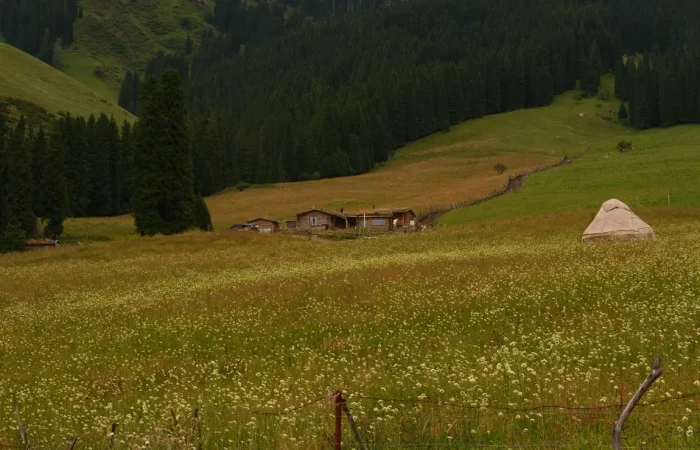
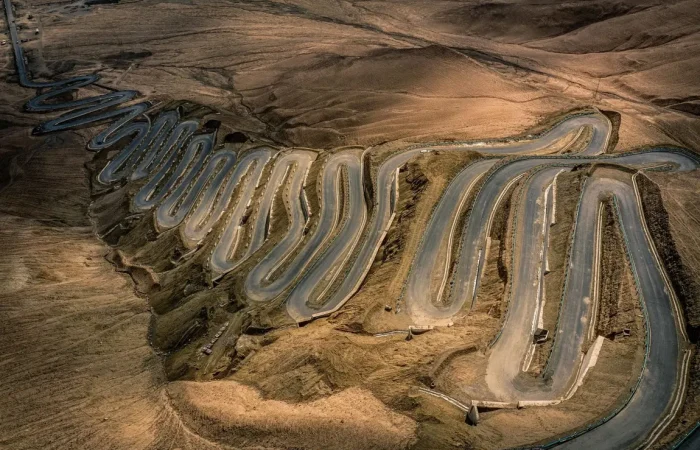
<p>Today is one of the most visually dramatic days on the route. After breakfast, the group departs for Nalati Grassland (*NAH-lah-tee*) — the “Tianshan Green Island”, where layered alpine meadows rise in three dimensions from river valley to ridgeline. The aerial grassland route takes approximately four hours to tour, with time to walk among wildflowers, see Kazakh herder camps, and understand the nomadic culture that still defines life on these slopes.</p><p>In the afternoon, you transfer to a private vehicle and begin the Duku Highway crossing — the central section between Nalati and Bayinbuluke. This is one of China’s most celebrated mountain roads, threading between cliff faces and deep valleys as it climbs through the Tianshan range. The scenery is raw and vast: snow peaks, alpine lakes, and sudden drops into green valley floors.</p><p>You arrive in Bayin Town in the evening. Dinner and overnight at a highland hotel.</p><p>Note: Foreign passport holders cannot access this section of the Duku Highway. An alternative route via train to Kuqa is arranged — they rejoin the group the following day.</p>
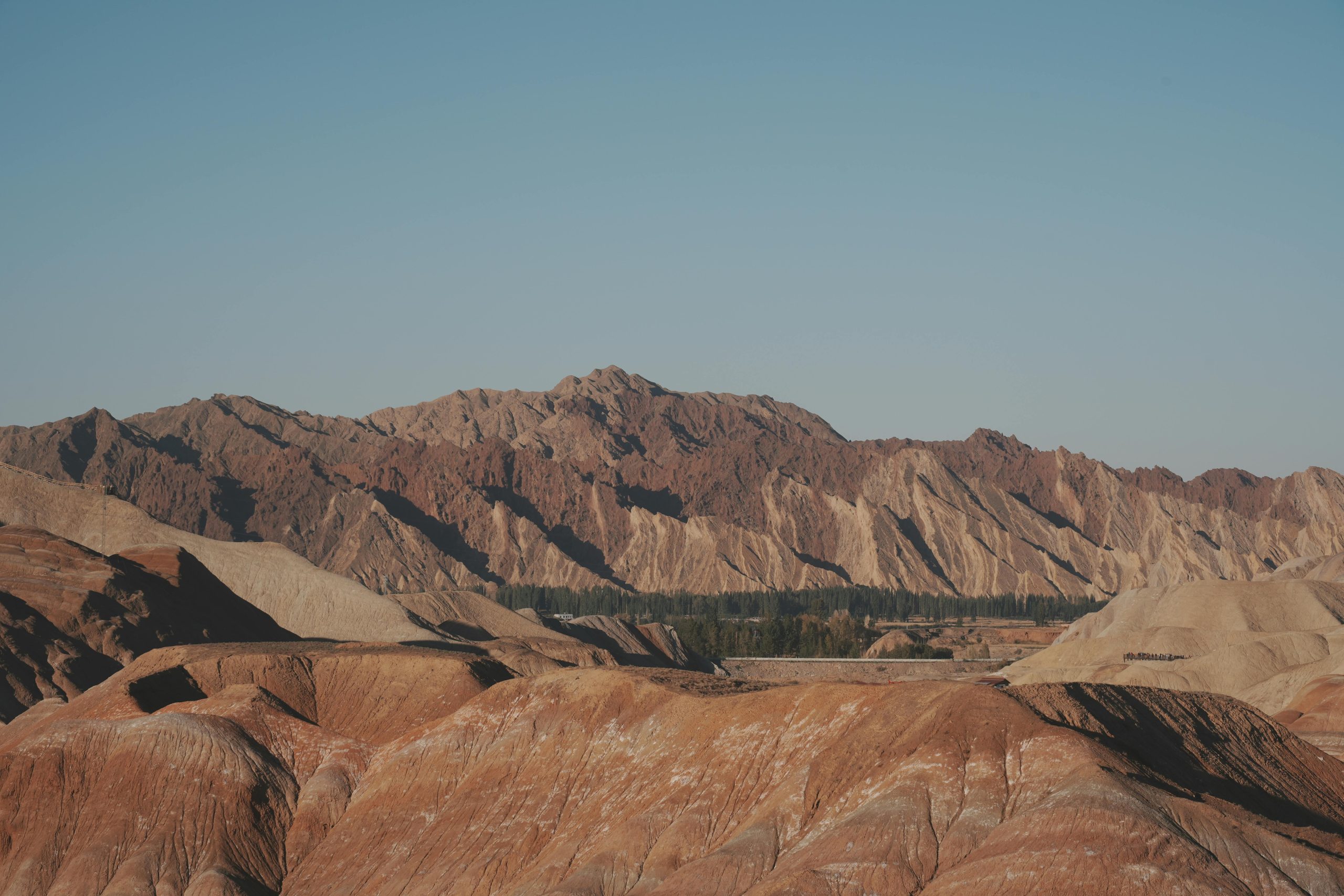
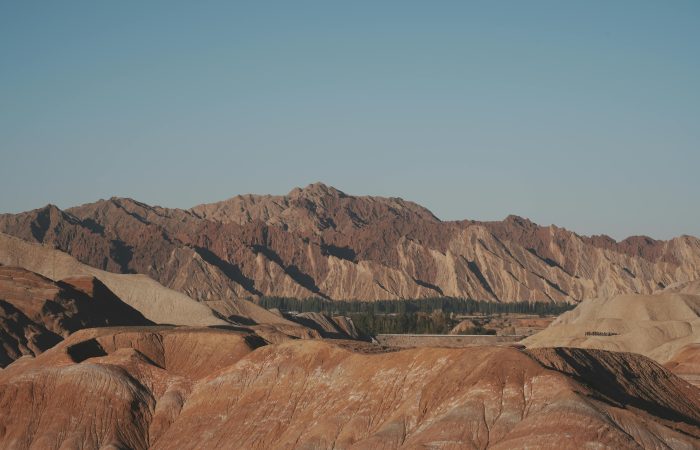
<p>After breakfast, the day continues along the southern section of the Duku Highway, descending from the highland plateau toward the Tarim Basin. Through the vehicle window, you pass the Bayinbuluke Grassland — a vast marshland known for its swan lake — before climbing over the Tielimaiti Pass with its snow-covered peaks, and passing the alpine “dragon ponds” that sit like emeralds in the rock.</p><p>The road eventually drops into red-rock country and the Tianshan Grand Canyon (*tee-EN-shahn*) — one of China’s top ten canyons, where towering red sandstone cliffs have been carved by wind and water into a geological wonderland hidden in the southern foothills of the Tianshan. The visit takes about an hour.</p><p>After dinner, you transfer to the train station and board the Panda Train for the overnight journey to Kashgar — the ancient Silk Road city at Xinjiang’s western edge.</p>
<p>The train arrives in Kashgar in the morning, and the day turns toward the Pamir Plateau — one of the most remote and awe-inspiring landscapes on the entire route.</p><p>The group drives approximately three hours along the China-Pakistan Friendship Highway (*zhong-ba gong lu*), climbing steadily toward the roof of the world. The first stop is Baisha Lake (*bai sha hu*) — where undulating silver-white sand dunes meet a lake of startling blue, a contrast so sharp it looks painted. The stop lasts about forty minutes.</p><p>Continue to Tashkurgan (*TAHSH-koor-gahn*), the legendary border town on the Pamir Plateau. Sitting at approximately 3,800 metres, Tashkurgan’s position — one county bordering three countries (Pakistan, Afghanistan, Tajikistan) — gives it a frontier gravity unlike anywhere else in China. This is also the hometown of Laziqin Bayika, the 2021 “Touching China” Person of the Year, and the filming location of the classic film Visitors on the Glacier.</p><p>The afternoon brings a Tajik family visit, where you sit in a traditional home, taste handmade Tajik snacks, and learn about the culture of China’s Tajik community — a people whose faces and customs feel more Central Asian than Chinese.</p><p>Dinner is yak meat hot pot — hearty, rich, and suited to the altitude. Overnight at a hotel in Tashkurgan.</p>
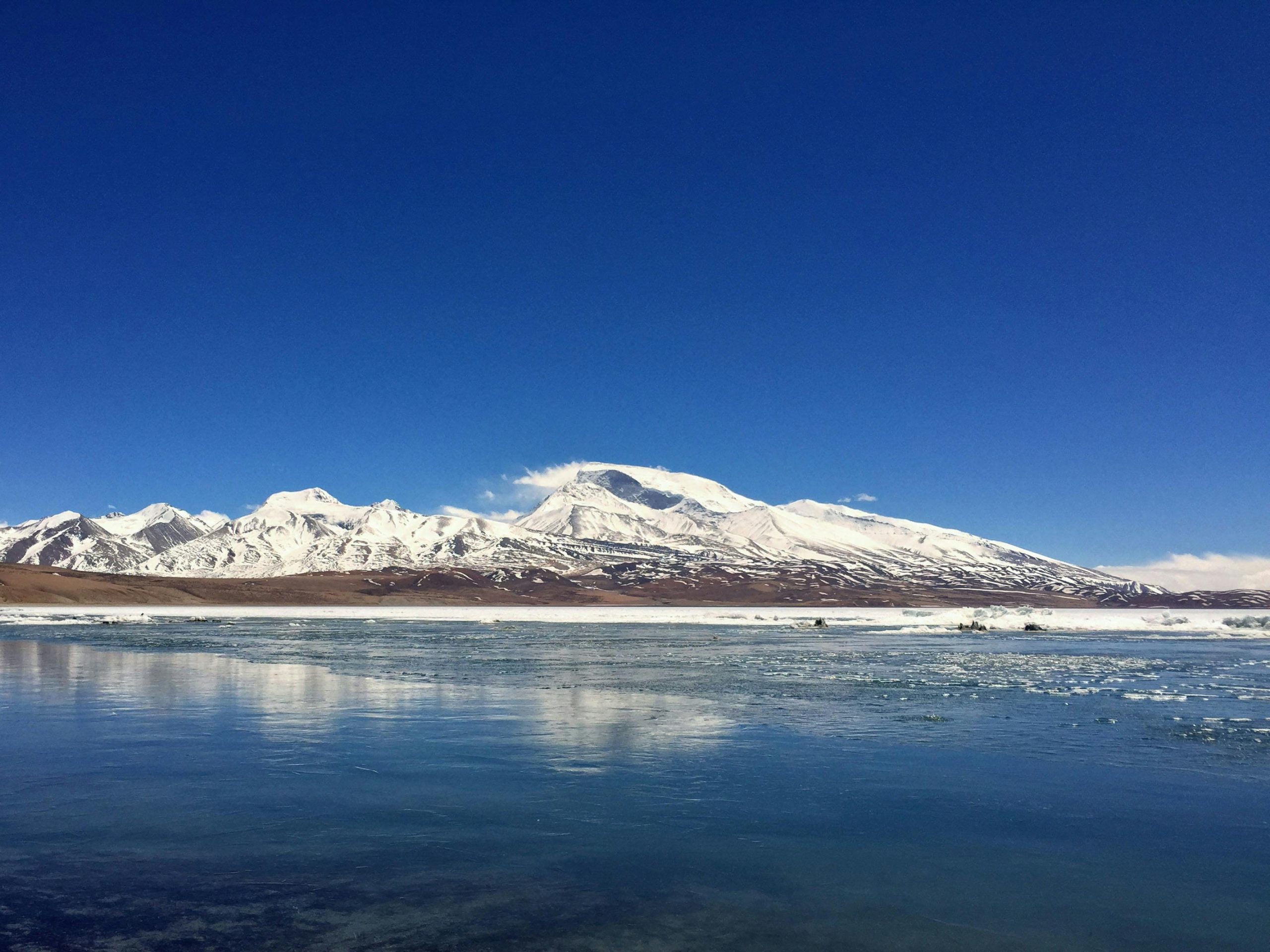
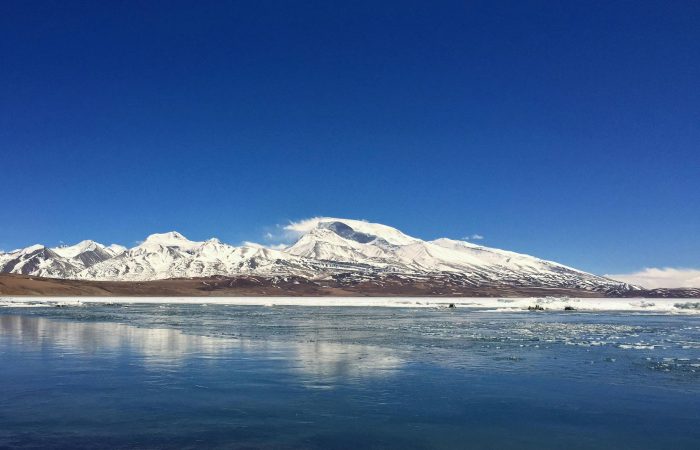
<p>After breakfast, the group drives approximately two hours to Karakul Lake (*KAH-rah-kool*) — the crown jewel of the Pamir Plateau. Known as the “mirror of the father of icebergs”, the lake sits directly beneath Muztagh Ata, a 7,546-metre peak whose reflection fills the water surface on calm mornings. The hour-long visit is less about “seeing a lake” and more about standing in one of the most purely beautiful places on the planet — the scale, the silence, and the proximity of the ice-covered massif above you.</p><p>On the return to Kashgar, the group stops for an intangible cultural heritage craft workshop — a hands-on session in a traditional craft that has been passed down through generations of Xinjiang’s ethnic communities. The workshop is about touch and patience: feeling the rhythm of a skill that has survived centuries of change.</p><p>The day closes in Kashgar with a roasted whole lamb feast (*kaoquanyang*) — the signature celebration meal of Xinjiang, where an entire lamb is slow-roasted until the skin is crisp and the meat falls from the bone. Overnight at a hotel in Kashgar.</p>
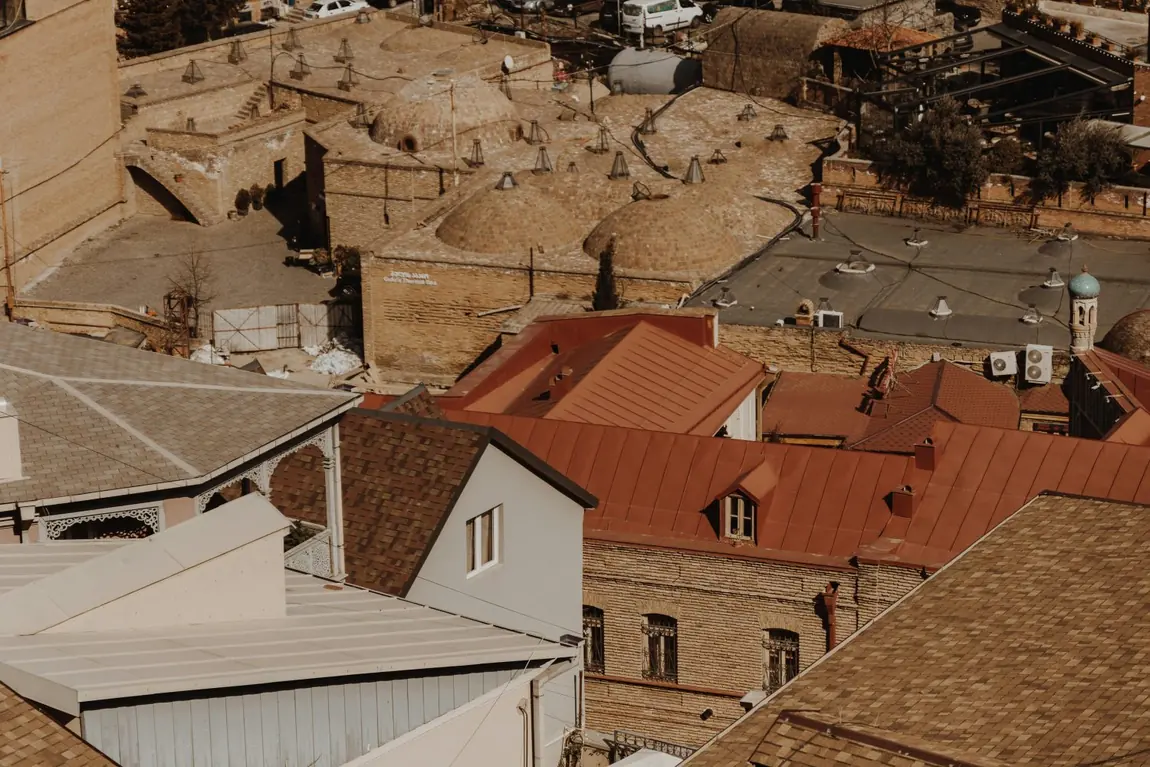
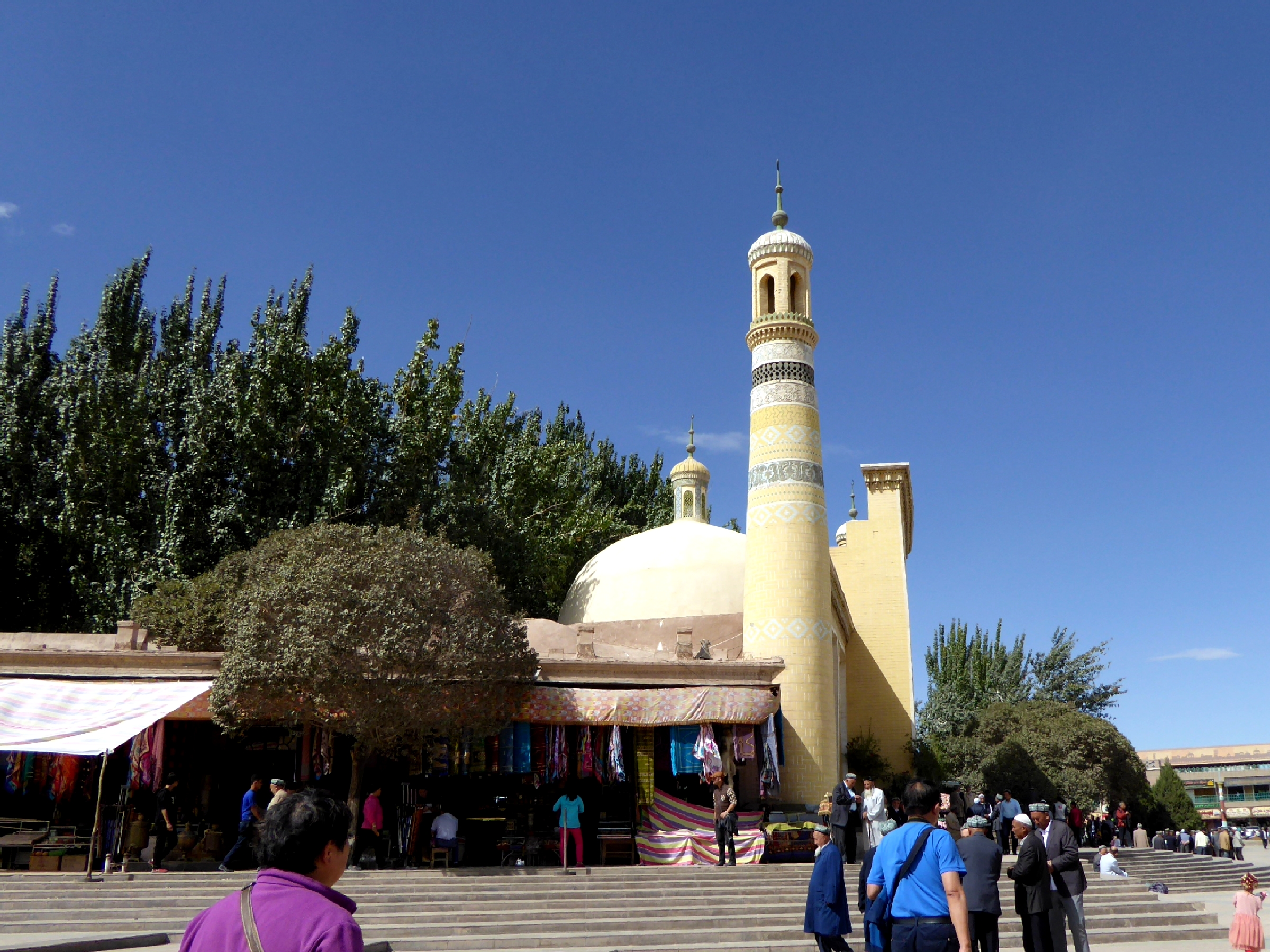
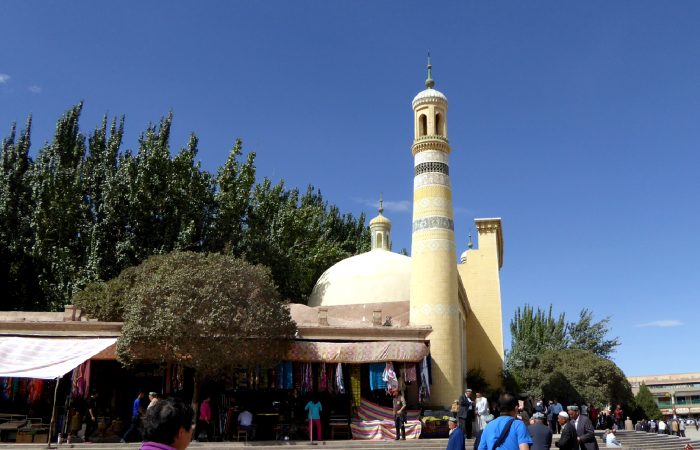
<p>Today belongs to Kashgar — the city that sat at the western end of the Silk Road for over 2,000 years and still feels, in its oldest quarters, like the place where China ends and Central Asia begins.</p><p>The morning opens at the Kashgar Old City (*KAH-shuh-gahr*), a labyrinth of mud-brick lanes, wooden balconies, and family courtyards that has been continuously inhabited for millennia. Your guide walks you through the narrow streets, pointing out the architectural logic — load-bearing walls of sun-dried brick, upper floors that lean over the lane for shade, and doorway carvings that indicate the family’s history. The visit lasts about 1.5 hours.</p><p>Continue to Gaotai Old Town (*gow-TAI*) — a hillside neighbourhood of brightly painted houses built directly into the cliff face, and the filming location for the award-winning film The Kite Runner. The architecture here is raw, layered, and photogenic — every angle reveals another combination of colour, texture, and lived-in character.</p><p>The afternoon brings Id Kah Mosque (*ee-dah KAH*) — the largest mosque in Xinjiang and one of the most important in China. The architecture combines Arabic and Uyghur styles, with a yellow-tiled facade and a prayer hall that can accommodate thousands. The visit lasts about forty minutes.</p><p>After dinner, you board the Panda Train for the overnight journey to Turpan — the gateway to Xinjiang’s Silk Road desert country.</p>
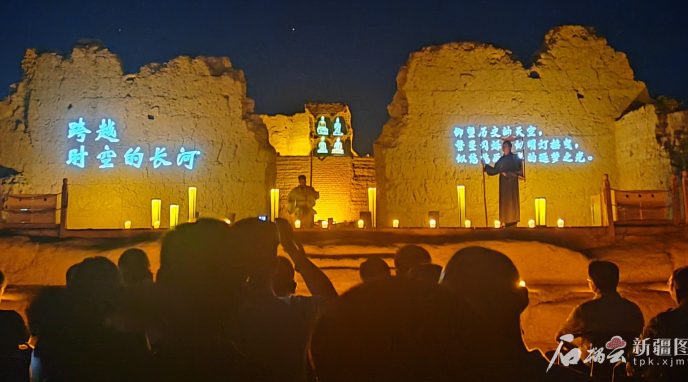
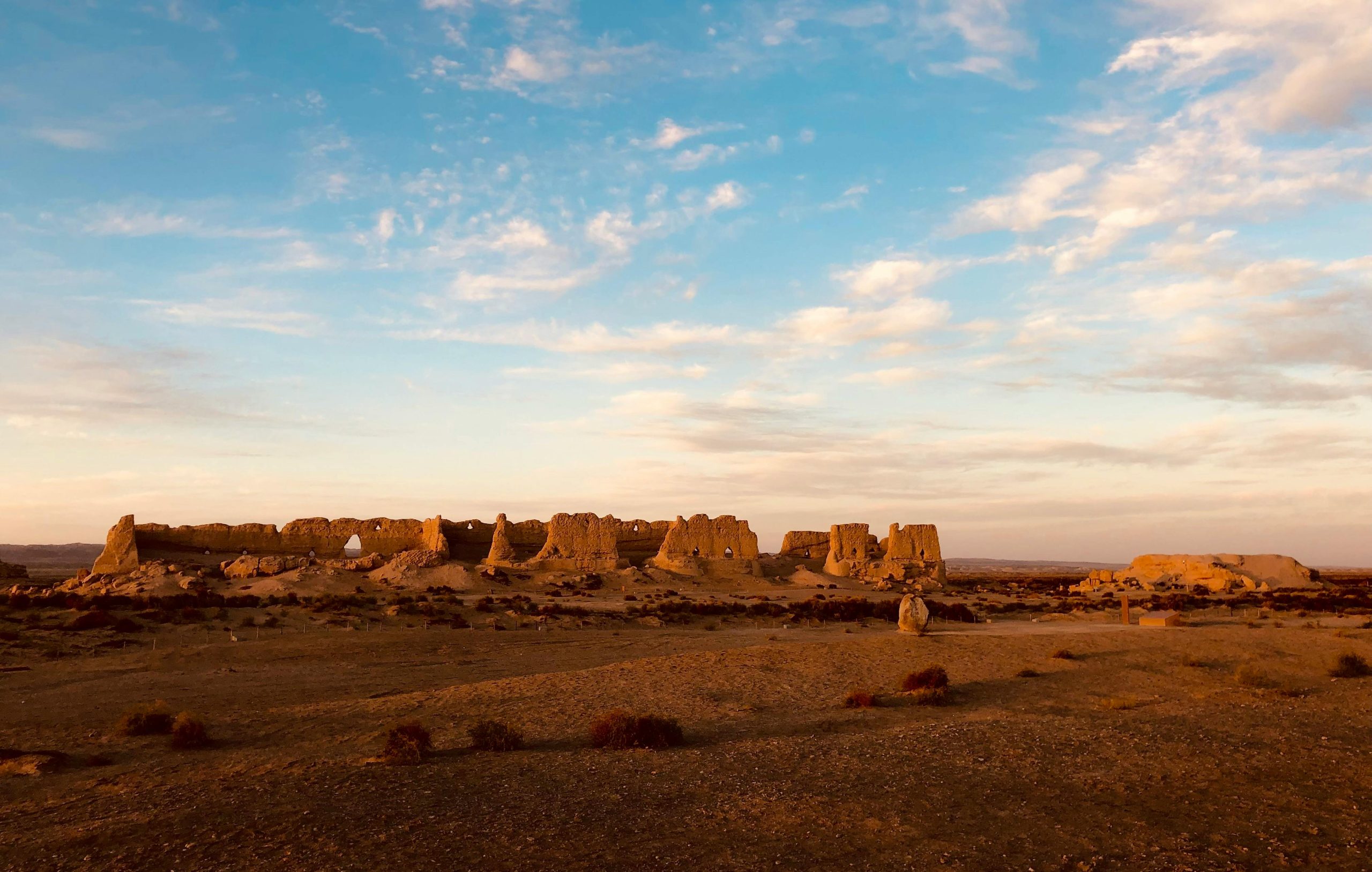
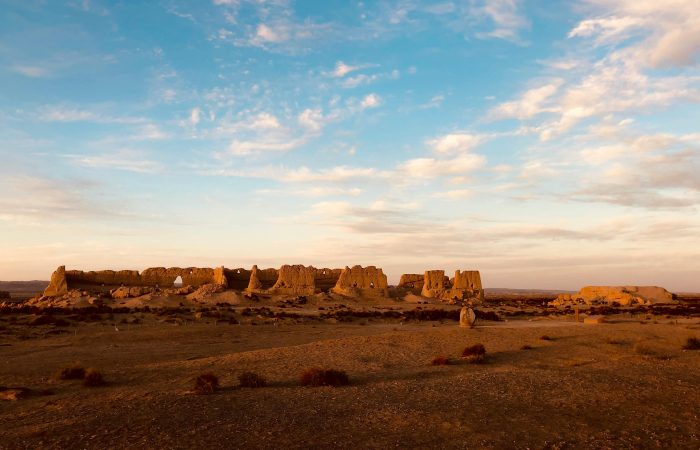
<p>The train arrives in Turpan, where you check into a hotel and take a short rest. The temperature here is a shock after the Pamir — Turpan sits in China’s hottest basin, a place where summer ground temperatures rival the Sahara.</p><p>The signature experience comes in the evening. As the sun drops and the desert heat finally relents, the group transfers to Jiaohe Ancient City (*jee-OW-huh*) — a 2,000-year-old fortress carved from a natural cliff island between two rivers. Once a garrison town on the Silk Road, Jiaohe’s earthen ramparts and street grid have survived intact in the bone-dry climate.</p><p>Here, as sunset cloaks the thousand-year-old walls in gold, you attend the Jiaohe Ancient City Concert — a live performance staged inside the ruins. The music rises from the same ground where Silk Road soldiers once stood watch, and the wind carries the sound across the ancient streets. This is not a stadium show — it is a conversation between history and the present, set against one of the most atmospheric backdrops in all of China.</p><p>Note: If the concert cannot be held due to weather (strong winds), an equivalent cultural performance by a local ethnic art group is arranged as a substitute.</p>
<p>After breakfast at the hotel, the morning begins at the Flaming Mountains (*huo yan shan*) — the red sandstone ridgeline that inspired the fire mountain chapter in Journey to the West. The mountains do not literally burn, but in summer the rock radiates heat that you can feel from the ground up. At the base stands China’s largest thermometer — a novelty, but the ground temperature readings (sometimes above 70°C) are genuinely startling.</p><p>At midday, the group is treated to a Turpan fruit feast — grapes, melons, figs, and dried fruits from the oasis farmlands around the city. Xinjiang is called the land of fruits, and Turpan’s extreme heat and irrigation produce some of the sweetest fruit in the country.</p><p>The afternoon brings the last major site: Karez (*KAH-rehz*) — Xinjiang’s ancient underground irrigation system, an engineering achievement ranked alongside the Great Wall and the Grand Canal. The tunnels carry snowmelt from the Tianshan to the desert oasis fields below, entirely by gravity, through channels that can stretch for kilometres underground. The visit lasts about thirty minutes and includes a walk through a section of the tunnel.</p><p>You then transfer to Turpan Railway Station and board the Panda Train for the return journey.</p>
<p>The train runs through the day and night on the return journey to Chengdu or Lanzhou. On board, the rhythm of the train takes over one last time: meals in the dining car, the reading corner, and the Gobi landscape rolling past the window as the journey winds down.</p><p>This is a day for reflection — processing the scale of what you have seen, sorting through your photos, and letting the pace slow before re-entry. The crew organizes farewell activities as the route crosses back through the northwestern corridor.</p>
<p>The Panda Train arrives at its destination station in Chengdu or Lanzhou. After a final breakfast on board, you disembark and conclude a journey that has covered the full breadth of Xinjiang — from alpine lakes and nomad villages to Silk Road fortresses and the edge of Central Asia.</p><p>Guests arrange their own onward transport from the station. For those with late flights, the city offers a last morning of exploration before departure.</p><p>Note: Lunch and dinner are not included on Day 16.</p>