Login
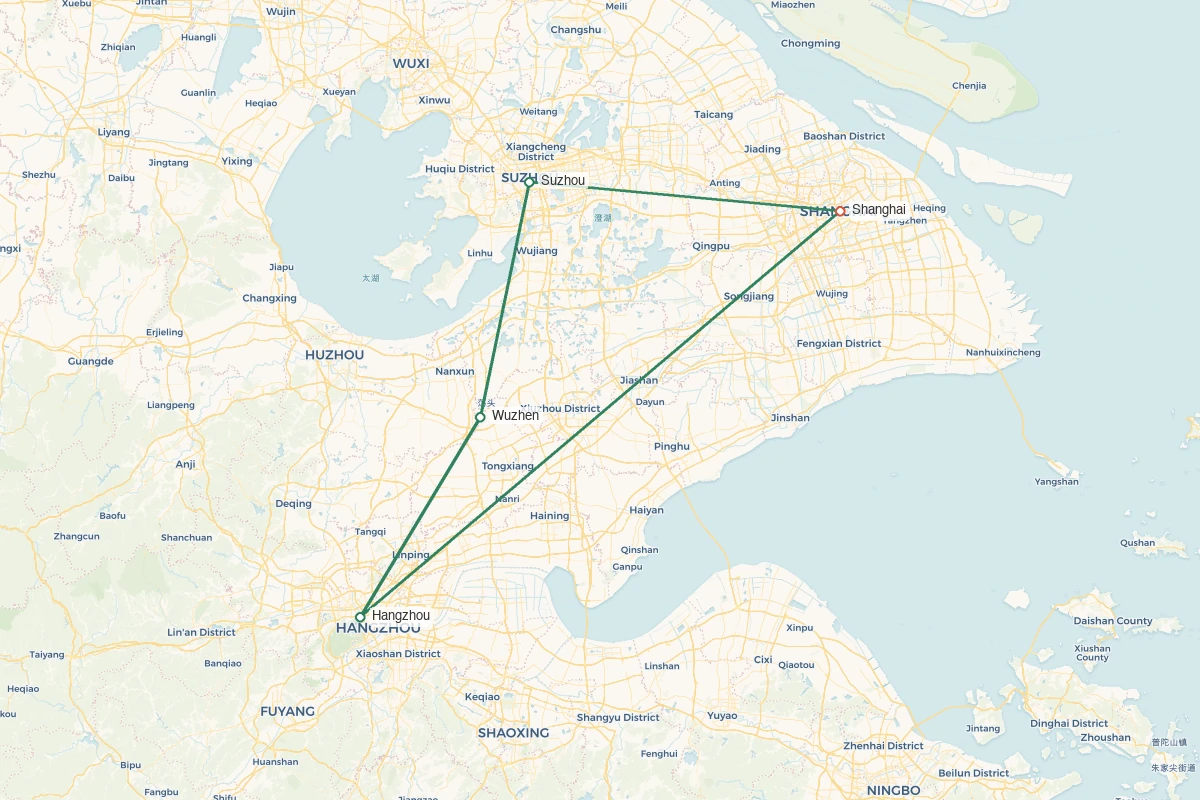
Twelve days across the three cities that define the Jiangnan cultural region — Shanghai’s modern skyline and old-world Bund, Suzhou’s classical gardens and canal lanes, the lantern-lit water town of Wuzhen, and Hangzhou’s West Lake.
The route opens in Shanghai with the Bund, a Huangpu River night cruise, the 100th-floor observation deck of Shanghai Tower, the Yu Garden bazaar, the maglev, and a science museum day for travellers who want more than postcards. Suzhou slows the pace with the Humble Administrator’s Garden, I.M. Pei’s Suzhou Museum, Hanshan Temple, and an evening on Shantang Street. A night at Wuzhen West Scenic Area lets you walk a 1,300-year-old water town after the day crowds leave. Hangzhou closes the route with West Lake at a walking pace, Lingyin Temple, a wetland boat through Xixi’s channels, a Dragon Well tea-picking session, a silk tie-dye workshop, and a final evening of Qianjiang skyline lights.
Your guide meets you at arrivals in Shanghai — whether you land at Pudong International or Hongqiao, a private car is waiting. From here, everything is handled.
The drive to your hotel takes about an hour depending on traffic. After check-in, the rest of the day is yours to recover from the flight and adjust to local time. Your guide is available if you’d like a restaurant recommendation for dinner. No fixed programme today — the journey ahead is full enough.
After breakfast, the morning opens on Wukang Road (*Wukang Lu*) — the leafiest stretch of the former French Concession, where plane trees arch over Art Deco mansions and 1920s apartment houses. The block centres on the Wukang Building, the ship-prow apartment block at the intersection of six streets, and the cafes spilling onto the sidewalks define one of Shanghai’s quietest old-world textures. Your guide picks out the architectural details and tells the stories of the writers, actors, and exiles who lived along the road.
Lunch nearby, then a slow afternoon on Nanjing Road Pedestrian Street (*Nanjing Lu*) — Shanghai’s main shopping artery for more than a century, where old Chinese department stores, century-old confectioners, and modern brand flagships line up shoulder to shoulder. A good stretch to feel the city’s commercial rhythm without rushing.
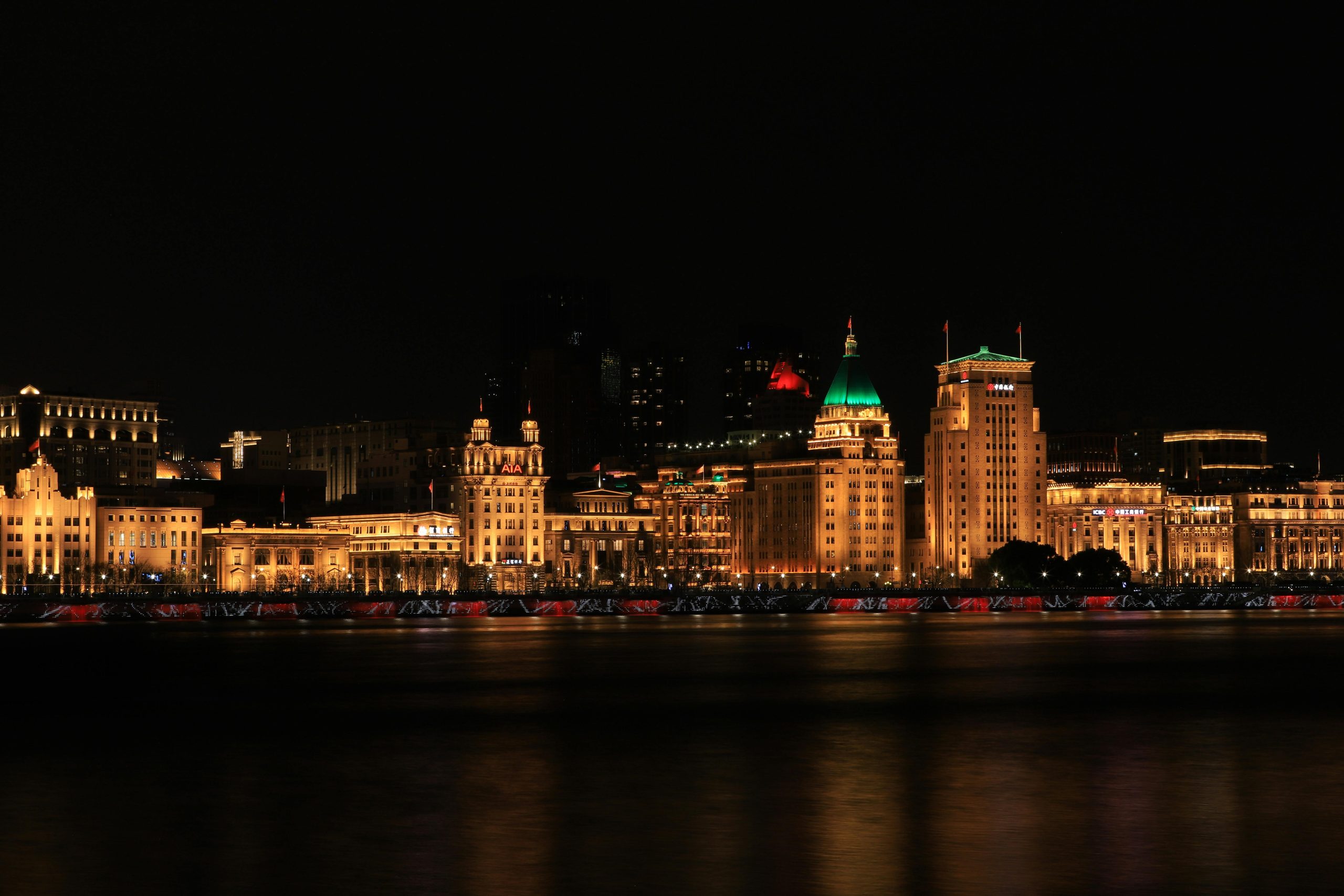
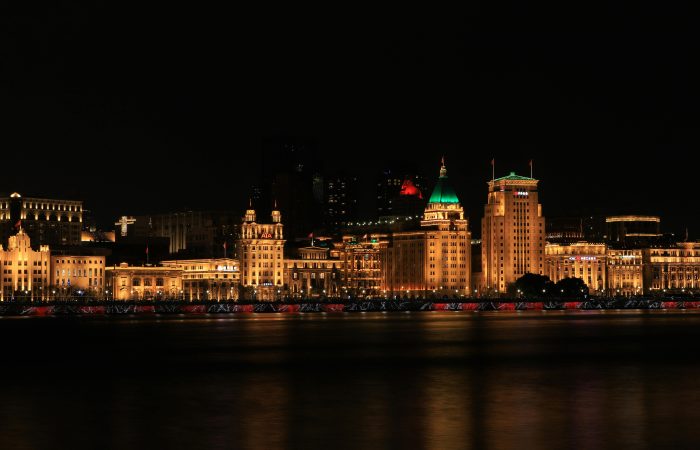
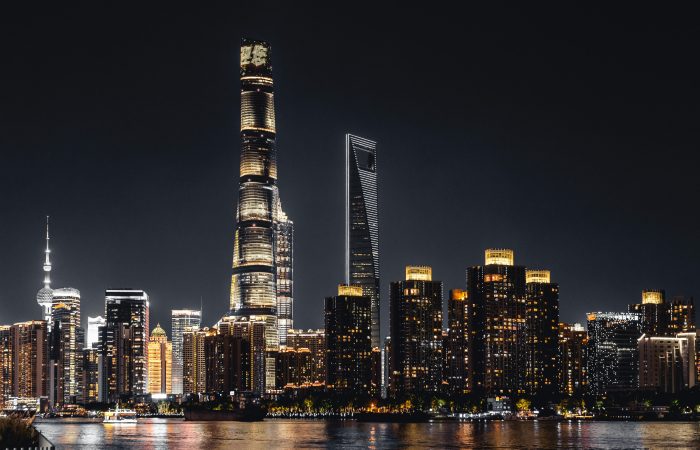
As the light softens, the day shifts to The Bund (*Waitan*) — Shanghai’s colonial riverfront, where 52 heritage buildings face the Pudong skyline across the Huangpu River. A walk along the promenade as the towers light up one by one is the simplest introduction to Shanghai’s dual personality.
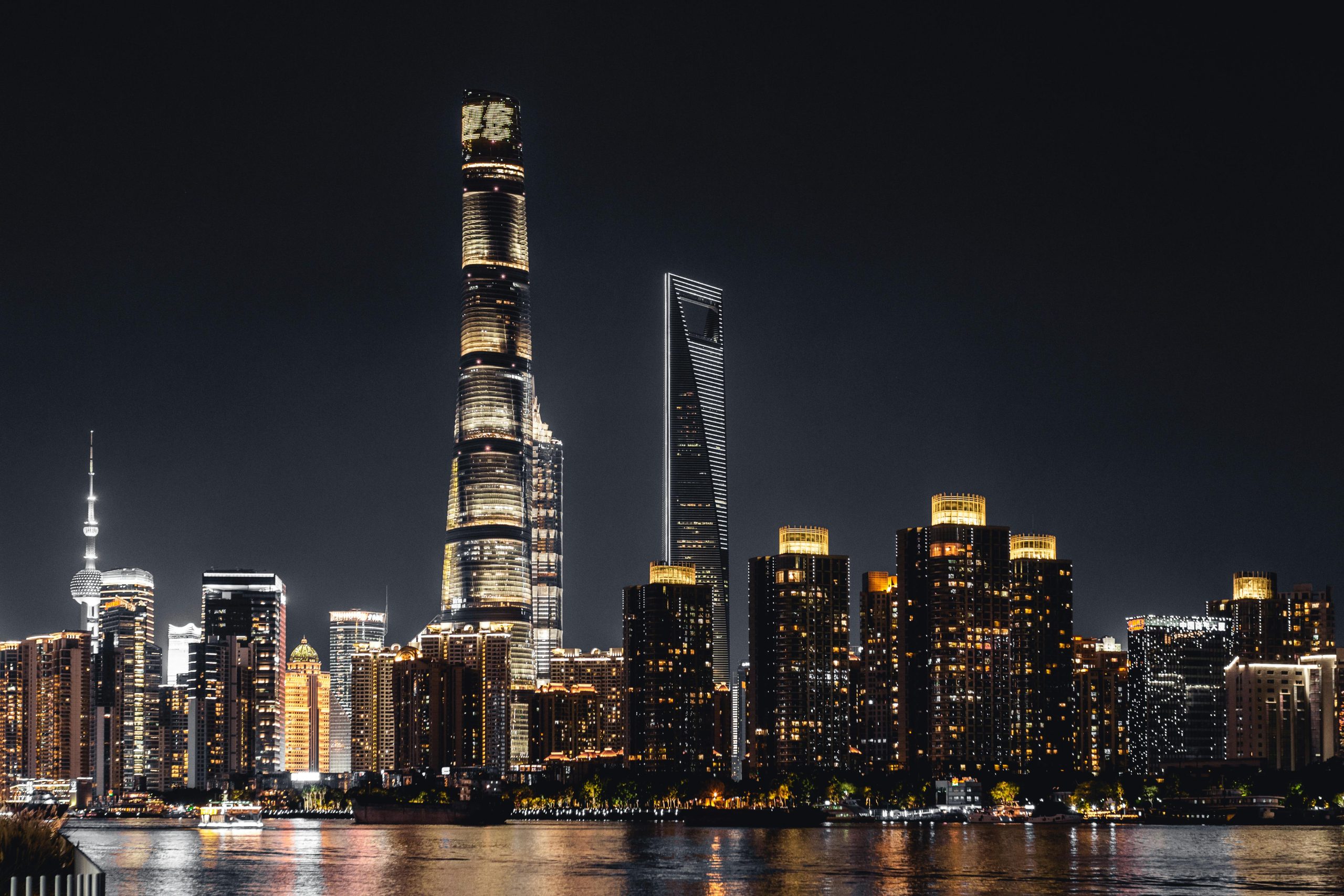
The evening closes with a Huangpu River night cruise — about 90 minutes on the water, with the Bund’s neo-classical heritage row on one side and Pudong’s lit-up skyscrapers on the other. The dual skyline is best from the boat.
The morning starts with the Shanghai Tower (*Shanghai Zhongxin Dasha*) — China’s tallest skyscraper at 632 metres. A high-speed elevator carries you to the 100th-floor observation deck for a full panorama of Lujiazui’s skyscraper cluster, the curve of the Huangpu River, and the Bund’s heritage row spread out below.
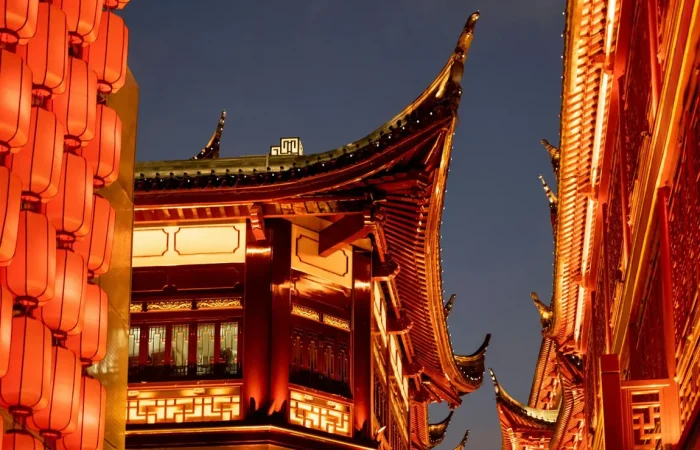
Lunch is at Yu Garden (*Yuyuan*) and the City God Temple Bazaar (*Chenghuang Miao*), where the lanes wind between Ming-dynasty pavilions and lattice windows. The garden itself is small but layered — a classical Jiangnan pavilion-and-pool design squeezed into the heart of Shanghai’s old town. The surrounding bazaar is famous for Nanxiang xiaolongbao (*Nanxiang Xiaolongbao*) — soup-filled steamed buns served in bamboo baskets — and other Shanghai snack-stand classics.
In the afternoon, a short detour to Longyang Road Station for a Shanghai Maglev ride — the world’s first commercial magnetic-levitation line, covering the 30-kilometre run to Pudong International Airport in eight minutes at a top speed of 431 km/h. A round trip is included.
Later, the city’s sightseeing double-decker bus covers a slow loop through the urban core for a different angle on the streets.
The evening lands at Xintiandi — a block of Shanghai’s original shikumen townhouses (stone-gate lane dwellings) restored as a pedestrianised quarter of cafes, galleries, and independent boutiques. Dinner is here, in a 1920s lane building converted into a Shanghai-style dining room.
After breakfast, the morning opens at a new-energy vehicle showcase — a Shanghai exhibition centre dedicated to the wave of electric and hybrid cars now reshaping Chinese roads. Interactive displays cover battery technology, autonomous driving systems, and the design language of the latest models from Chinese makers. The visit is a glimpse of where the country’s automotive industry is moving — a topic most travel itineraries skip.
Lunch nearby.
The afternoon belongs to the Shanghai Science and Technology Museum (*Shanghai Keji Guan*) — China’s largest science museum, with permanent halls covering quantum physics, robotics, biodiversity, and space exploration. The hands-on exhibits and a 4D film are the centrepieces; the layout is designed so curious adults and travelling families both find their own pace. About four and a half hours on-site lets you choose where to go deep rather than rush.
The early evening is free for an unhurried dinner near the hotel before another night in Shanghai.
A morning drive of about 90 minutes brings you to Suzhou — the canal-and-garden city built on a Tang-dynasty street plan. Lunch is Suzhou-style cuisine on arrival.
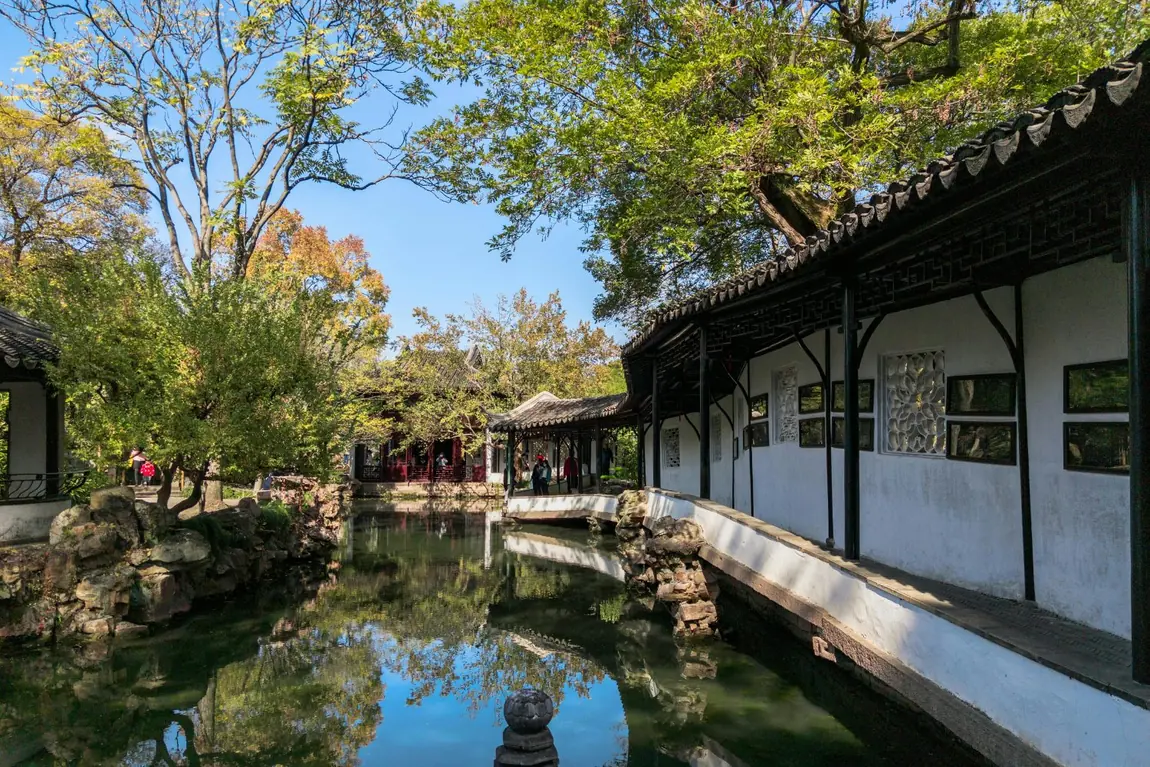
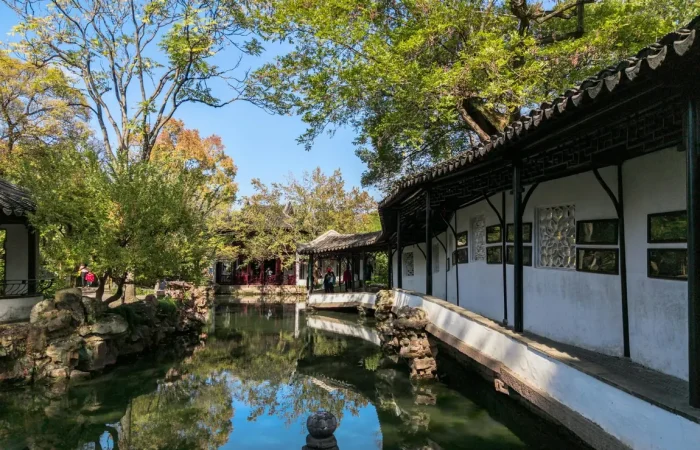
The afternoon moves to the Humble Administrator’s Garden (*Zhuozheng Yuan*) — the largest of Suzhou’s classical gardens and a UNESCO World Heritage site. Built in 1509 by a retired Ming-dynasty official, the garden covers 52,000 square metres of water pavilions, bridges, and connected islands, designed around the idea that wandering it should feel like moving through a Chinese landscape painting. Your guide traces the design logic as you walk — how each pavilion frames a different view, why the rocks are arranged the way they are, what the poetry carved on the lintels says.
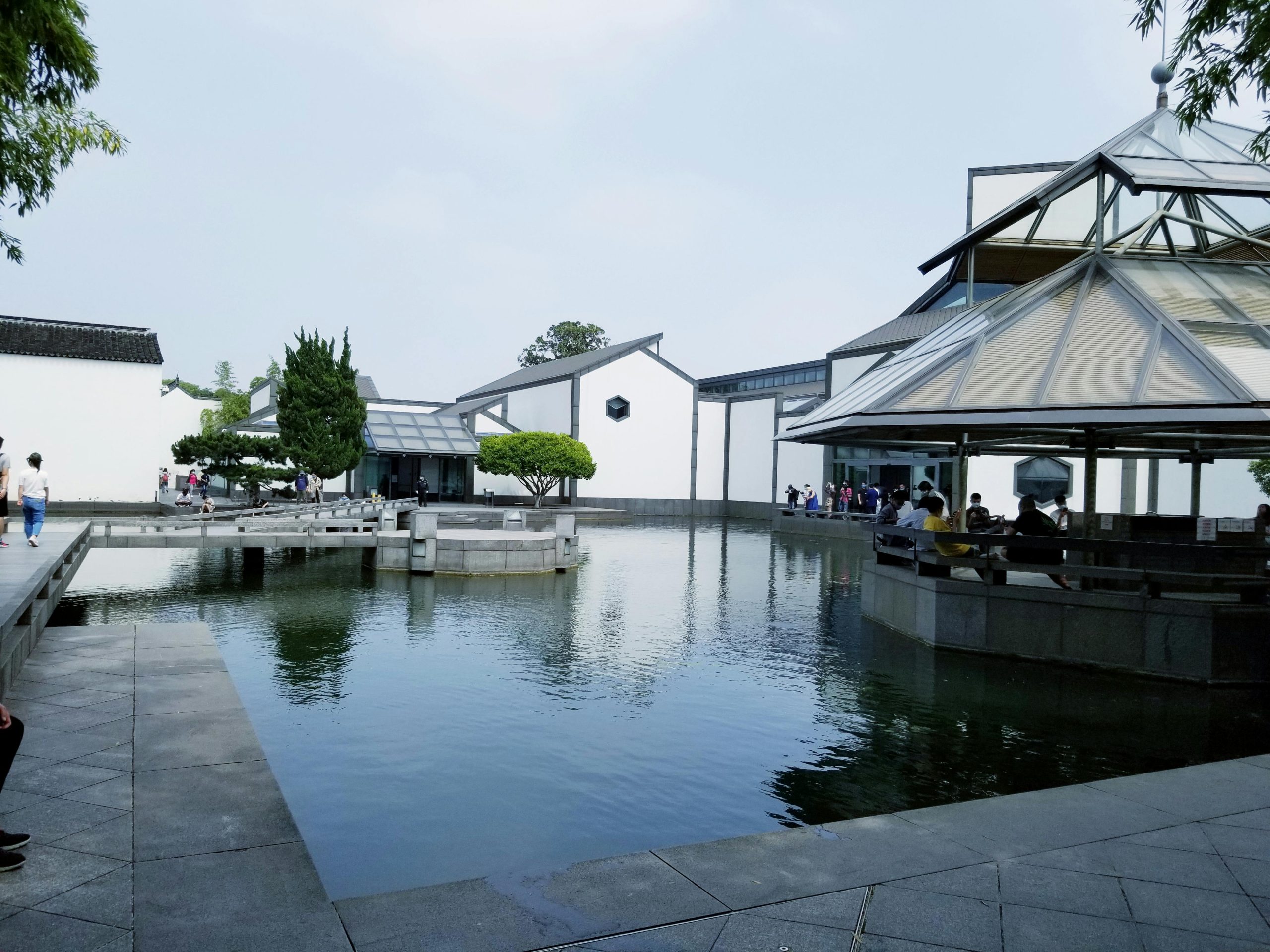
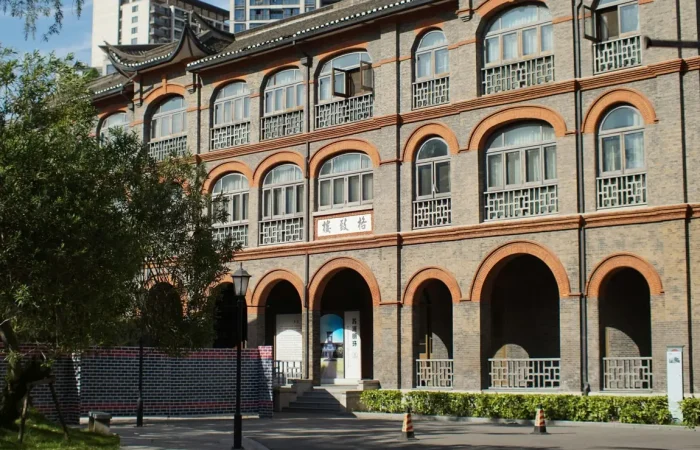
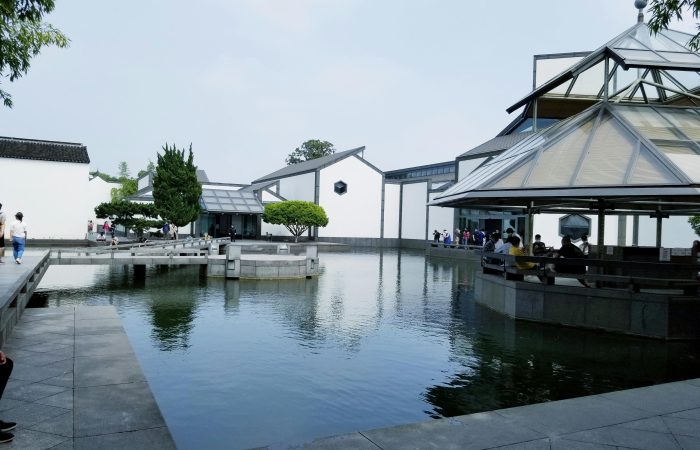
Next door is the Suzhou Museum — the final major work of Chinese-American architect I.M. Pei, completed in 2006. Its white walls, geometric skylights, and grey-tile roofs translate the language of classical Suzhou gardens into a modernist museum. The collection focuses on regional paintings, calligraphy, crafts, and archaeological finds. The museum is free with advance booking, which your guide handles.
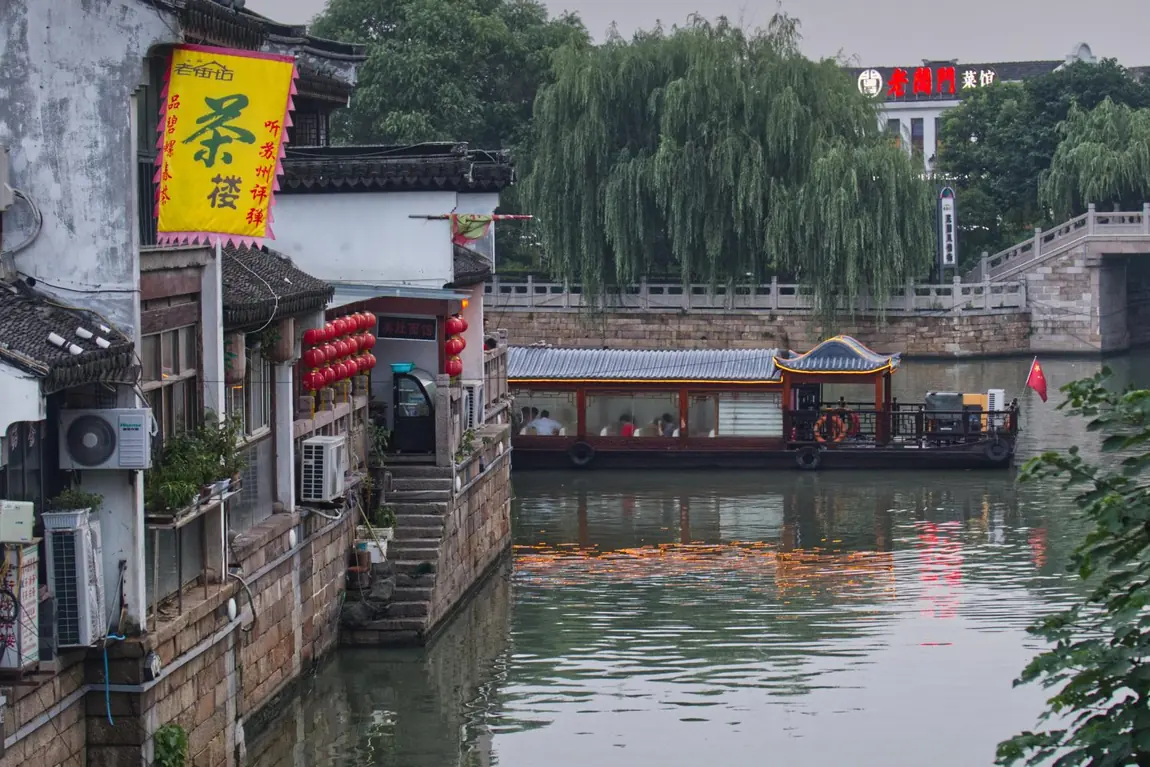
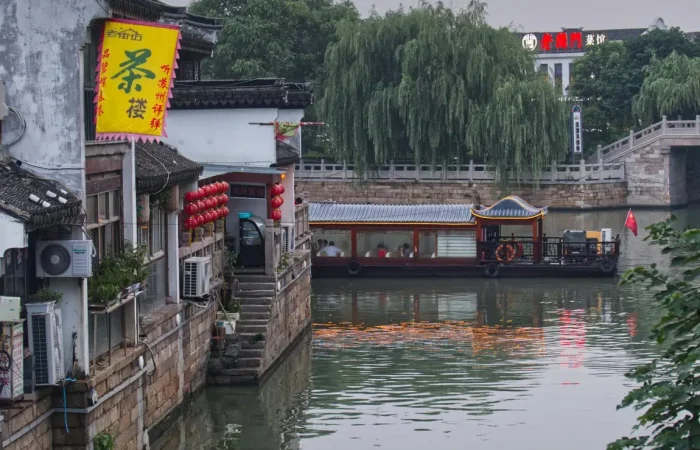
The day closes with an evening walk on Shantang Street (*Qili Shantang*) — a 1,200-year-old canal street commissioned by Tang-dynasty poet Bai Juyi when he served as governor of Suzhou. Red lanterns reflect on the water, and the night view of Shantang’s stone bridges and shop-house facades is one of the city’s classic scenes.
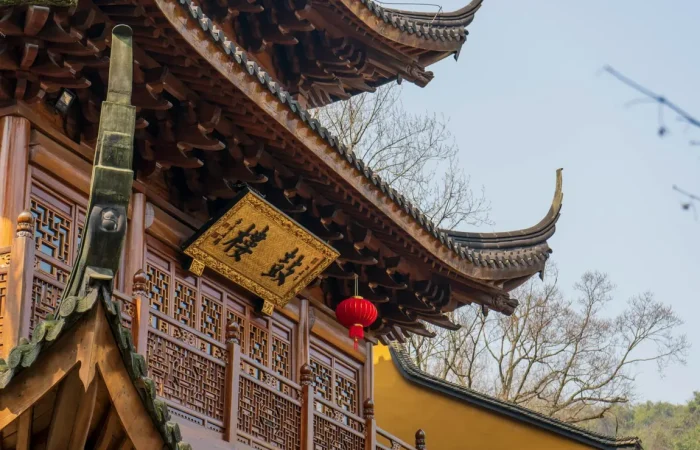
The morning begins at Hanshan Temple (*Hanshan Si*) and the adjacent Maple Bridge Scenic Area (*Fengqiao Jingqu*) — the Tang-dynasty Buddhist temple immortalised by the poet Zhang Ji in A Night Mooring by Maple Bridge, one of the most-quoted classical Chinese poems. The bell tower, the stone-arched bridge, and the calligraphy stones from a thousand years of pilgrims make this the most literary of Suzhou’s temples.
The rest of the morning unfolds on Pingjiang Road (*Pingjiang Lu*) — Suzhou’s best-preserved canal-side lane, where the Song-dynasty street plan has survived unchanged for 800 years. Stone bridges arch over the canal at each block, and the lane is lined with tea houses, small craft workshops, and family-run shops. A traditional Suzhou pingtan performance — a regional storytelling and ballad form combining the pipa and the sanxian, sung in Suzhou dialect — is staged over tea at one of the lane’s heritage tea houses. Your guide provides English context before the performance so the lyrical content lands.
Lunch nearby.
The afternoon shifts modern. The Gate of the Orient (*Dongfang Zhi Men*) — Suzhou Industrial Park’s signature inverted-arch skyscraper — anchors a panoramic photo stop on the new-city skyline. Across the water, the Jinji Lake (*Jinji Hu*) waterfront opens out as the evening lights come up. A slow walk along the promenade and an illuminated lake-view dinner close the day.
A morning drive of about two hours takes you out of Suzhou and into Wuzhen (*Wuzhen*) — the 1,300-year-old water town on the canal grid south of the Yangtze. Lunch is a local Wuzhen menu on arrival.
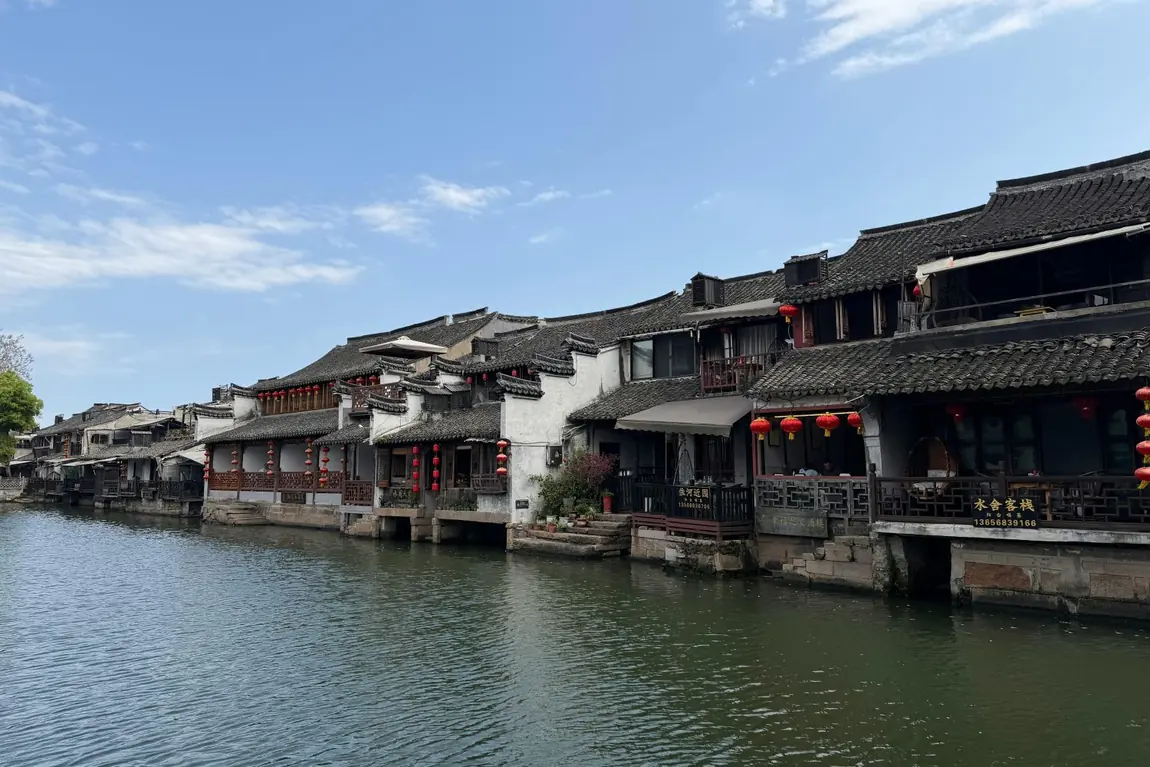
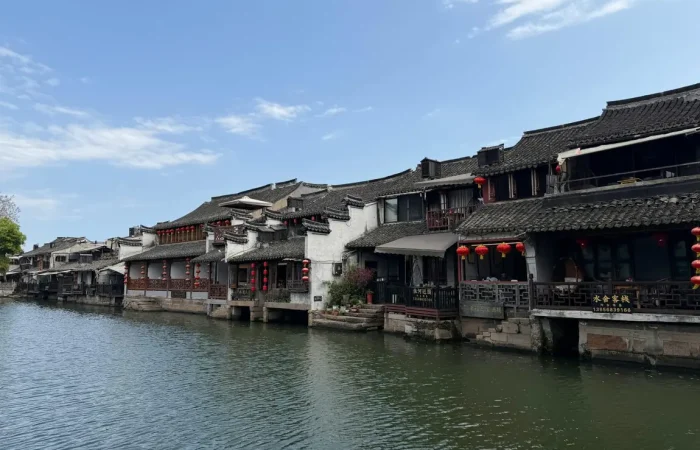
The afternoon walks the East Scenic Area (*Dongzha*) — the original lived-in side of Wuzhen, where stone-bridge alleys, dye-cloth racks, and a still-working shadow-puppet theatre sit alongside the home and museum of Mao Dun, the 20th-century writer who grew up here. The whitewashed walls, black-tile roofs, and willow trees over the canal define the look of Jiangnan water-town life.
The day’s flagship is the West Scenic Area (*Xizha*) — the more atmospheric, more restored half of Wuzhen, where the canal lanes light up at dusk with red lanterns reflecting in the water. Most day-tour visitors leave by early evening; because tonight’s hotel is just outside the West Scenic Area entrance, you stay on. The lanes empty, the boats slow on the canal, and the photography hour begins. Dinner is at one of the West Scenic Area’s canal-side restaurants.
A morning drive of about two hours brings you to Hangzhou — the southern Song-dynasty capital and home to the UNESCO-listed lake that has shaped a thousand years of Chinese landscape poetry. Lunch beside West Lake on arrival.
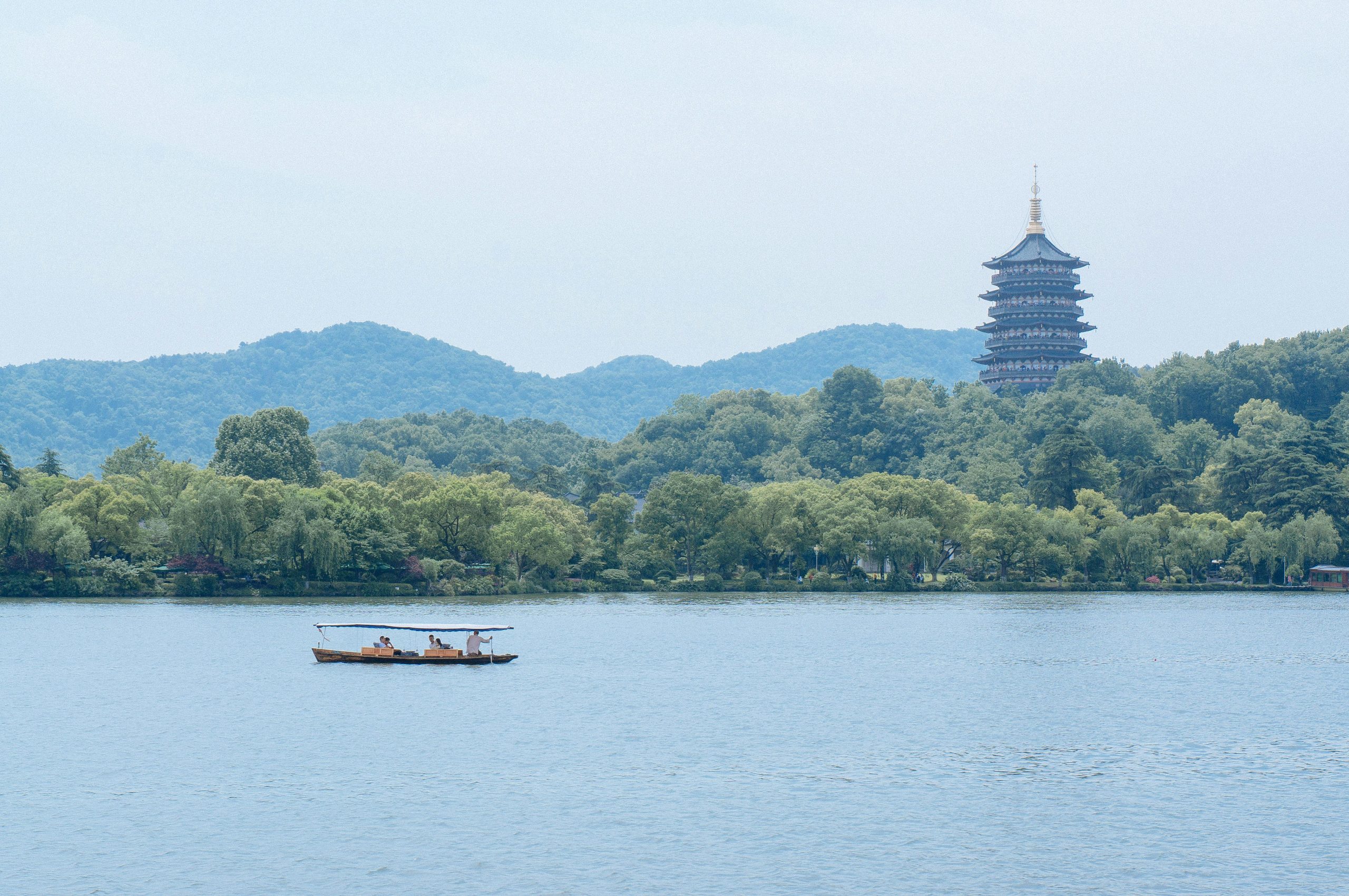
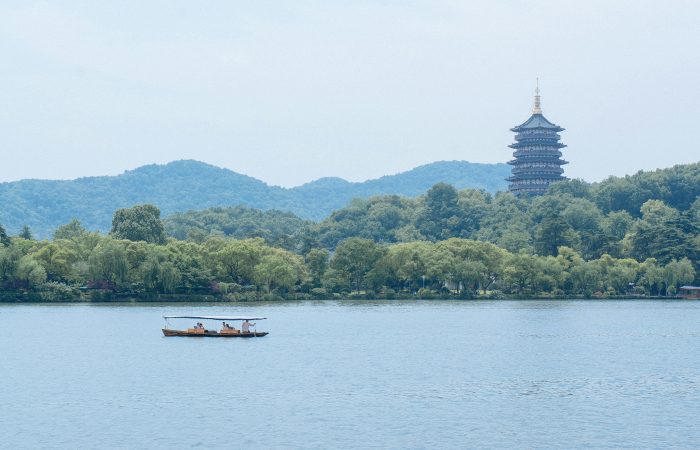
The afternoon belongs to West Lake (*Xihu*). A slow walk traces the lake’s two historic causeways — the Broken Bridge (*Duanqiao*), famously associated with the winter-snow vista in Legend of the White Snake, marks the start; the willow-lined Bai Causeway (*Baidi*) and Su Causeway (*Sudi*) — the latter built by Song-dynasty poet Su Shi — lead across the water. A lake-crossing boat carries you to Xiao Ying Zhou (Small Fairy Island) for a view of the Three Pools Mirroring the Moon (*San Tan Yin Yue*) — the three stone pagodas in the water that appear on the back of the 1 yuan note. The Flower-Viewing Pond at Hua Gang (*Hua Gang Guan Yu*) finishes the lake circuit with carp and lotus reflections.
A short West Lake bicycle ride along the lake-edge path covers the stretch between the major scenic points.
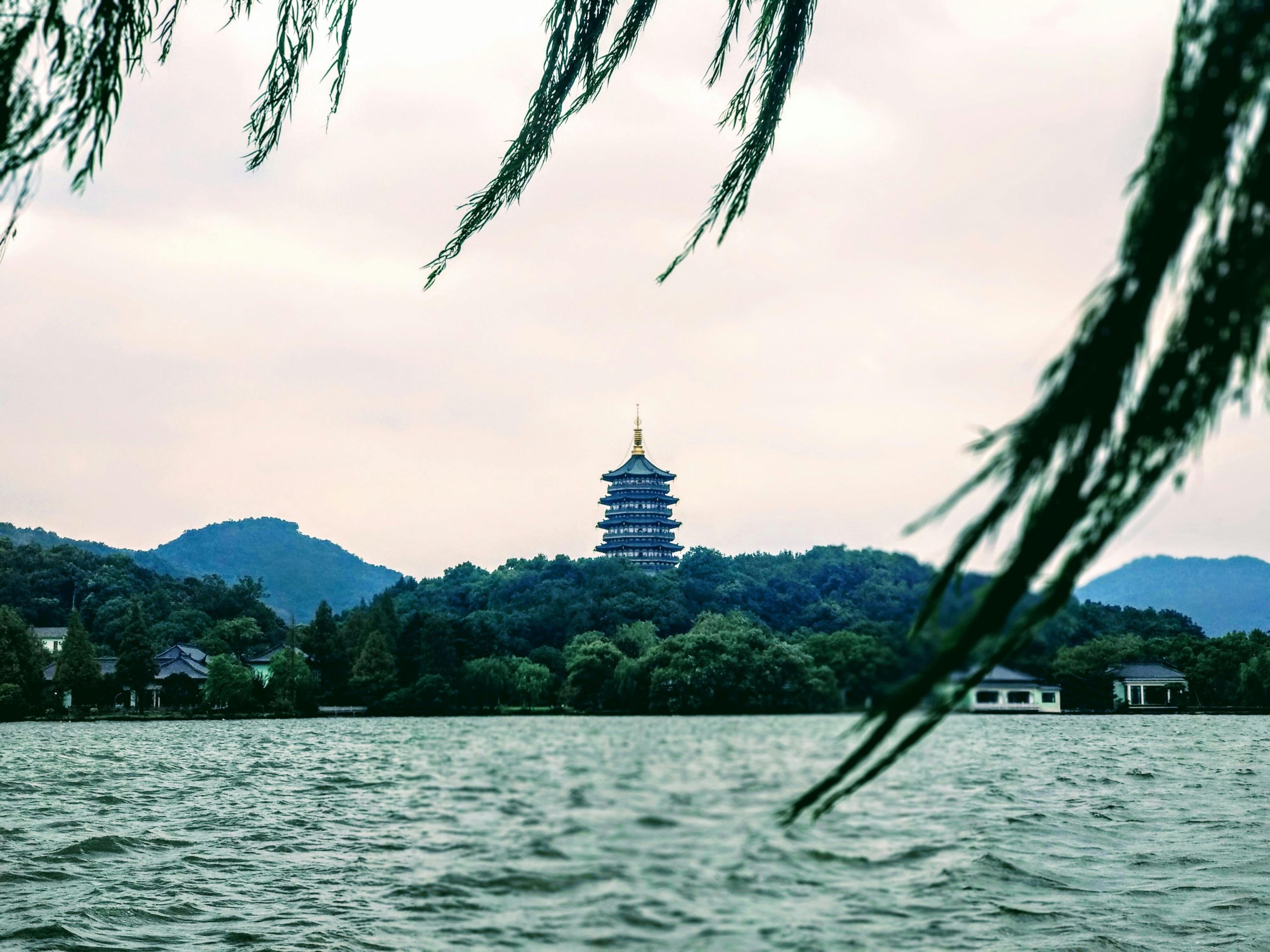
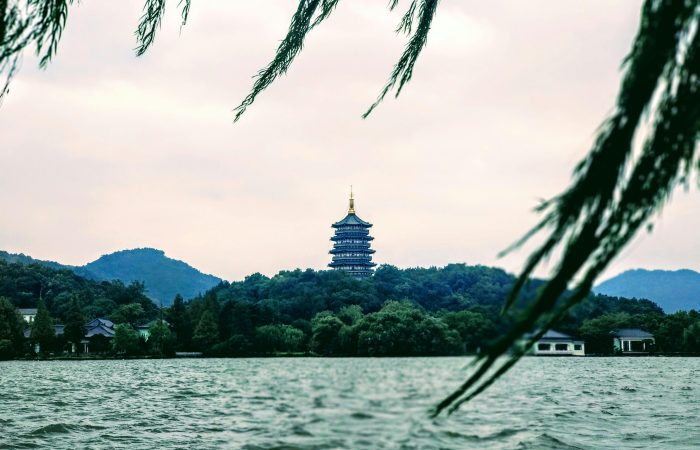
As the light shifts gold, the day closes at Leifeng Pagoda (*Leifeng Ta*) — the recently rebuilt riverside pagoda whose Song-dynasty original collapsed in 1924 after standing for nearly a thousand years. The top floor gives a near-panoramic view of West Lake at sunset, with Baoshu Pagoda directly opposite on the northern shore.
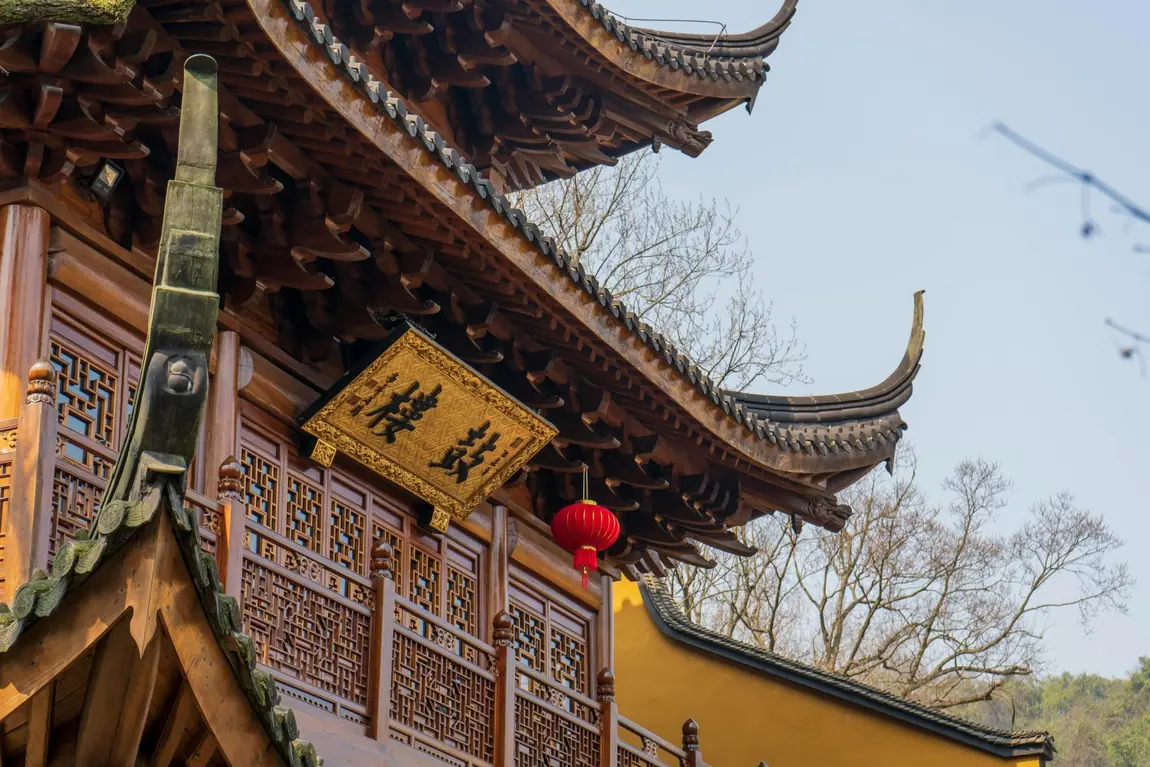
The morning begins at Lingyin Temple (*Lingyin Si*) — one of China’s oldest and most important Chan Buddhist monasteries, founded in 328 AD. The approach is through a forest of old camphor trees, past the Feilai Feng (*Peak Flown from Afar*) cliff, whose limestone face carries 470 Song and Yuan grotto carvings — one of the finest open-air Buddhist sculpture collections in the country. Inside the main hall, the 24-metre Śakyamuni Buddha — carved from camphor wood and finished in gold — is the largest seated wooden Buddha in China. A short uphill walk reaches the smaller Lingshun Temple (*Lingshun Si*) on the same mountain, where the woodland setting and prayer rituals make for a quieter, more reflective visit.
Lunch is a country-style menu near the Longjing tea fields.
The afternoon shifts to Xixi National Wetland Park (*Xixi Guojia Shidi Gongyuan*) — China’s first national wetland park and the green counterweight to West Lake, covering 11 square kilometres of interlocking waterways ten minutes from central Hangzhou. A small wetland boat takes the group through the inner channels — flat water, willow-lined banks, and water birds lifting off as the boat passes. The boat is shared by up to six guests in your private party, and a traditional tea-on-water experience (*Wo Shui Wen Cha*) is served on board.
The evening lands at Songcheng (*Song Cheng*) — Hangzhou’s Song-dynasty themed cultural park, where reconstructed Song-era streets, market stalls, and folk-arts demonstrations frame the park’s flagship Romance of the Song Dynasty (*Songcheng Qianguqing*) live performance — a one-hour music, dance, and stagecraft spectacle telling the story of Hangzhou through the dynasties. Dinner is at the park.
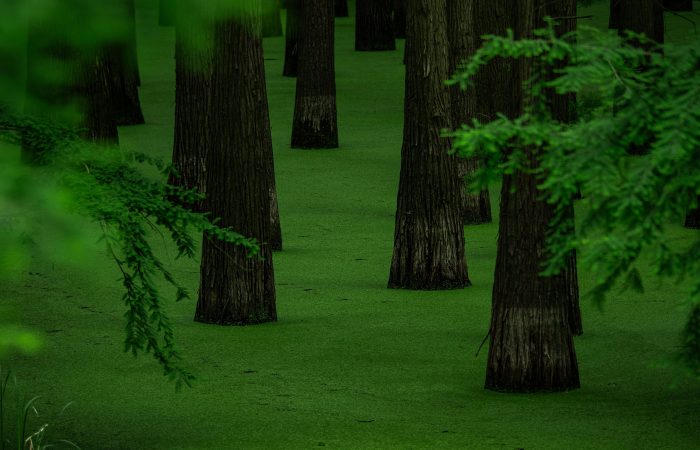
After breakfast, the morning opens with the Jiuxi Smoke Trees (*Jiuxi Yan Shu*) — a forested valley above West Lake where nine streams converge, named for the morning mist that rises through the camphor and pine. The 2.5-hour walk follows a paved forest trail past tea-garden terraces and small waterfalls. The grade is mild and the air is the freshest in Hangzhou.
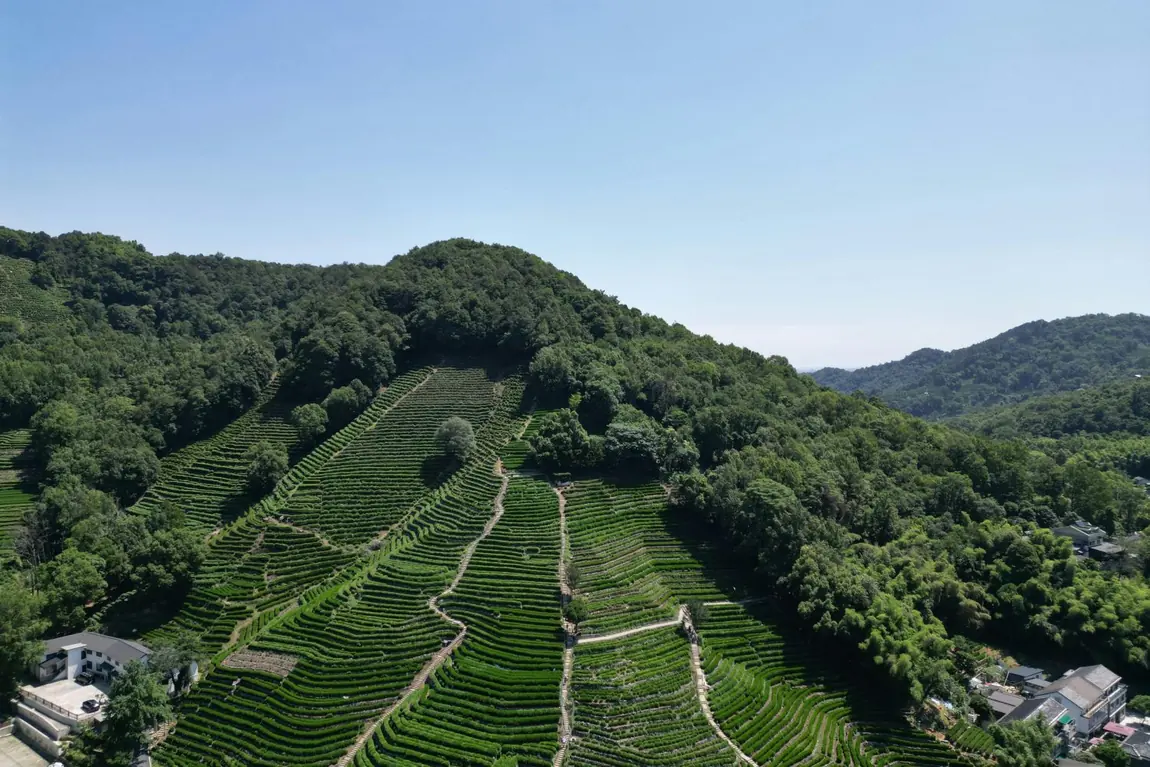
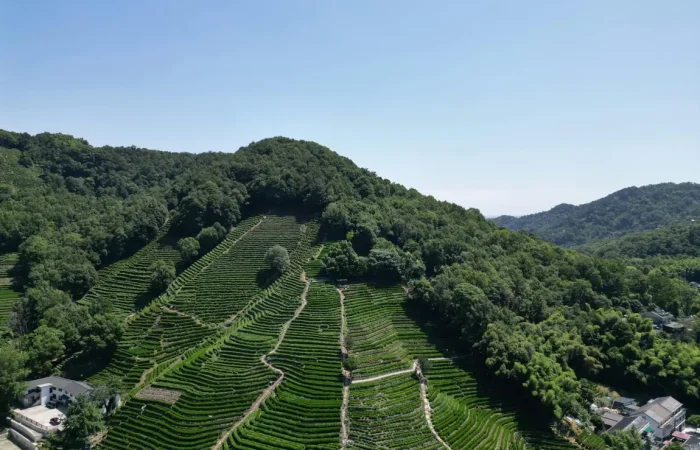
The trail emerges into the Longjing tea hills (*Longjing Cha Shan*) — the original tea gardens above Longjing village that have produced China’s most famous green tea since the Tang dynasty. A Dragon Well tea-picking session is the morning’s centrepiece: a local tea farmer shows you how to pick the young leaves correctly, demonstrates the simple wok-roasting process that follows, and pours fresh-roasted tea alongside a country-style lunch served at a tea farmer’s family home. (Tea-picking is seasonal — best in spring and early summer; in other seasons the focus shifts to tasting, the tea-hills walk, and the demonstration.)
After lunch, free time in the tea hills for photographs and rest.
The afternoon moves to Xiaohe Street (*Xiaohe Zhi Jie*) — a restored old canal street in northern Hangzhou where the city’s Grand Canal heritage is most visible. A short Grand Canal cruise (*Jing-Hang Da Yunhe*) covers a scenic stretch of the world’s oldest and longest canal — the Beijing-Hangzhou Grand Canal began under the Sui dynasty and is still a working waterway today. Dinner is on a small canal-side lane.
The morning belongs to the China National Silk Museum (*Zhongguo Sichou Bowuguan*) — the only state-level silk museum in China, set in a parkland campus on the south shore of West Lake. Its collections span 5,000 years of silk weaving and dyeing, from Han-dynasty fragments through Song court robes to contemporary couture. After a curator-led walk through the galleries, you sit at a workshop bench and tie-dye your own silk scarf using traditional natural-pigment techniques. The finished piece is yours to take home.
Lunch nearby.
The afternoon visits the Six Little Dragons Robot Town exhibition (*Liu Xiao Long Jiqi Ren Xiao Zhen*) at Xiaoshan Robot Town — a Hangzhou industrial showcase highlighting six of the city’s leading robotics companies, including humanoid-robot demonstrations and interactive automation displays. The exhibition operates with a 20-person group threshold; for private bookings below that threshold, your guide will substitute another Hangzhou cultural stop on the day — typically additional time at the Qianjiang New City viewing platform, an extended Grand Canal cruise, or a tea-house afternoon.
The day closes at Qianjiang New City (*Qianjiang Xincheng*) — Hangzhou’s new central business district on the north bank of the Qiantang River, redeveloped for the 2016 G20 summit. The Civic Centre balcony looks across the river to the Sun and Moon Pagodas, and as evening falls, the choreographed light show turns the skyscraper facades into a coordinated display visible across the river. A river-side dinner closes the Hangzhou chapter.
A relaxed breakfast and a slow morning to pack. Depending on flight schedule, your private transfer takes you to the airport — Hangzhou Xiaoshan International for direct return flights, or back to Shanghai (about 2.5 hours by road) for the international departure if no flight is available from Hangzhou. Your guide sees you through check-in and says goodbye.