

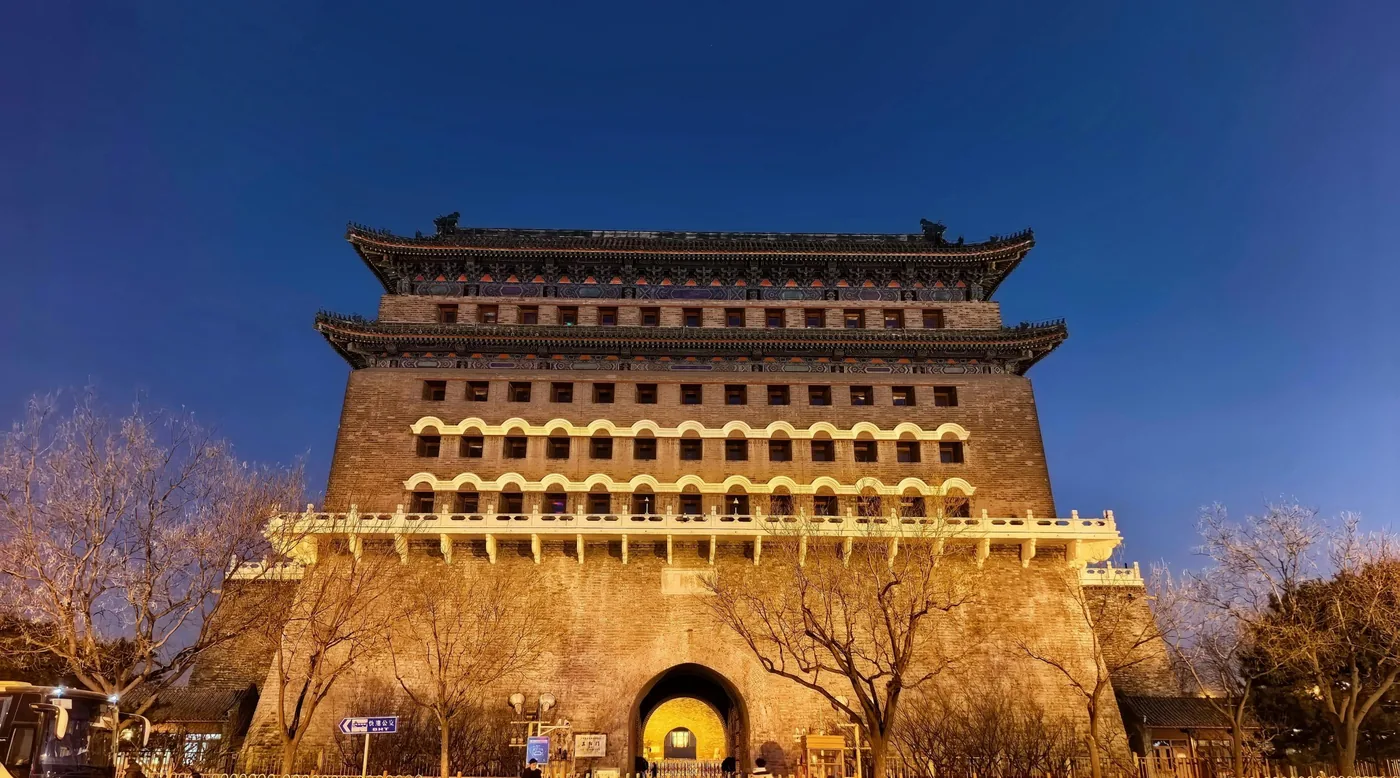
For a lot of foreign visitors, Beijing [bay-JING] (China’s capital) comes packaged as a city of emperors, walls, and giant ceremonial spaces. That image is real, but incomplete. If you want to feel how the capital once received ordinary commerce, food, movement, and theater at street level, Qianmen Street [chyen-MUHN] (前门, the old “Front Gate” district south of Tiananmen Square) is still one of the smartest places to walk.
The area can look easy to dismiss at first glance. There are visitors, shopfronts, and enough polished surfaces to make skeptical travelers worry that they are getting a packaged version of the city. But Qianmen Street becomes much more interesting once you stop asking whether it is “too touristy” and start asking what kind of urban memory it preserves. This was a threshold district: a place where movement into the old city met trade, food, services, and the dense practical life that big imperial monuments tend to hide.
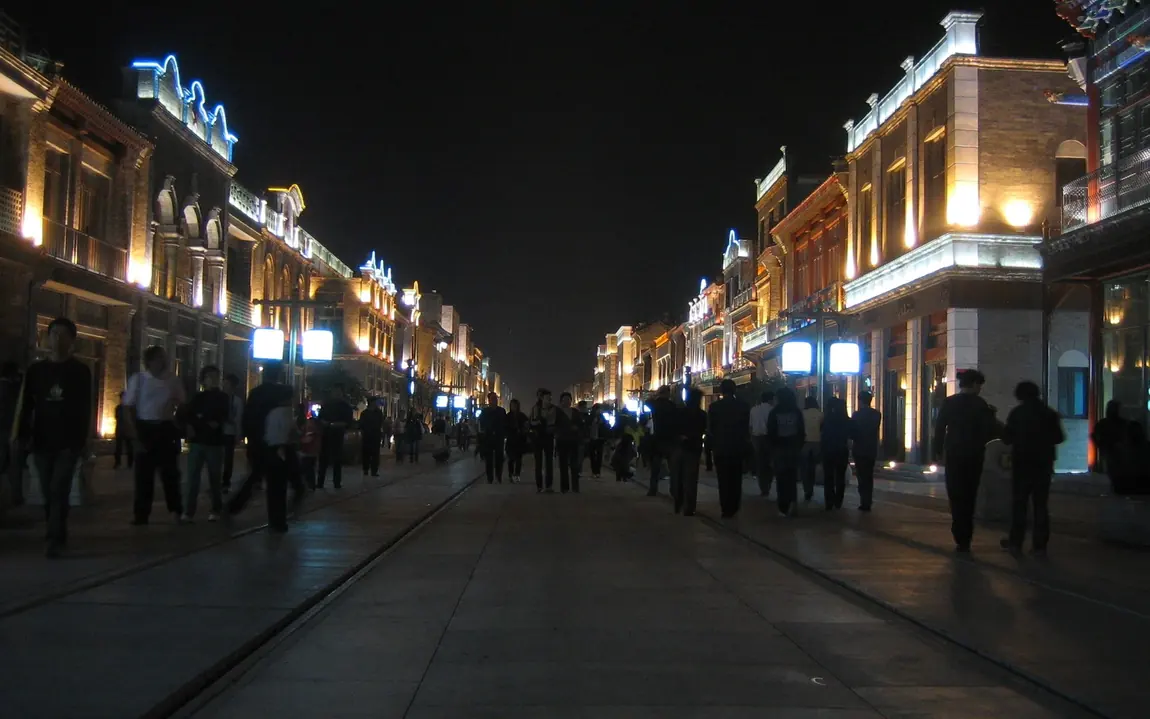
Qianmen Street Beyond The First Photo Stop
The famous gate and the broad shopping street are only the entry point. The richer experience begins when you treat the district as a sequence of connected textures. Move into Dashilar Street [DAH-shur] (大栅栏, also written Da Zhalan, a historic commercial street off Qianmen Street), then continue toward Xianyukou [shyen-yoo-KOH] (鲜鱼口, a long-running snack street in old Beijing). Suddenly the area stops feeling like a single attraction and starts reading like a compact lesson in how old Beijing organized commerce, specialty shops, and pedestrian flow.
That matters because Western coverage of Beijing often jumps between two extremes: either giant imperial icons or intimate hutong [HOO-tawng] (a narrow lane lined with courtyard homes). Qianmen Street fills the missing middle. It shows you a city that was not only ruled and inhabited, but also bought, sold, tasted, repaired, and performed. The district is commercial, yes, but that is exactly why it is historically useful.
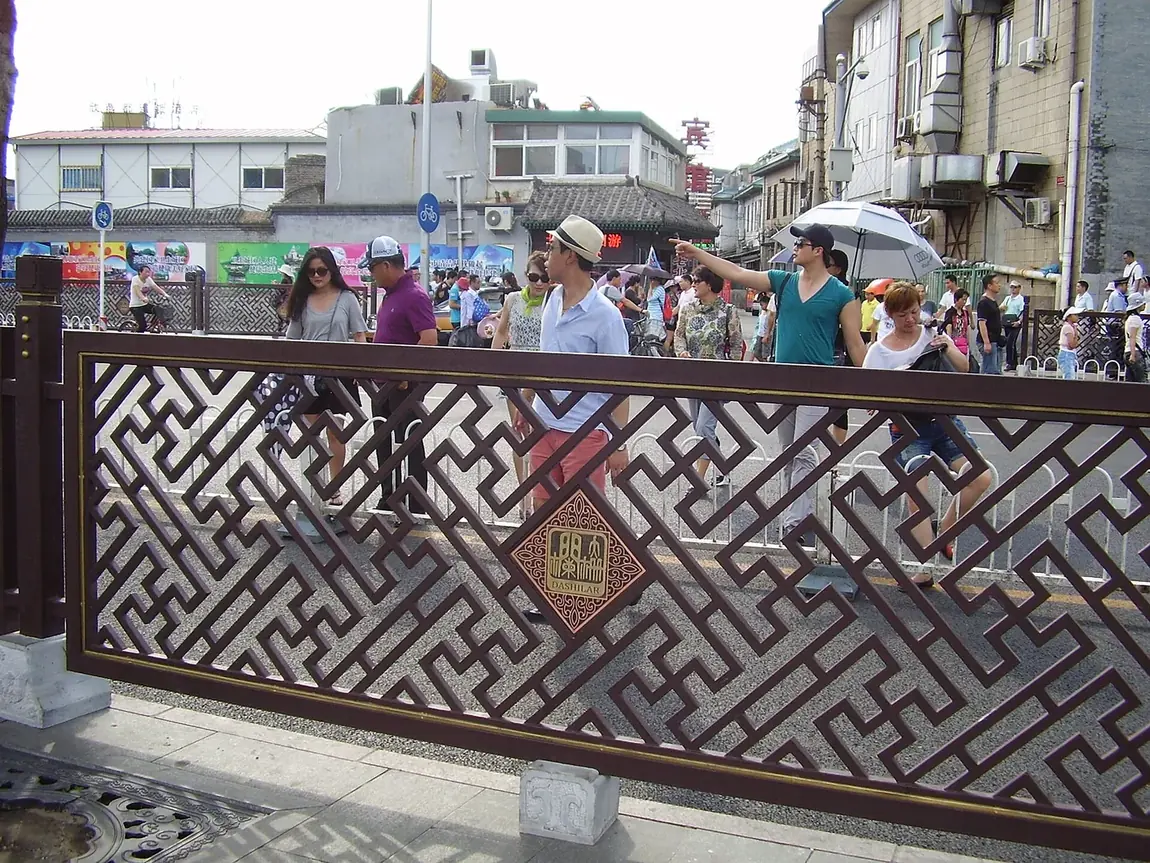
The Old-Brand Energy Is Part Of The Point
One reason the walk stays engaging is that the district still carries the atmosphere of laozihao [laow-dzuh-HOW] (time-honored Chinese brands and shops with long local reputations). Even when individual storefronts have changed, the area still encourages you to notice categories of trade rather than only landmarks: food alleys, medicinal shops, fabric and clothing traditions, snack culture, and the older logic of destination shopping before the city turned into a landscape of malls.
Qianmen Street works when you read it as old Beijing in motion, not as a frozen heritage façade.
That is also why the district pairs so well with nearby monumental Beijing. After Tiananmen Square, palace compounds, or museum-heavy stops, Qianmen Street returns the city to body level. You pay attention to thresholds, signs, aromas, snack queues, storefront depth, and the small decisions people make while walking. This is not the Beijing of state ceremony. It is the Beijing of circulation.
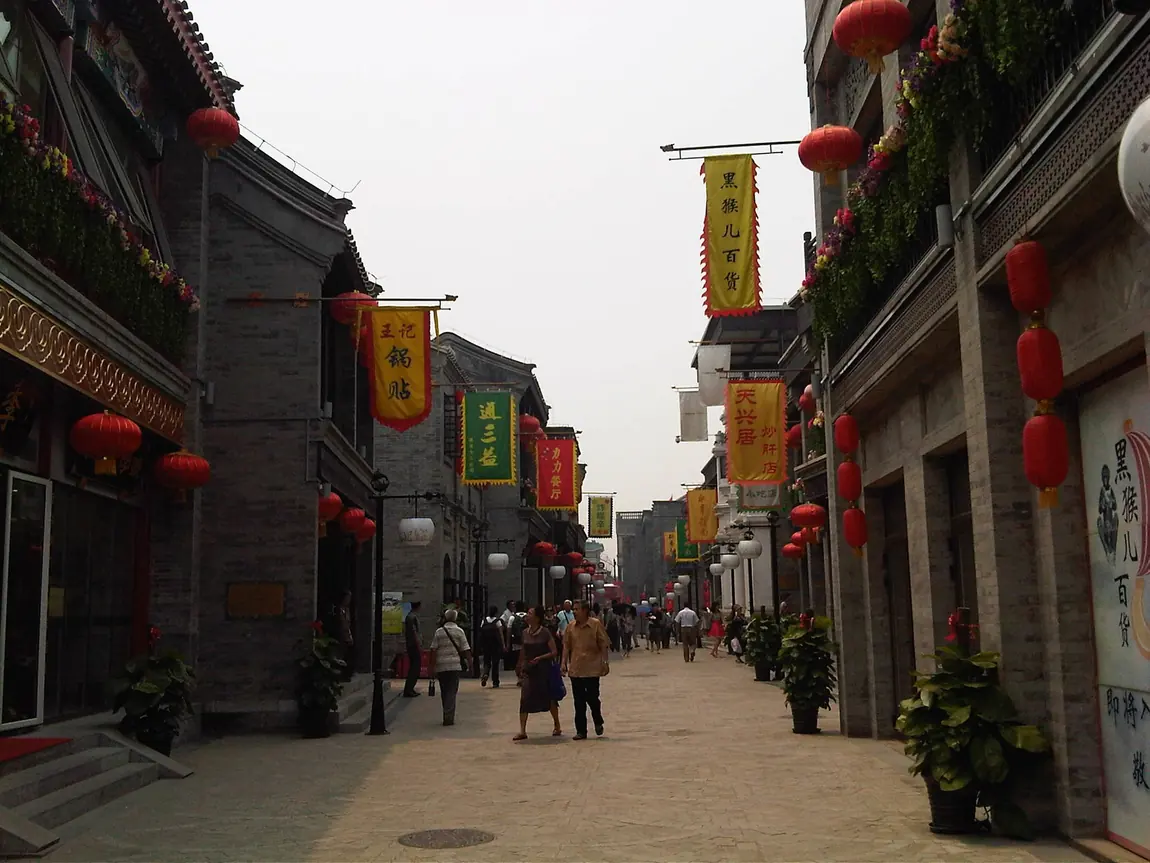
What Foreign Visitors Usually Get Wrong
The common mistake is to assume that a commercial district cannot also be culturally revealing. But cities are often most honest where they transact. Qianmen Street does not need to be perfectly untouched to matter. Its value is that it still teaches you how older Beijing connected prestige, convenience, appetite, and urban movement. If you arrive expecting silence, you may miss the point. If you arrive expecting density and historical residue inside a living visitor corridor, the district becomes much easier to appreciate.
- Walk beyond the main axis instead of stopping at the first big photo angle.
- Use Dashilar Street and Xianyukou to understand different layers of old commercial Beijing.
- Pair the area with Wangfujing [wahng-foo-JING] (王府井, Beijing’s famous shopping avenue) only if you want a contrast between older and newer retail atmospheres.
- Go hungry enough to notice the district through smell and snack culture, not just façades.
Where Qianmen Street Fits In A Longer Beijing Trip
Qianmen Street also connects naturally to Dragon Discover’s current Beijing product direction. Beijing · Heritage Craft & Hutong Rhythms – 10 Days 9 Nights uses a Qianmen Street and Dashilar Street quarter day to keep the capital from becoming a parade of monuments only. That is exactly the right instinct. Visitors remember Beijing more clearly when imperial scale is balanced with a district where food, commerce, and everyday movement still explain the city from the ground up.
Related journey: Beijing · Heritage Craft & Hutong Rhythms – 10 Days 9 Nights uses Qianmen Street as the street-level counterweight that keeps a longer Beijing itinerary from feeling too monumental.
That is the real value of Qianmen Street. Not that it preserves some impossible untouched past, and not that every shop is equally historic. It earns a place on a smart itinerary because it still feels like an entrance to the lived city. In a capital so often reduced to official grandeur, that is a perspective worth protecting. For Dragon Discover, that also makes it a useful counterweight inside a longer Beijing product: after monuments and ritual spaces, Qianmen Street gives travelers the city at body level again.
Image Credits
- Qianmen Street, Beijing — Romain Pontida / Wikimedia Commons (CC BY-SA 2.0)
- Dazhalan — WhisperToMe / Wikimedia Commons (CC0)
- Xianyu Traditional Restaurant Street From East — Bohao Zhao / Wikimedia Commons (CC BY 3.0)