

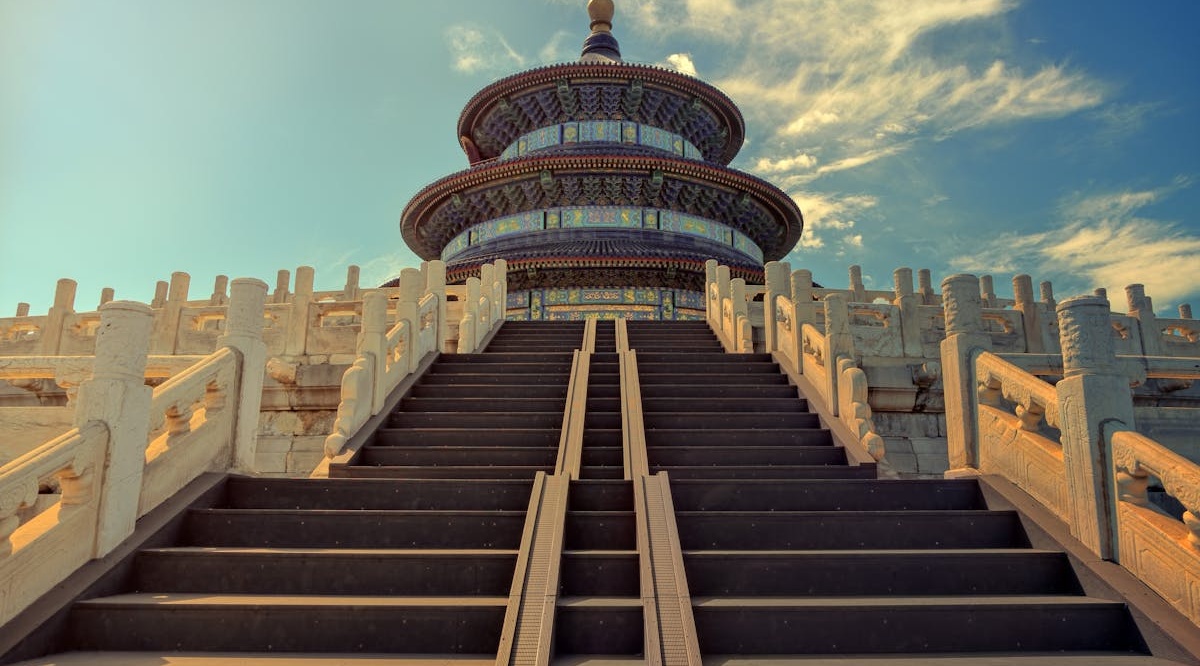
In Beijing [bay-JING] (China’s capital), first-time visitors usually build their days around the biggest imperial names: the Forbidden City, the Great Wall, and the Summer Palace. Those places absolutely deserve the attention. But Temple of Heaven [tee-ahn-TAHN] (天坛, the Temple of Heaven, Beijing’s great imperial altar complex) rewards a different rhythm. It is one of the rare headline monuments in China that feels more readable when the day is still waking up.
That is because Temple of Heaven is not just a building to photograph. It is a place where architecture, ritual space, and ordinary urban life still overlap. Come around noon and you will still see the famous circular hall and broad ceremonial grounds. Come early and you understand why the site lives so deeply in Beijing’s daily imagination. The park fills with people stretching, singing, chatting, kicking shuttlecocks, and moving through slow morning routines that soften the monument without making it feel smaller.
What Makes Temple of Heaven Feel Different From Other Imperial Sights
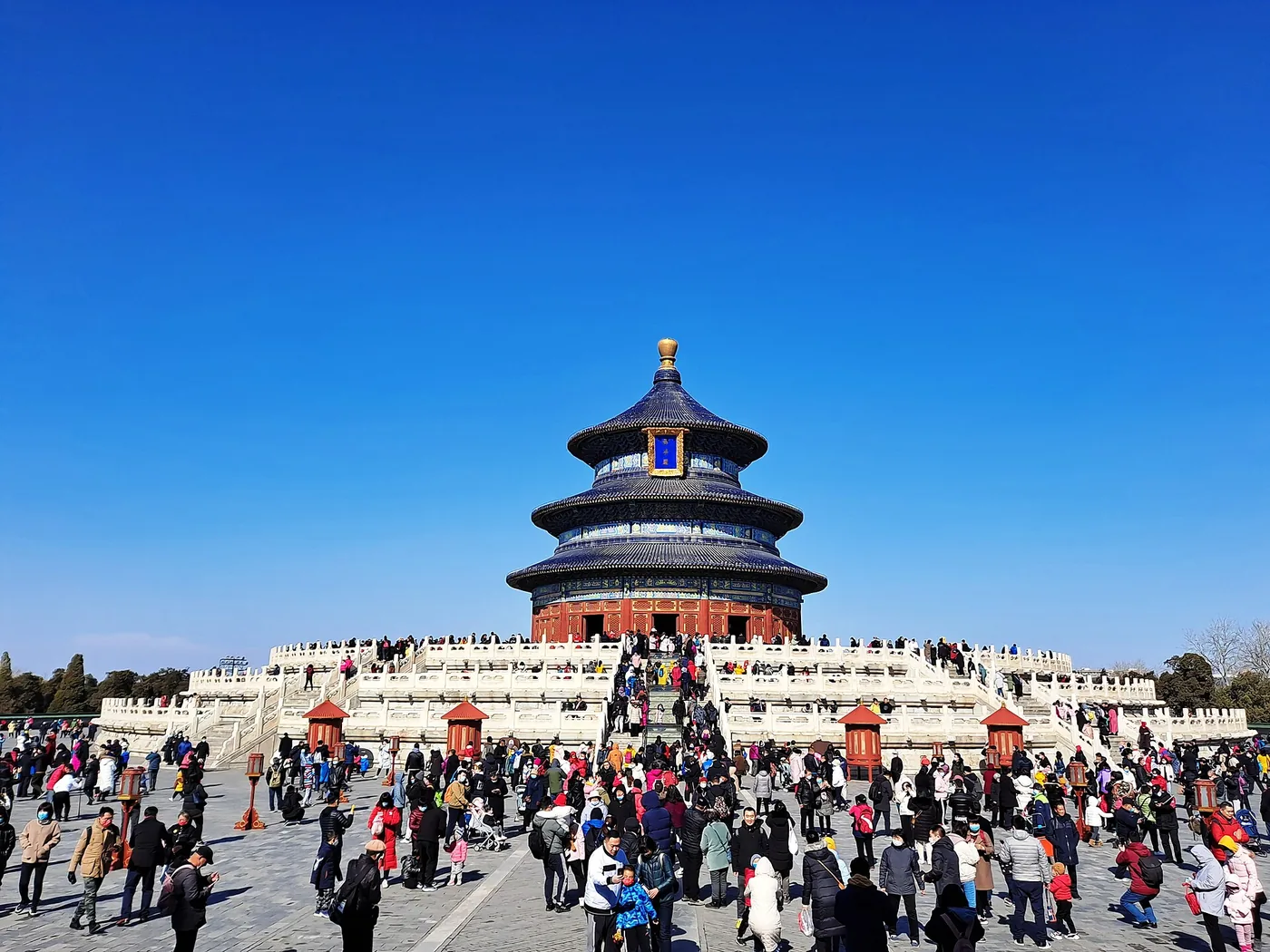
A palace tells you how rulers lived. Temple of Heaven tells you how they imagined order. The site was built for emperors to perform major seasonal rites connected to Heaven, harvests, and dynastic legitimacy. Even without specialist knowledge, you can feel that difference immediately. The spaces are more open, the geometry feels more ceremonial, and the emotional effect is less about private luxury than about public cosmic ambition.
That makes the place unusually accessible for Western travelers. You do not need to memorize dynasties to get something from it. Start with the shapes. Look at the famous Hall of Prayer for Good Harvests rising above its marble platform, then notice how the broader park creates processional distance around it. Temple of Heaven works because it does not feel crowded with narrative detail. It feels precise, deliberate, and spatially calm.
The Morning Park Is Part Of The Experience
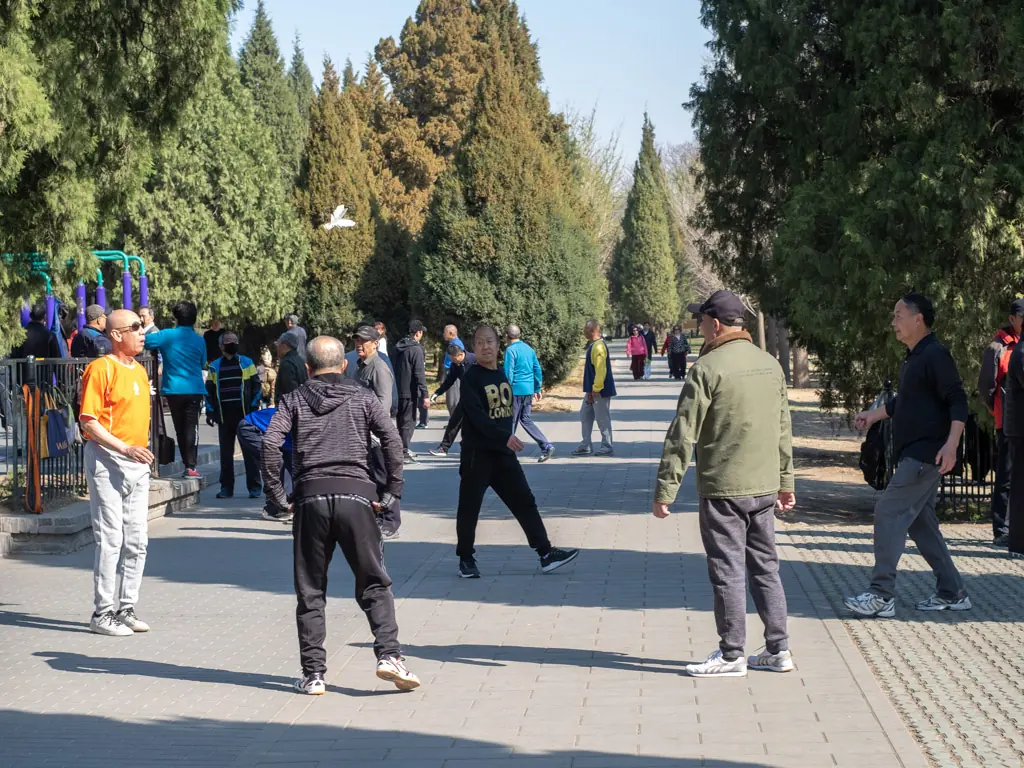
This is the part many foreign visitors miss. The monument and the park should not be treated as separate experiences. In the early hours, locals reclaim the grounds in ways that make Beijing legible at human scale. You see circles of taiji [tie-JEE] (the meditative martial art widely called tai chi), informal singing groups, card players, and people practicing jianzi [JYEN-dzuh] (a shuttlecock game played with the feet). None of that turns Temple of Heaven into a theme park. It does the opposite. It proves the site still sits inside lived urban time.
The Temple of Heaven is most impressive when it feels like both a monument and a morning habit.
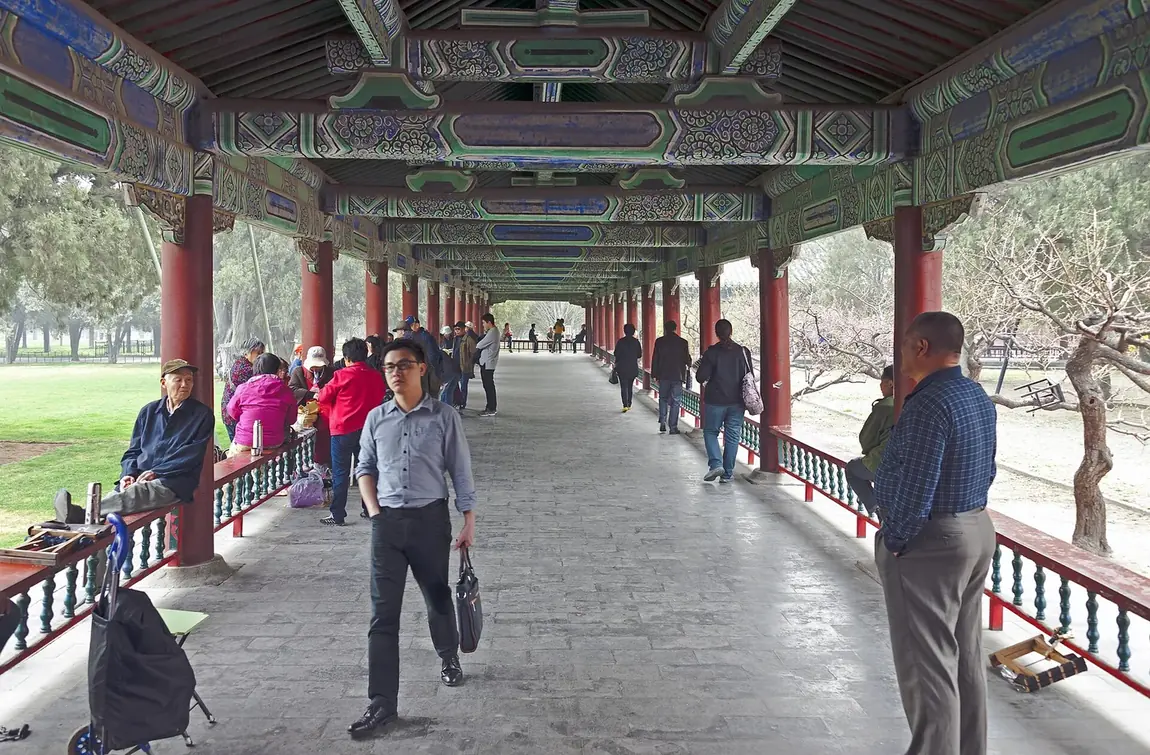
That contrast matters. Beijing can feel overwhelming if you only know it through giant walls, broad avenues, and world-famous landmarks. Temple of Heaven gives you scale and intimacy in the same stop. One minute you are looking at one of China’s most recognizable ceremonial structures. The next, you are watching retired Beijingers move through routines so ordinary and confident that they quietly teach you how the city inhabits its public spaces.
What To Notice Beyond The Famous Hall
The easiest mistake is to reduce Temple of Heaven to one postcard angle. The better approach is to read the site as a sequence. Notice the raised terraces, the measured approach lines, the emptier ritual platforms, and the way the architecture uses symmetry without feeling heavy. Even when the park is active, the core spaces still communicate formality. That tension between ceremonial design and everyday use is exactly what makes the visit satisfying.
If you like cities that reveal themselves through transitions, Temple of Heaven is especially rewarding. It is not only about “seeing the Temple of Heaven.” It is about moving from tree-lined public space into imperial ritual geometry and then back into ordinary park life again. Few major attractions in Beijing make those shifts feel so natural.
Where Temple of Heaven Fits In A Deeper Beijing Itinerary
Temple of Heaven also makes practical sense inside a longer Beijing route. After palace compounds and museum-heavy stops, the site gives travelers a different register of the capital: still historic, still monumental, but more breathable. That is especially true on Dragon Discover’s current wellness-led Beijing route, where the park’s dawn rhythm and slower pacing keep the site from feeling like one more monument squeezed between heavier hours.
Related journey: Beijing · Wellness Retreat & Health Discovery – 10 Days 9 Nights gives Temple of Heaven the calm morning slot it deserves, with tai chi, space to linger, and enough breathing room around the heavier palace hours.
For travelers who want Beijing to feel like more than a parade of famous gates and roofs, this is the right adjustment. Go early. Let the park wake up around you. Watch how the site holds both state grandeur and ordinary movement at once. That is when the Temple of Heaven stops feeling like a monument you are supposed to admire and starts feeling like a place you can actually understand. It also makes the stop work much better inside a longer heritage route, where Temple of Heaven can balance heavier palace and museum hours with something more breathable and lived in.
Image Credits
- Hall of Prayer for Good Harvests, Beijing — 钉钉 / Wikimedia Commons (CC BY-SA 4.0)
- People in Long Corridor, Temple of Heaven Park, Beijing — Daniel Case / Wikimedia Commons (CC BY-SA 3.0)
- Playing Jianzi in the Temple of Heaven Park in Beijing — Tim Bray / Wikimedia Commons (CC BY-SA 4.0)