

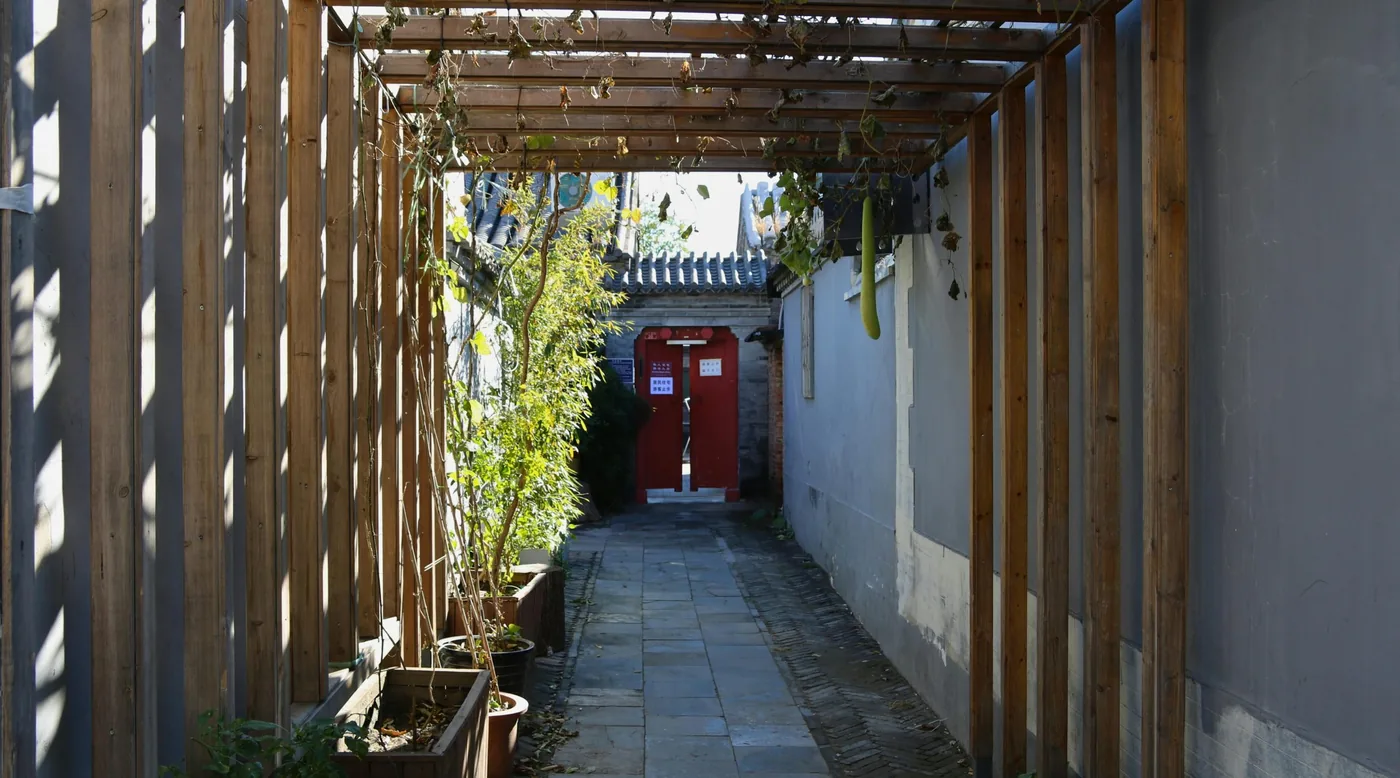
In Beijing [bay-JING] (China’s capital), first-time visitors usually start with the biggest names: the Forbidden City, the Great Wall, and the Temple of Heaven. Those places deserve the attention. But if you want to understand how the city feels at walking speed, the better test can be much smaller. That is why Wudaoying Hutong [woo-dow-YING hoo-tong] (五道营胡同, a historic lane east of the Lama Temple) keeps earning a place on smart Beijing itineraries.
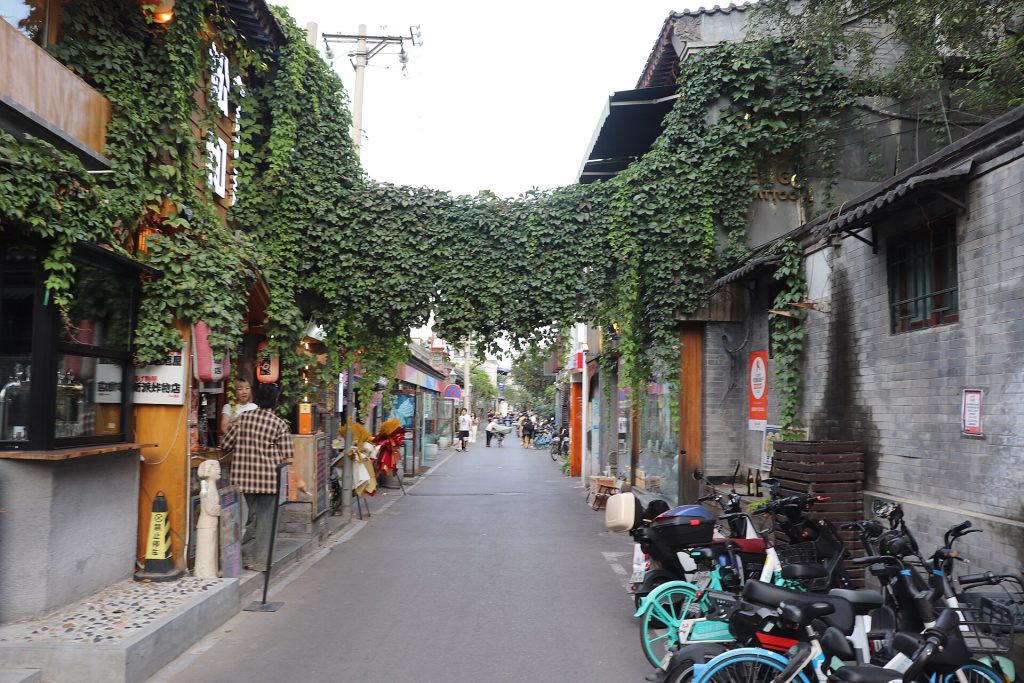
For overseas travelers, Wudaoying works because it delivers the version of the city many people imagine before they arrive: a lived-in hutong [HOO-tawng] (a narrow Beijing alley lined with courtyard homes), low roofs, old brick walls, bikes leaning outside doorways, and enough small businesses to make the street interesting without turning it into a stage set. It feels human before it feels monumental, and that matters in a capital as visually overwhelming as Beijing.
Why Wudaoying Works Better Than a Checklist Stop
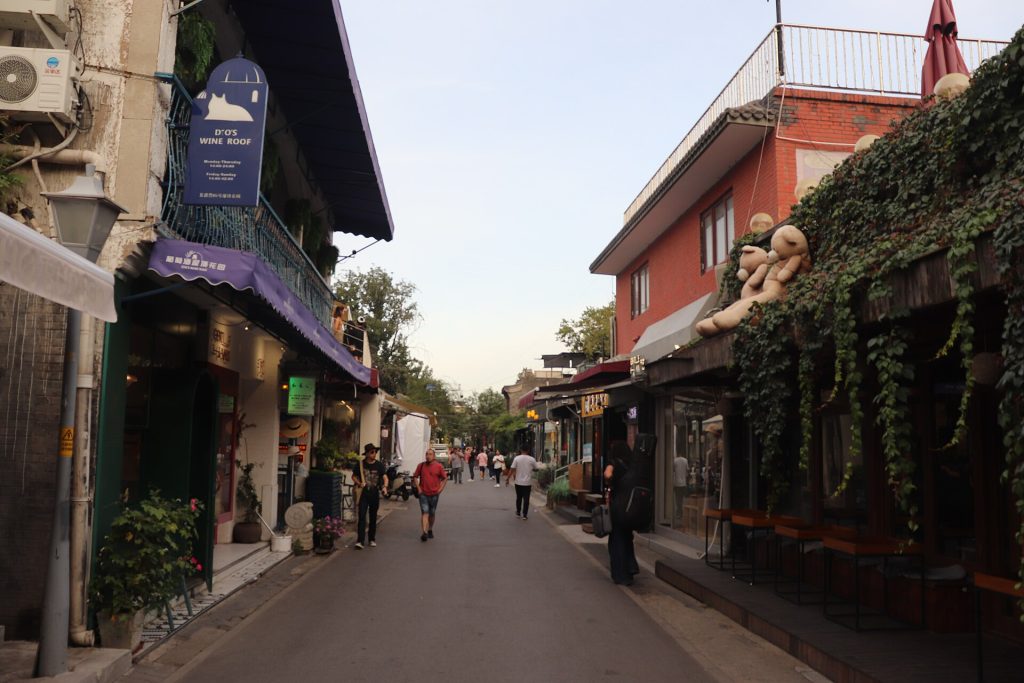
A lot of famous urban neighborhoods lose their appeal once they become too easy to market. They keep the right façade, but the place itself starts feeling over-scripted. Wudaoying has avoided the worst version of that problem. Yes, there are cafés, boutiques, and visitors with cameras. But the lane still reads like a neighborhood first. You can feel that in the gaps between storefronts, in the sudden quiet at side entrances, and in the way daily life keeps leaking through the polished surface.
That is part of why it pairs so well with larger Beijing sights. After a morning inside palace walls or temple courtyards, Wudaoying resets your eyes. The scale drops. The city becomes readable again. Instead of imperial axes and ceremonial grandeur, you get a lane that invites you to slow down and notice details: weathered brick, hand-painted signs, potted plants, bicycles, and the odd contrast between old residential form and contemporary urban taste.
It also fits naturally into the kind of longer heritage itineraries Dragon Discover is already selling in Beijing. A multi-day cultural route built around imperial landmarks, Lama Temple [LAH-mah] (雍和宫, the Tibetan Buddhist temple complex in northeast Beijing), the Temple of Heaven (天坛), and time inside a siheyuan [SUH-huh-ywen] (a traditional courtyard residence arranged around an inner yard) becomes more convincing when it also includes one street-level stop that makes the capital feel lived in rather than monumental from start to finish.
What To Look For When You Walk It
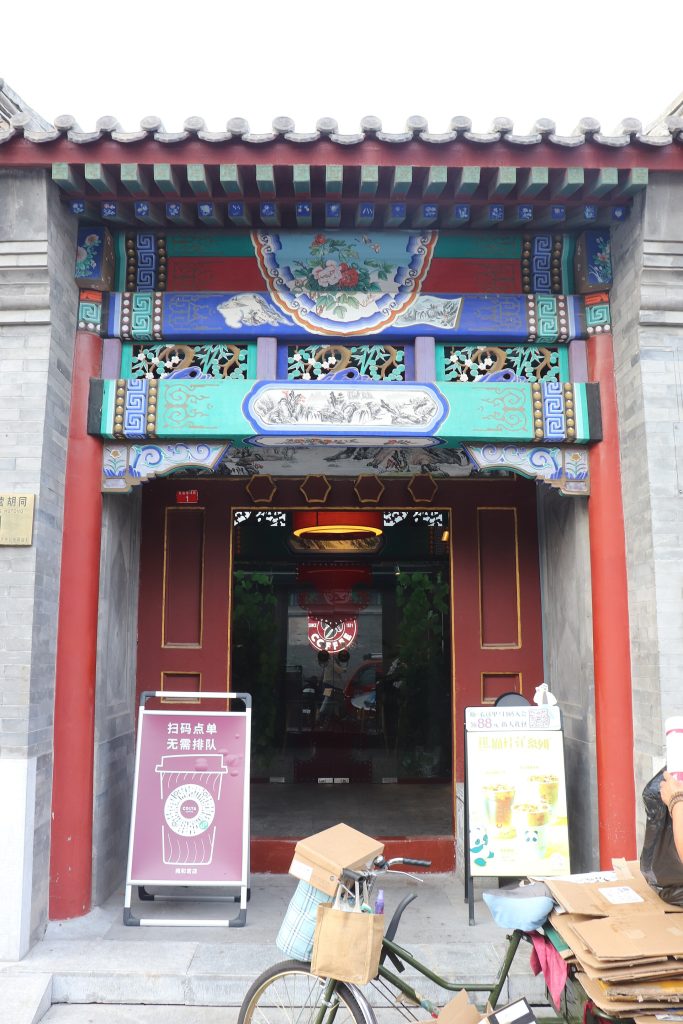
The mistake is to walk a hutong as if it were only a shopping strip. Wudaoying becomes more interesting when you read it architecturally. Look at the depth behind the front walls. Look at how doorways are set back from the lane. Look at the rhythm between public frontage and private enclosure. Even when you cannot enter, you can still sense the logic of the siheyuan that shaped the area’s older residential life.
Wudaoying is not the Beijing lane that shouts the loudest. It is the one that makes the city legible again.
That architectural legibility is what makes the lane satisfying for Western readers and travelers. You do not need specialist knowledge to understand what is happening here. The street teaches you how Beijing grew at the neighborhood level: walls first, courtyards behind them, movement through narrow passages, and daily life organized at a scale that still feels close to the body. That is very different from how most iconic Beijing images are framed abroad.
Why The Lama Temple Pairing Matters
Wudaoying also benefits from where it sits. Because it is so close to the Lama Temple, it fits naturally into a day that moves between sacred atmosphere and street-level texture. You can spend the morning in one of the city’s most important Tibetan Buddhist temple complexes, then step into Wudaoying and feel Beijing exhale. The smell of incense gives way to coffee, side lanes, bookstores, and everyday foot traffic. That contrast is exactly what makes the pairing memorable.
In itinerary terms, that makes the lane unusually useful. It does not demand a full day, a major detour, or a heroic amount of planning. It works as a soft landing after the temple, as a lunch corridor, or as part of a longer east-central Beijing walk. It also connects naturally to bigger conversations about the city: how heritage districts survive, how tourism changes neighborhoods, and how Beijing still holds onto intimacy inside an enormous metropolitan frame.
What Foreign Visitors Usually Get Wrong About Hutongs
Many visitors arrive with an unhelpful binary in mind. They want a hutong to be either perfectly preserved and untouched or else they dismiss it as “too commercial.” Real neighborhoods are messier than that. A living lane has to adapt. It can hold old spatial logic, newer businesses, local residents, and changing habits at the same time. Wudaoying is interesting not because it escaped history, but because it shows how older urban form survives by being reused.
That is also why etiquette matters here. Treat the lane like a neighborhood, not an open-air museum. Do not block doorways for photos. Do not aim cameras into private courtyards. Keep voices down when the lane narrows. If you stop for coffee or browsing, think of it as part of supporting the street rather than consuming it from a distance. The right pace for Wudaoying is curious, not extractive.
Why It Belongs On a Beijing Trip
Beijing’s greatest sights explain the city at the scale of empire. Wudaoying explains it at the scale of a walk. That is exactly why it belongs in a balanced itinerary, especially for first-time visitors who want something more textured than landmark collecting. The lane does not compete with the capital’s headline attractions. It complements them by showing how Beijing feels once you step out of official grandeur and back into everyday urban space.
And that is the real value of Wudaoying Hutong. Not that it is the oldest lane in Beijing, or the most dramatic, or the least visited. It earns attention because it gives travelers a form of access many famous capitals struggle to offer: a place where history is still legible at human scale. In a city that can sometimes feel almost too large to read, that is a gift.
For travelers booking a deeper Beijing culture route, this is exactly the kind of place that works best as part of a broader day rather than a detached photo stop.
Explore it properly: Beijing · Heritage Craft & Hutong Rhythms – 10 Days 9 Nights uses Wudaoying as part of a slower Beijing sequence of temples, hutongs, and courtyard-scale culture rather than a rushed add-on between bigger landmarks.
Image Credits
- Wudaoying Hutong street view — Andrzej Otrębski / Wikimedia Commons (CC BY-SA 4.0)
- Wudaoying Hutong lane scene — Andrzej Otrębski / Wikimedia Commons (CC BY-SA 4.0)
- Wudaoying Hutong daytime walk — Andrzej Otrębski / Wikimedia Commons (CC BY-SA 4.0)