Login

Twelve days across Fujian — the southeastern province where banyan-shaded lanes, oolong-tea peaks, Hakka rammed-earth roundhouses, and a UNESCO Maritime Silk Road city are all within a high-speed train ride.
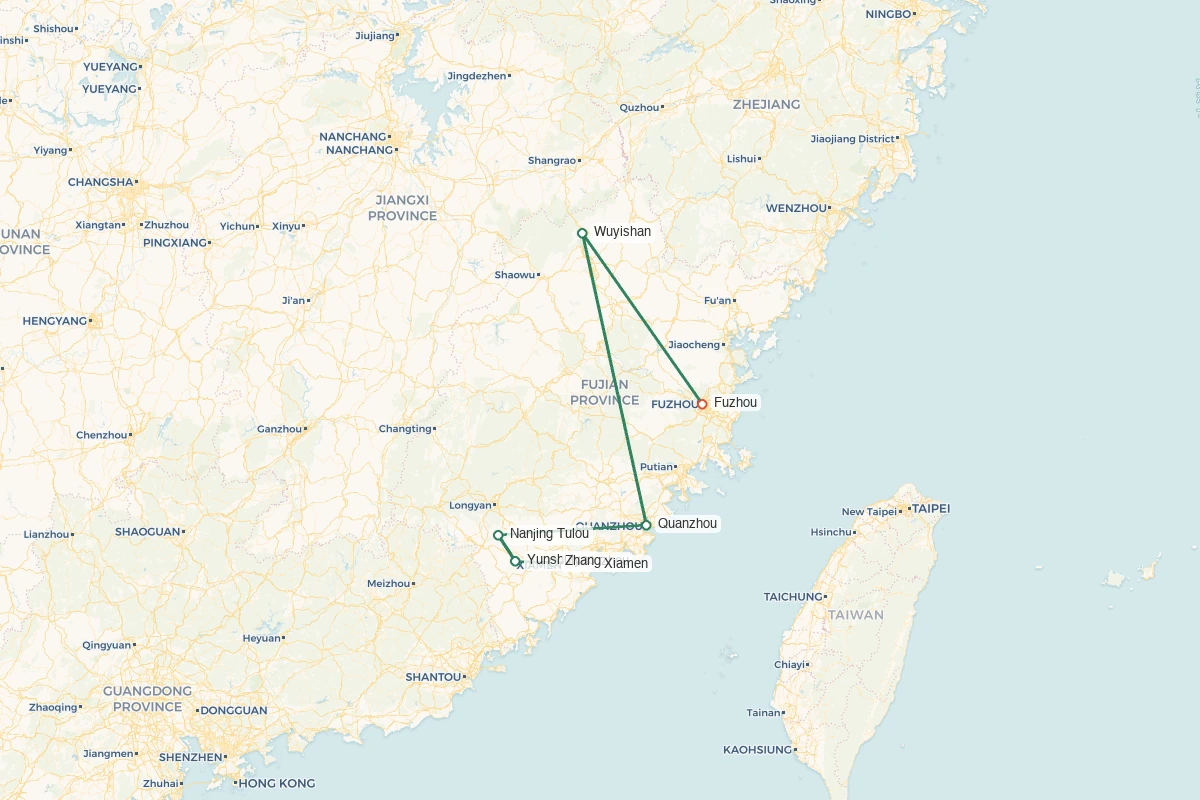
The journey begins in Fuzhou with the 1,000-year Three Lanes and Seven Alleys and a Min River night cruise, climbs into the Wuyi Mountains for bamboo rafting on the Nine Bend River and Zhang Yimou’s open-air Impression Dahongpao tea opera, rolls south to Quanzhou for Marco Polo’s Zaitun and a private intangible-heritage performance of string-puppet theatre and Nanyin music, descends into Nanjing County for an overnight inside the Yunshuiyao tulou cluster, and ends along the Xiamen coast with car-free Gulangyu, Tan Kah Kee’s school village, and a hands-on stone-carving session.
Your guide meets you at Fuzhou Changle International Airport and a private transfer takes you to your hotel in central Fuzhou — about an hour from the coast, through banyan-lined boulevards into the historic core.
The rest of the day is yours to recover from the flight and settle in. If you arrive early enough, the lanes immediately around the hotel — small noodle shops, banyan-shaded teahouses, and the cooling rhythm of a subtropical evening — are a quiet first taste of what travelers usually skip when they fly straight to Beijing or Shanghai. A welcome dinner is included at the hotel.
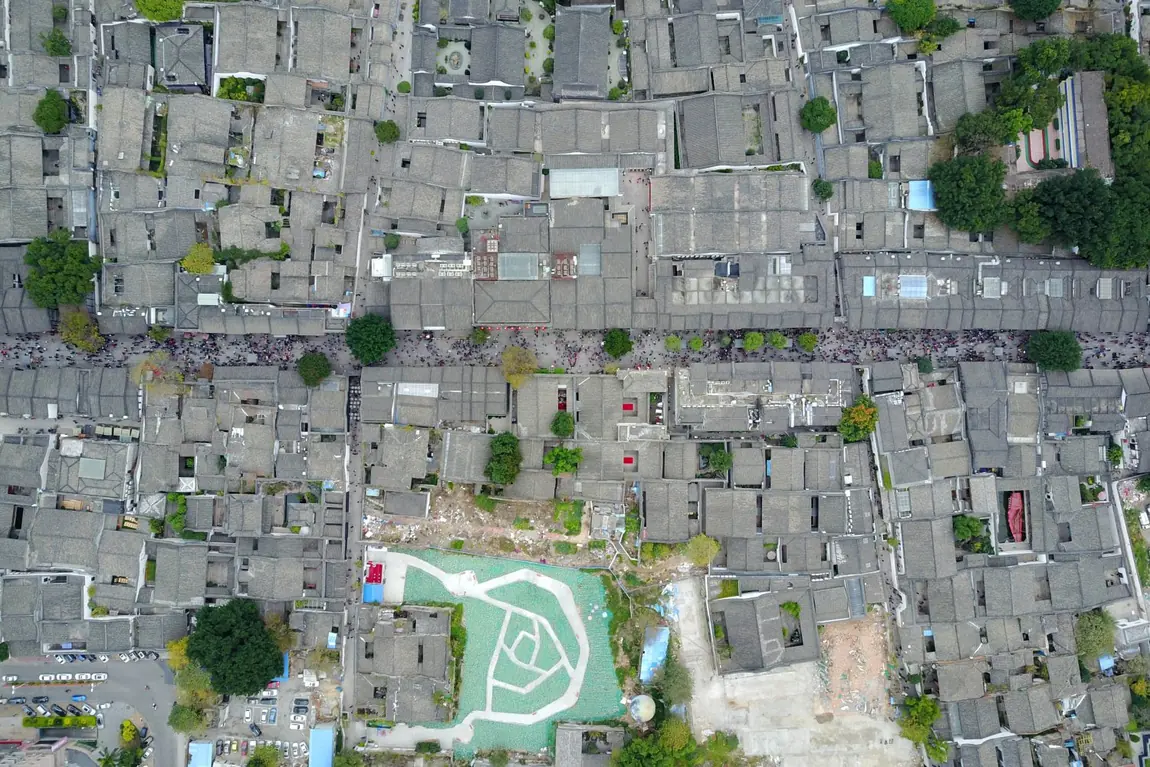
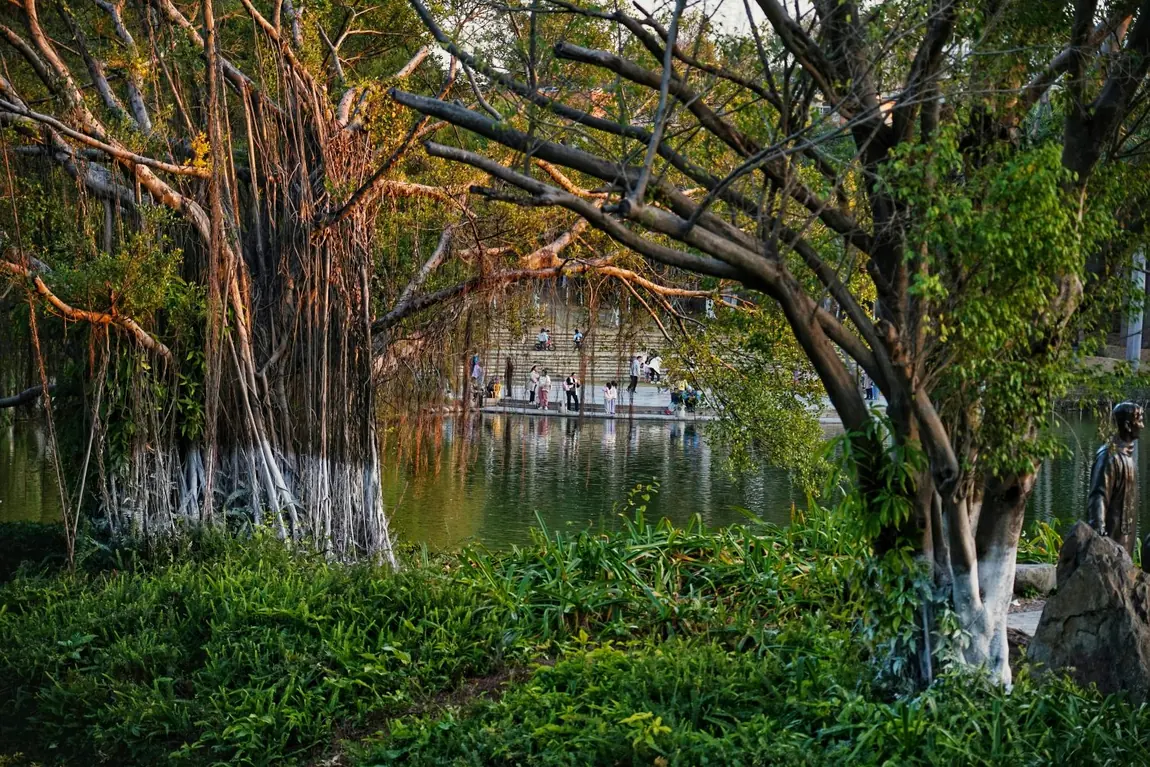
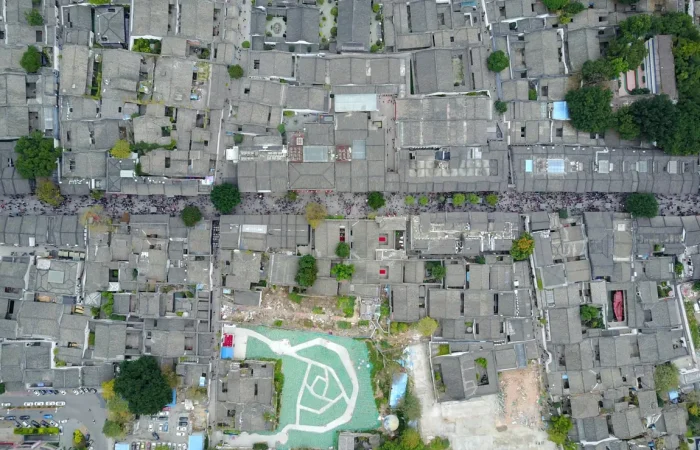
The morning opens in the Three Lanes and Seven Alleys — a 1,000-year lane quarter that survived intact when most Chinese cities tore down their old neighbourhoods. Your guide walks you through the former homes of Lin Juemin (the young revolutionary who wrote one of modern China’s most famous farewell letters), Yan Fu (the translator who brought Adam Smith and T. H. Huxley into Chinese), and Bing Xin (the writer whose poetry shaped a generation). The lanes themselves are the point — stone-paved, banyan-shaded, with whitewashed gable walls in the distinctive Fuzhou “horsehead” silhouette.
Lunch is just off the lanes — classic Min cuisine including Buddha Jumps Over the Wall (*fotiaoqiang*, the elaborate sealed-jar soup that gave Min cooking its international name), lychee pork (*lizhirou*), oyster omelette, and Fuzhou fish balls.
The afternoon turns to the Fujian Cuisine Museum, China’s first museum dedicated to a single regional cuisine. Across three floors you walk through the evolution of Min cooking — from the seafaring fishermen who first sealed fish in stone jars, through the Qing-era literati who codified its 24 cooking techniques, to the modern Buddha Jumps recipes that take three days to prepare.
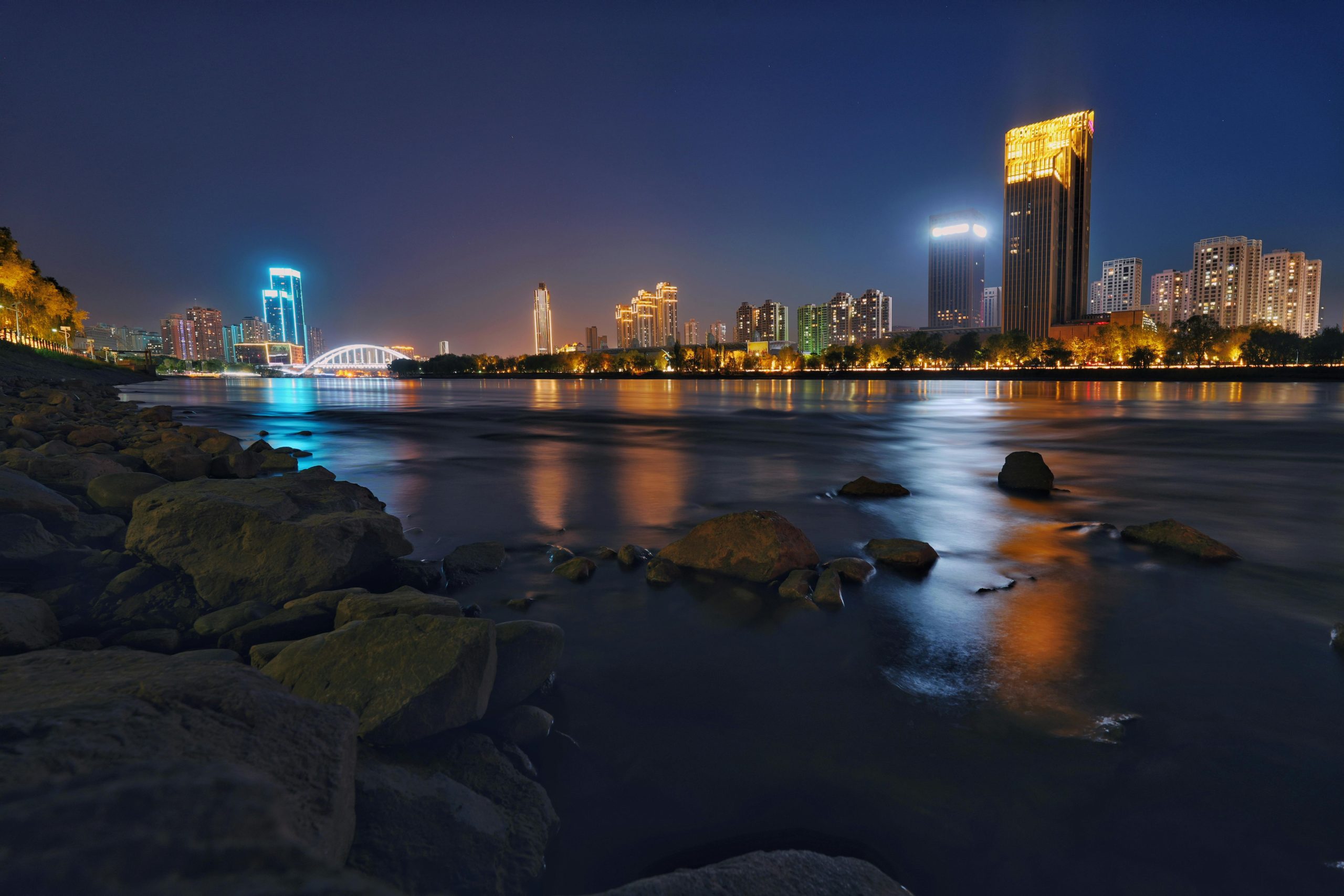
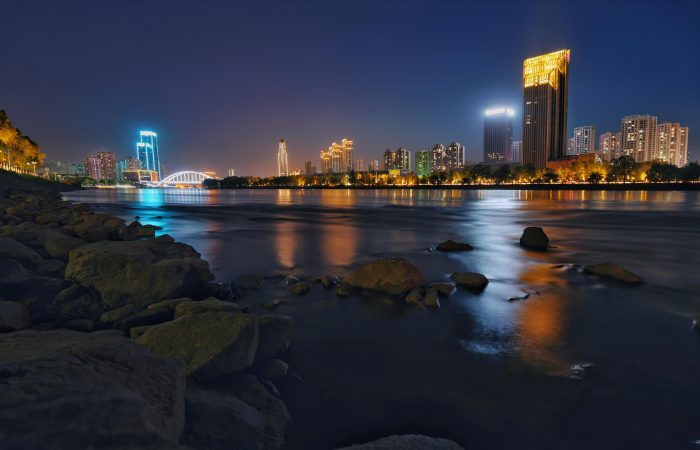
In the evening, you board a Min River night cruise — about 90 minutes drifting under the lit Fuzhou bridges, with the Three Lanes pagoda and the new financial district reflected on the water. Fuzhou’s two sides — banyan-shaded heritage on one bank, glass-tower skyline on the other — only really resolve from the river at night.
A 40-minute drive out of the city brings you to Mount Gu and the Yongquan Temple — a 900-year Chan Buddhist monastery whose name (“Welling Spring”) comes from the natural spring still bubbling inside the courtyard. The site sits in a forested cleft on Mount Gu’s western shoulder; the air shifts noticeably as you climb the temple steps. Your guide walks you through the main halls, the 1,000-year ginkgo trees, and the temple’s two granite stupas — among the oldest surviving stone pagodas in southern China.
Lunch is a simple Buddhist vegetarian set served inside the temple — clean, balanced, and surprisingly satisfying after a morning of incense and pine air.
The afternoon turns down to the river at Yantai Hill — Fuzhou’s old foreign concession, where twelve historic consulates from Britain, the United States, France, and Russia, plus a dozen Catholic and Protestant churches, still line the lanes above the Min River. A walking tour traces the 19th-century treaty port from the original British consulate to the Anglican cathedral, with views across to the modern city.
In the late afternoon, a 20-minute transfer takes you to Fuzhou Railway Station for the high-speed rail to Wuyishan (about 1.5–2 hours in second-class seats). Arrival at Wuyishan East is met by your Wuyi segment guide and a transfer to your hotel near the scenic area entrance. Dinner is a local mountain-style spread — bamboo shoots braised with pork, smoked goose (*xunjia*), and small wild stream fish.
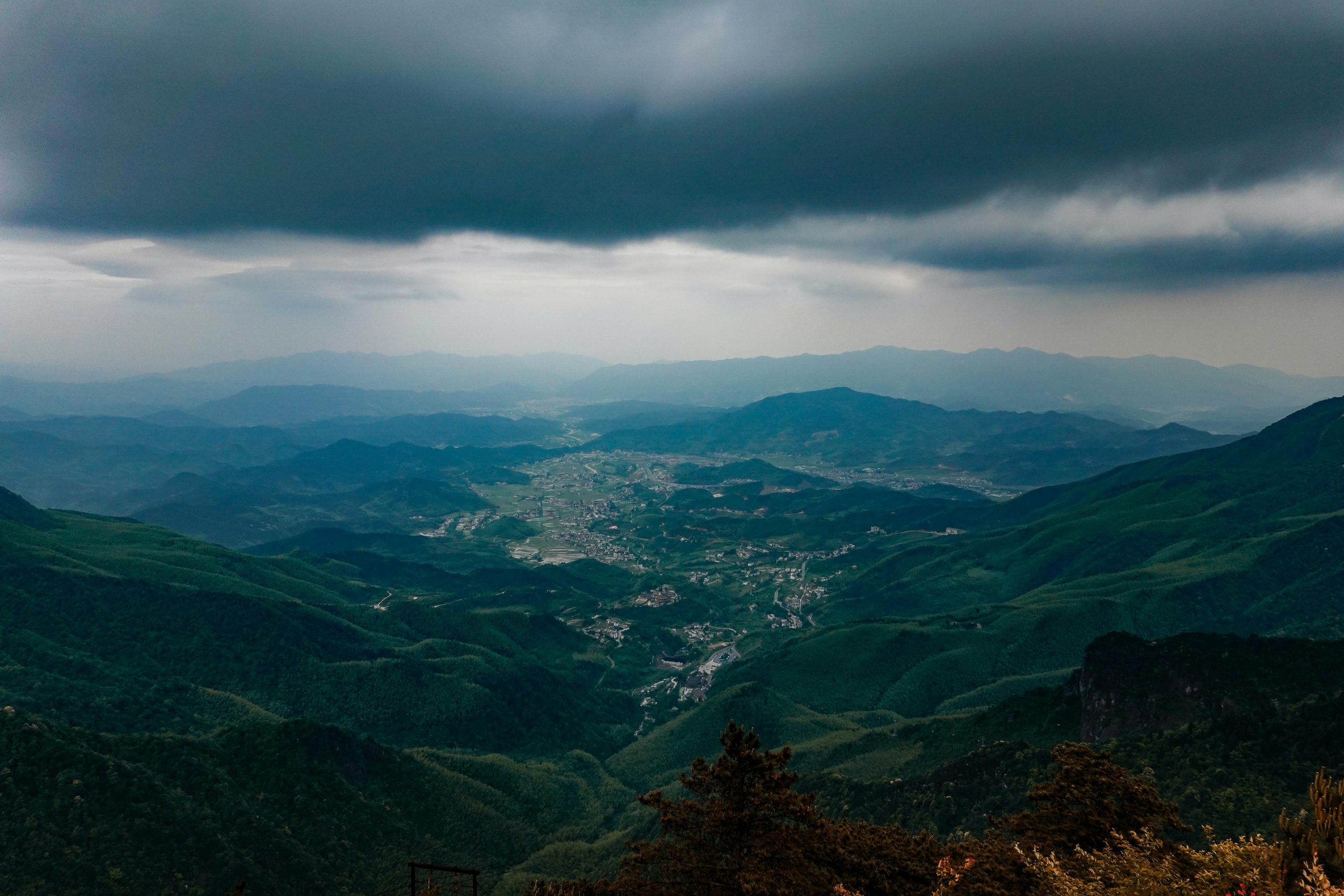
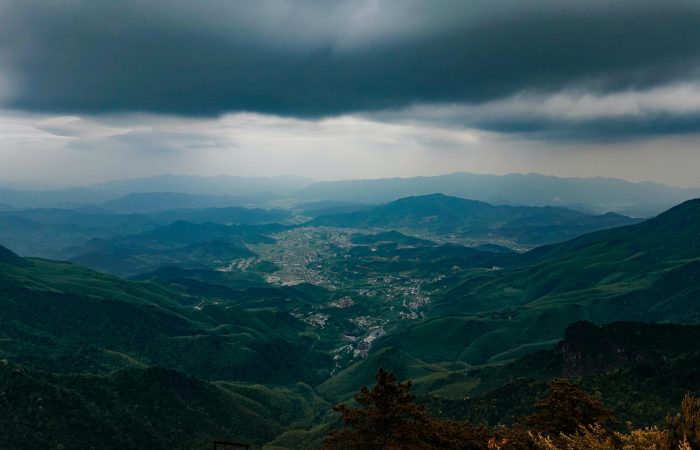
An early start heads into the heart of the Wuyi Mountains — the UNESCO dual heritage site of red sandstone peaks and dragonwell-clear rivers that gave the world oolong tea. The morning climb takes you up Tianyou Peak, Wuyi’s signature lookout — 848 stone steps each way, with rest pavilions every few hundred metres. From the summit, the Nine Bend River winds beneath you and Wuyi’s red cliffs stack into the distance — the panorama the Ming traveller Xu Xiake called “the first wonder under heaven.”
Lunch is at a Wuyi farmhouse near the scenic area — bamboo-shoot stew, mountain mushrooms, and free-range chicken, the cooking the tea farmers themselves eat.
The afternoon walks into the Dahongpao Mother Trees scenic zone — the six original cliff-rooted oolong bushes that birthed China’s most legendary tea. The grove was last harvested in 2005 and is now under permanent state protection; your guide explains the rock-tea (*yancha*) growing tradition, the cliff-cave microclimate that gives Dahongpao its mineral edge, and how the modern Dahongpao you can actually buy is descended by cutting from these six trees.
In the evening you take seats for Impression Dahongpao — Zhang Yimou’s 70-minute open-air tea opera, staged inside the Wuyi peaks themselves on a 360-degree rotating audience platform. The show tells the legend of the Big Red Robe tea and Wuyi tea culture through projection on the cliffs, water-stage performers, and live music. Dinner before the show is a Wuyi tea banquet — dishes cooked with rock tea infused into the sauce, oil, and broth.
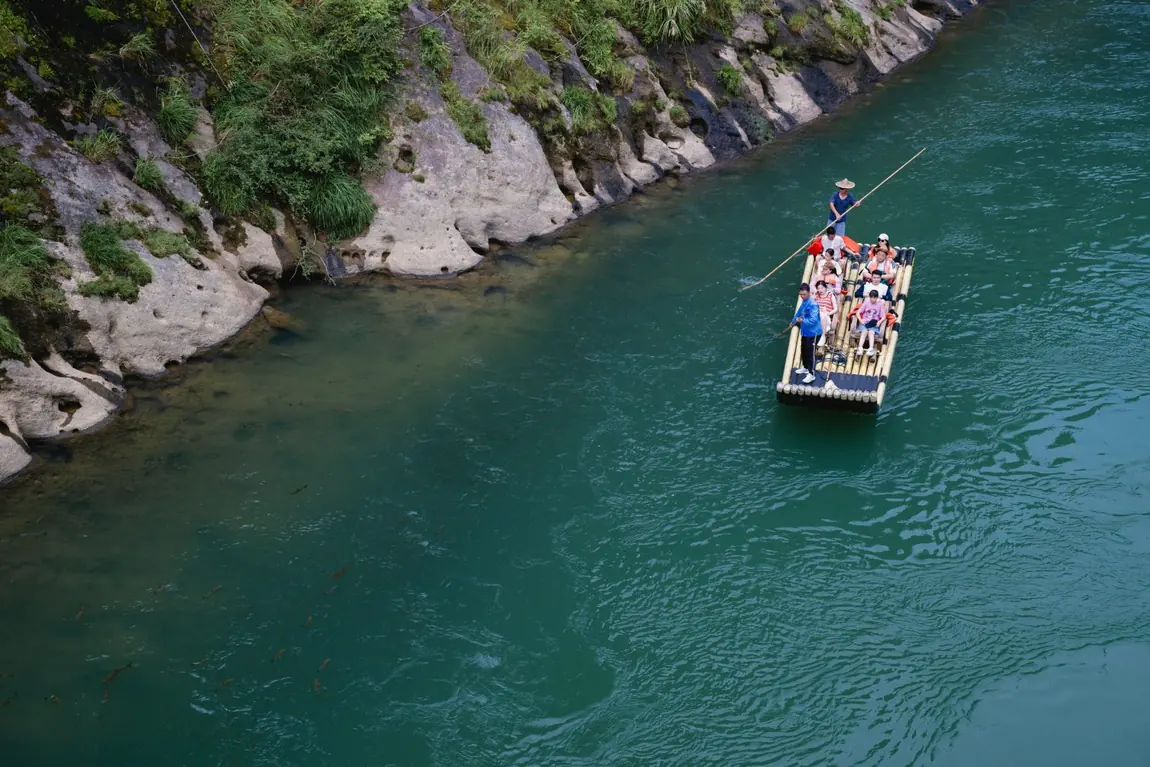
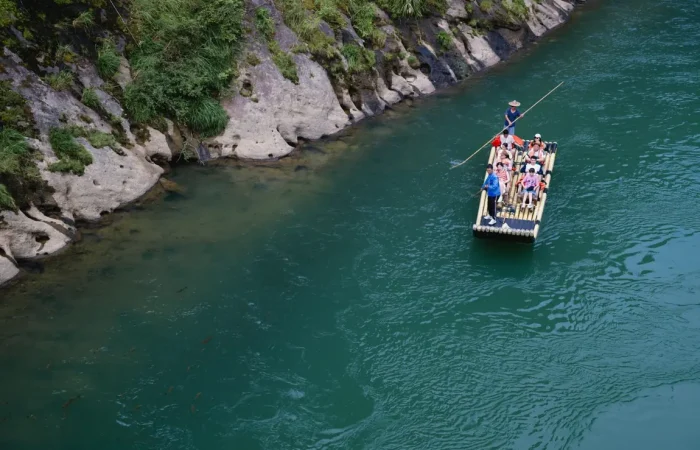
The morning belongs to the Nine Bend River — Wuyi’s signature drift, on bamboo rafts poled by local boatmen who narrate the river’s nine bends in local Min dialect (your guide translates). Each raft seats six on small bamboo chairs; the trip takes about 90 minutes, drifting past red-cliff peaks, ancient hanging-coffin cave tombs visible high on the cliffs, and the calligraphy carved into the rock walls by Song-dynasty poets.
Lunch is in the village at the raft’s end — Wuyi country cooking including Langu smoked goose (*langu xun e*), one of Fujian’s most distinctive cured meats, and Zhu Zi filial-cakes (*zhuzi xiaomu bing*), the sesame-and-walnut sweet named for the Song philosopher Zhu Xi.
The afternoon goes deep into Wuyi’s core tea zone for a hands-on Wuyi rock tea making session — you learn the leaf-picking standard, watch (and try) the withering and rolling on traditional bamboo trays, and finish with a guided gongfu cha tasting through three Wuyi rock teas at different roast levels. The afternoon is intentionally unhurried — most visitors do Wuyi in a single rushed day, and this is the time you actually understand what makes the tea different.
Dinner is a Hakka-style tea banquet, a quieter close to the day.
A morning transfer from your Wuyi hotel takes you to Nanping South Station (about 30 minutes), where you board the high-speed rail to Quanzhou (G255, around 11:50 to 13:48, second-class seats). Lunch is on the train — your guide can arrange a packed meal or you can pick up boxes at the station.
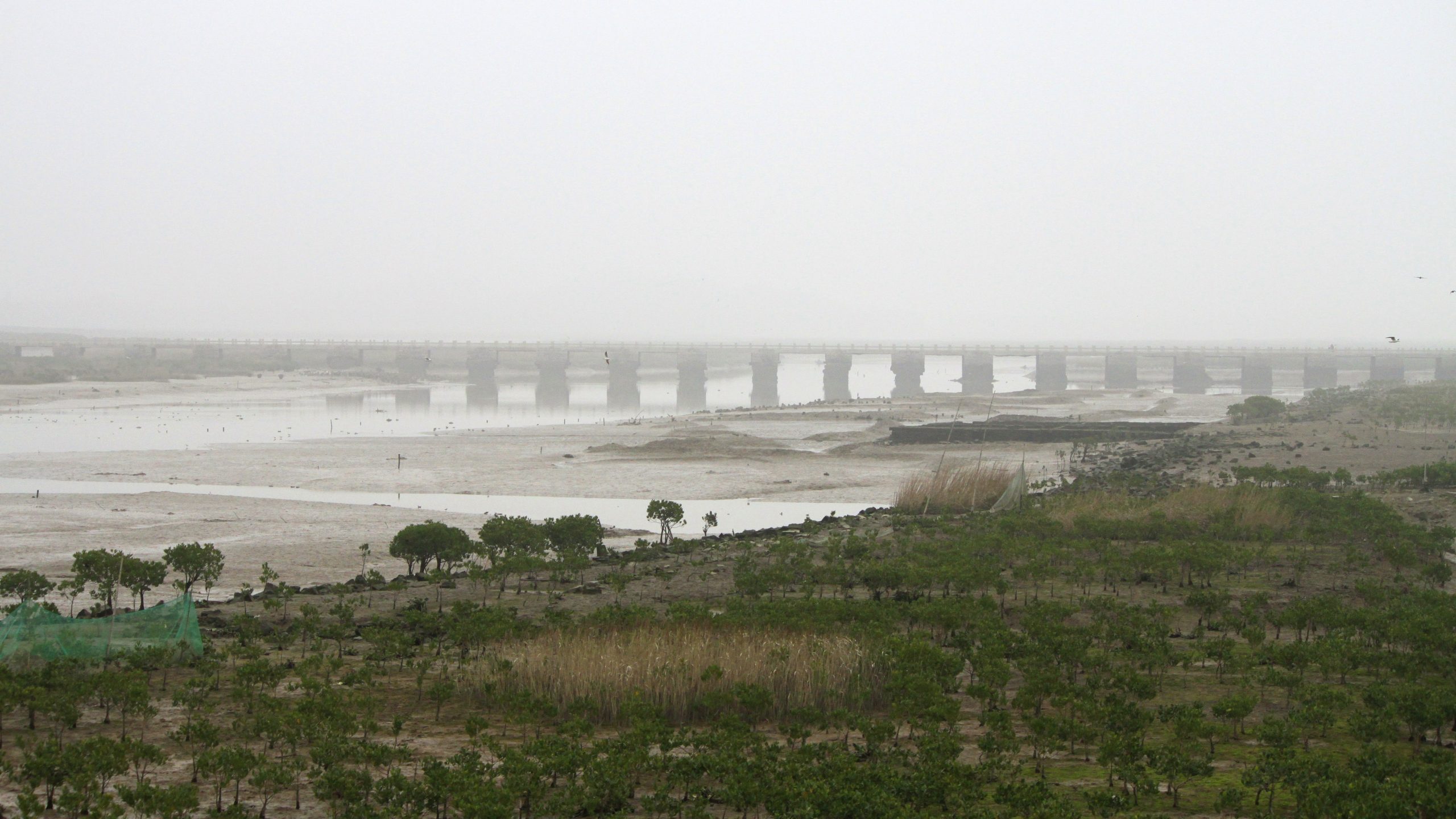
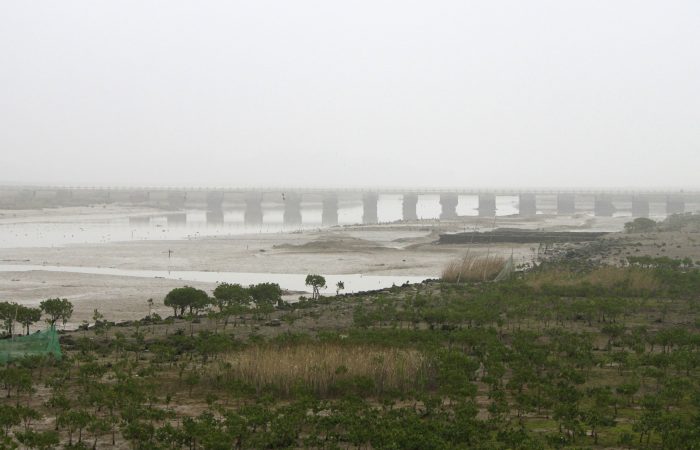
Arrival at Quanzhou East is met by your Quanzhou guide. You check into the hotel, then drive out to the coast for the Luoyang Bridge — one of China’s four great ancient bridges and a UNESCO Maritime Silk Road site. The 1,200-year stone-beam sea bridge crosses a tidal estuary on giant granite beams; the engineers used an early form of biocementing, encouraging oyster shells to grow over the bridge piers to bind the stones. You walk the full span (about 1.2 km) with your guide explaining how this single bridge unlocked the Maritime Silk Road’s overland reach.
Dinner in Quanzhou is a sit-down spread of classic Minnan dishes — ginger duck (*jiangmu ya*), thread noodles in oyster broth (*mianxianhu*), bamboo-worm jelly (*tusundong*, a coastal delicacy), and spring rolls (*runbing*, the Hokkien original of the dish that became modern spring rolls).
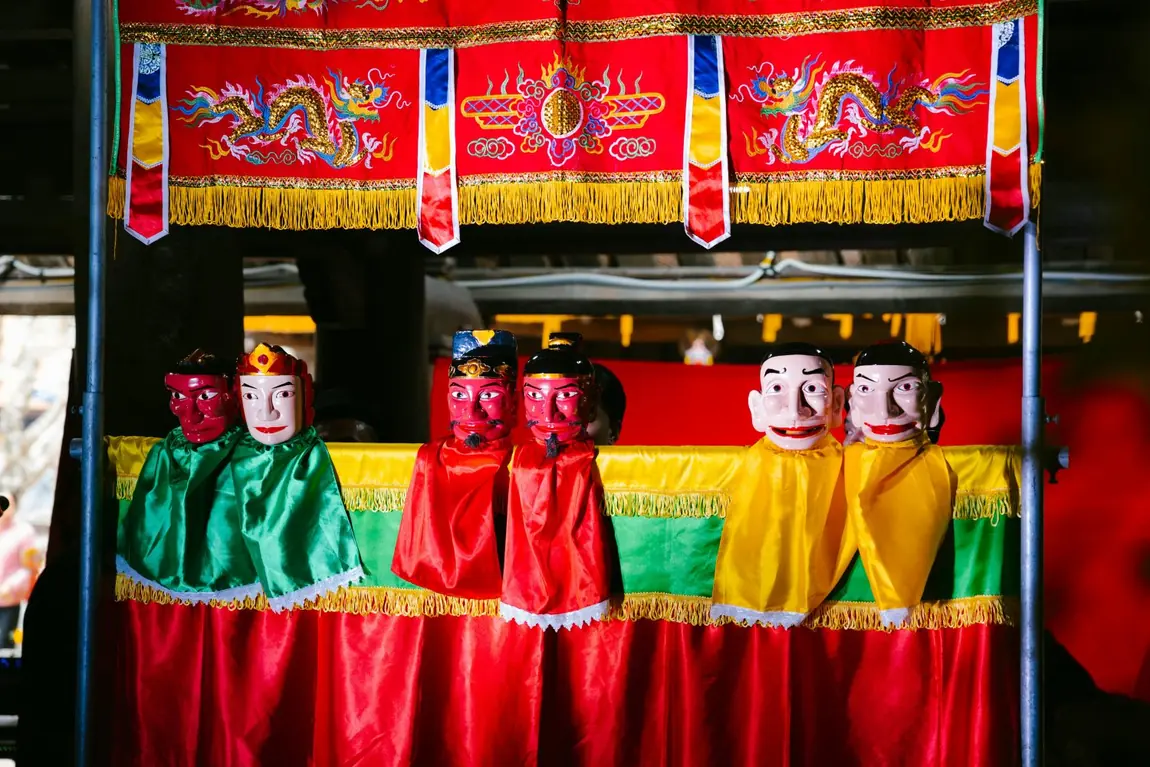
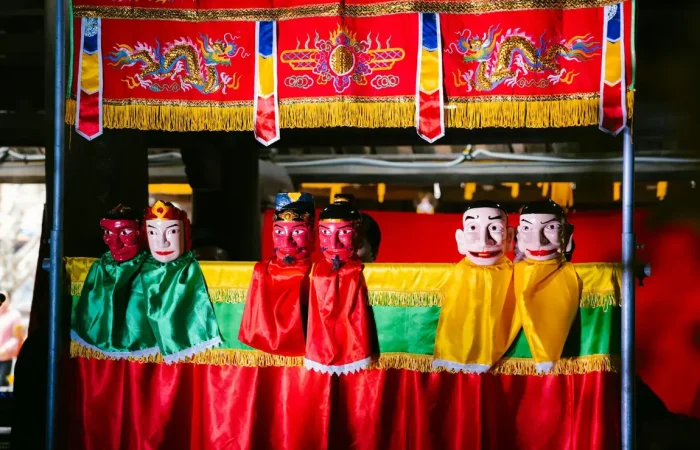
In the evening, you take seats at the Xili Teahouse for a private intangible-heritage performance — about 40 minutes of string-puppet theatre by Yang Zhanghuo, a designated national heritage transmitter; Nanyin (southern music, the oldest continuous music tradition in China) by Fujian gold-medal performer Zhang Lingling; and a tea-art display with a Sichuan-style face-changing finale. Tea service runs throughout.
The morning opens at the Quanzhou Maritime Museum — China’s only national-grade museum dedicated to maritime history. Across the galleries you walk through Quanzhou’s medieval golden age, when Marco Polo called it Zaitun and ranked it the busiest port in the world. Recovered Song-dynasty seagoing junks, Arabic and Persian tombstones, Tamil and Christian inscriptions, and the city’s recovered overseas-trade ledgers tell the story of how this single Fujian port traded with 100 countries before the Ming closed the seas.
Lunch is in the old city — small-bowl Quanzhou street food at a long-established local kitchen: oyster omelette (*hailijian*), thread noodles in oyster broth (*mianxianhu*), Quanzhou rice noodles with peanut sauce.
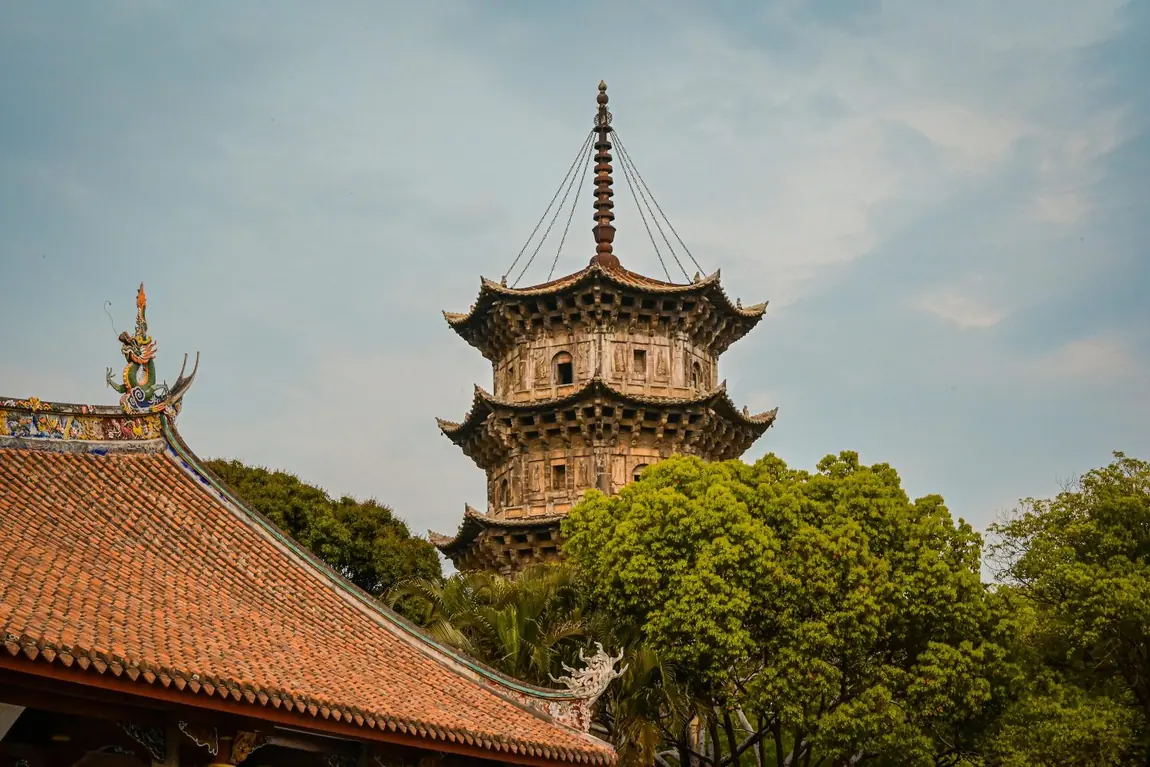
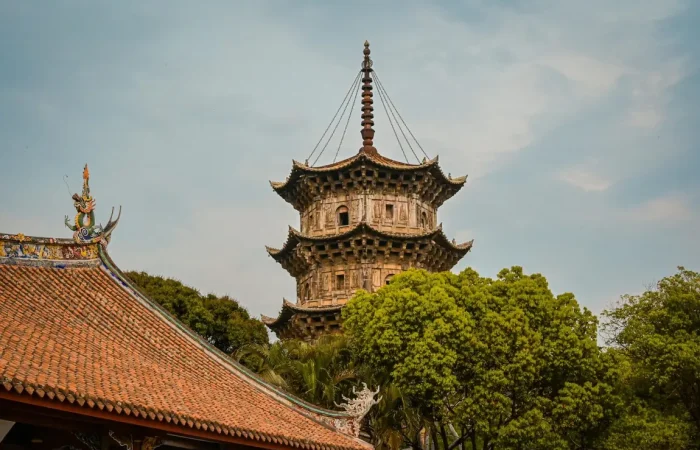
The afternoon turns to the Kaiyuan Temple — Fujian’s largest Buddhist monastery, with 1,300 years of history under century-old banyans. The temple’s two Song-dynasty stone pagodas — the East Tower (Renshou) and the West Tower (Zhenguo), each about 48 metres tall — are the tallest stone pagodas in China and survived a 1604 magnitude-8 earthquake without damage.
From the temple, your guide walks you down West Street — Quanzhou’s oldest commercial lane, 1,300 years of arcaded shophouses, tiny temples, ancestral halls, and incense-smoke shops still operating under banyan trees. The walk loops past the Guandi Temple (a Ming-Qing temple to the warrior god Guan Yu, still busy with worshippers burning offerings), then back through the lanes to dinner — Quanzhou seafood and Minnan small plates at a local favourite.
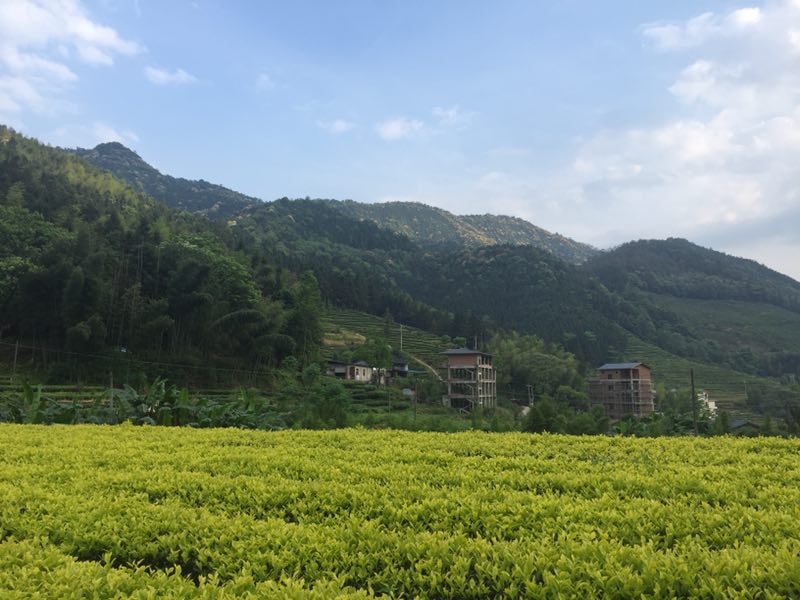
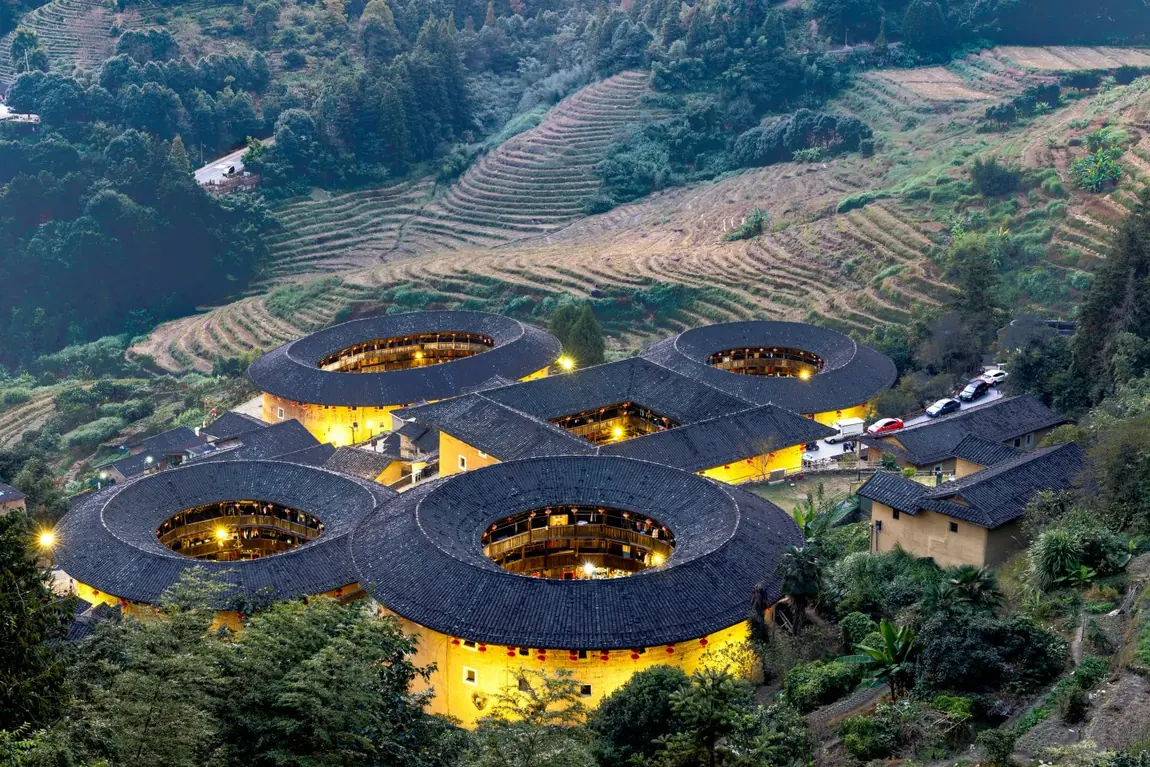
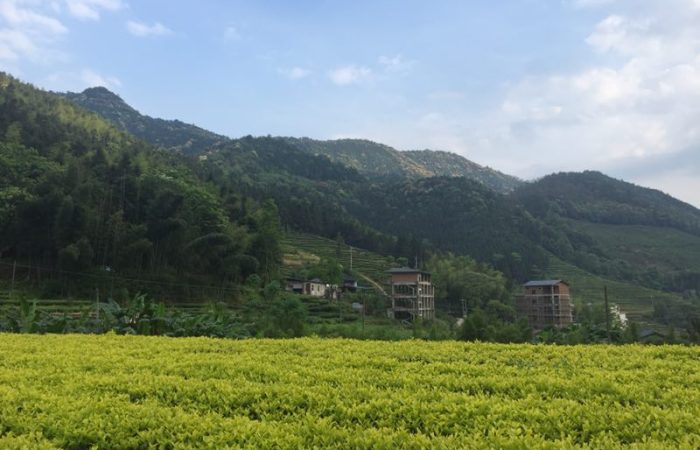
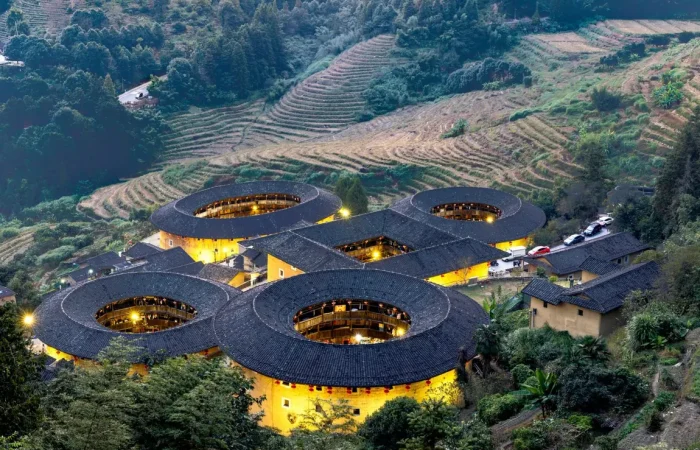
An early start drives you south out of Quanzhou into the tea hills of Nanjing County — about three hours through bamboo forests and terraced tea fields, into the heart of the UNESCO Fujian Tulou belt. These rammed-earth roundhouses are 800-year fortified Hakka clan villages — single buildings up to five storeys tall that housed entire extended families behind a single set of gates.
Lunch at a tulou village is a Hakka farmhouse spread — bamboo-shoot rice (*sun men fan*), Hakka stuffed tofu, mountain chicken and duck stew, and other dishes the tulou families have eaten for centuries.
The afternoon walks into the Tianluokeng Tulou Cluster — “four dishes and a soup,” the iconic UNESCO arrangement of one square earth tower ringed by four round ones, photographed from the hillside above for the postcard view. Your guide walks you inside one of the roundhouses, where you can see the wedge-shaped clan apartments, the central ancestral hall, and how a single building once housed 80 families.
From Tianluokeng you continue to Yuchang Tulou — the famous “leaning tulou,” whose 700-year five-storey corridor posts now tilt up to 15 degrees but still stand. You walk the wooden corridor (it sways a little, intentionally) and meet the descendants who still live in the building.
A final 40-minute drive takes you to Yunshuiyao Ancient Town for an overnight inside the scenic area. Dinner is Hakka mountain cooking at the inn, and after dark the village is car-free — the 13 ancient banyans, the creek, and the stone-paved paths are lit only by lanterns, and the silence is the kind only somewhere this remote produces.
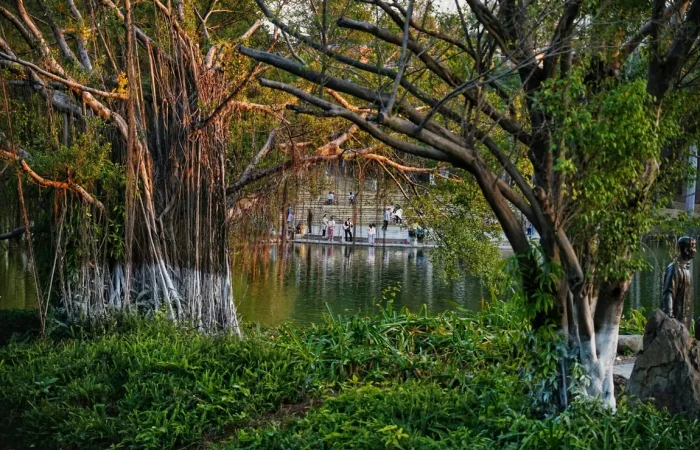
The morning is unhurried in Yunshuiyao Ancient Town. You walk the 1,000-year stone path that crosses the creek under the 13 banyans (this is the path the wuxia film Yunshuiyao used as its romantic backdrop), then visit the village’s two signature tulou — Huaiyuan Lou, the double-ring roundhouse whose inner ring still houses a small Confucian schoolroom; and Hegui Lou, the five-storey square tulou built on a marshy spring whose courtyard still bounces underfoot when you stamp on it.
A Hakka farmhouse lunch in the village closes the tulou segment. A one-hour drive then takes you to Zhangzhou Old Town — a 1,300-year Hokkien lane quarter and the ancestral home of most Taiwanese Han migrants. Your guide walks you through the shophouse arcades, the Tang-stone Zhangzhou Confucian Temple (one of the oldest surviving Confucian temples in southern China), and the carved-stone Mingjing Drum Tower at the old city gate.
A second one-hour drive in the late afternoon brings you to Xiamen. Welcome dinner is Xiamen seafood — sand worm jelly, fried rice with sea urchin, hand-cut sea cucumber, and stir-fried mantis shrimp — at a coastal local favourite, before check-in at your seaside hotel.
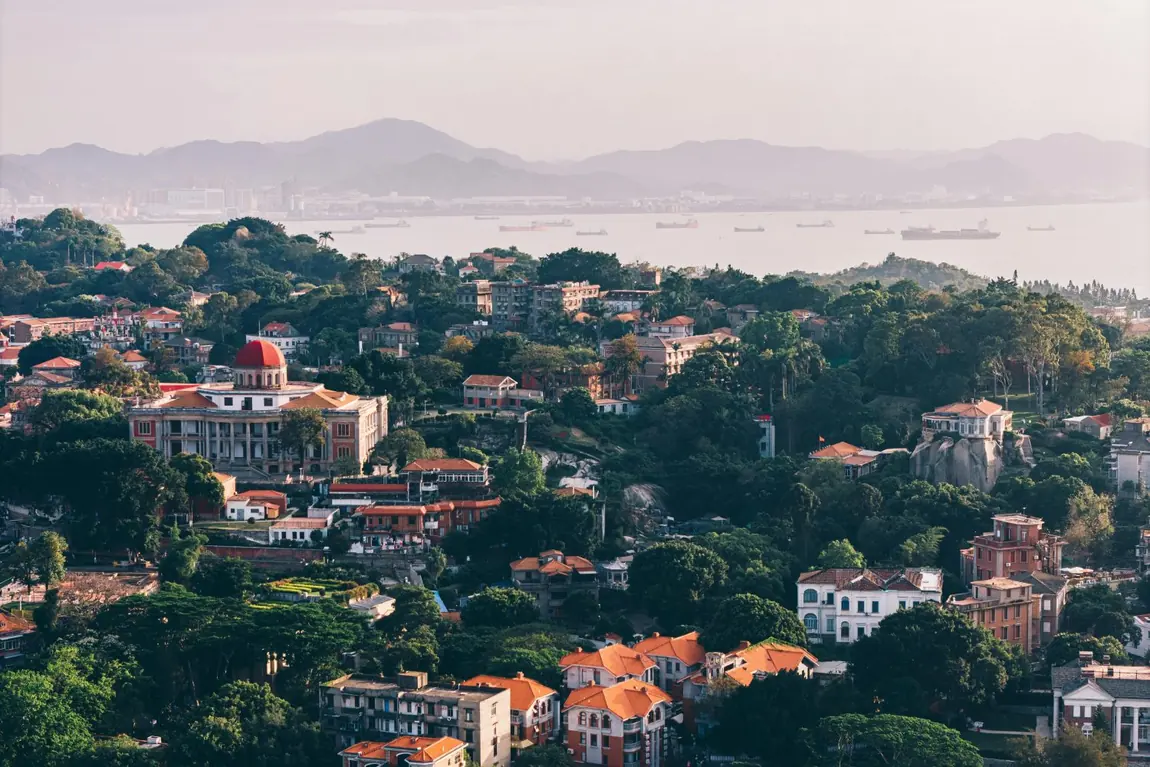
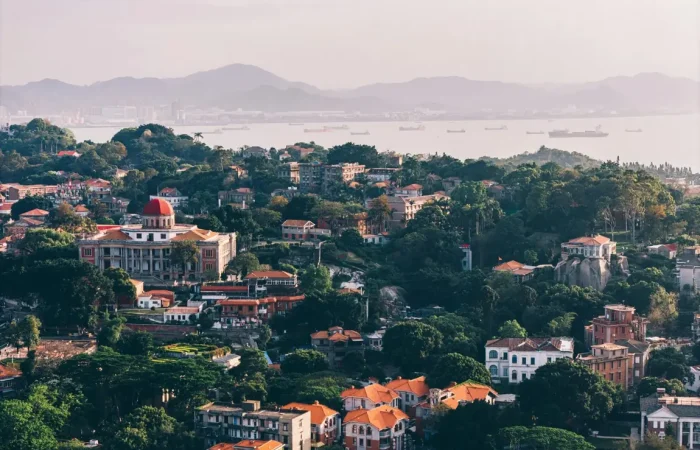
A short ferry from the city pier (about 10 minutes) takes you across to Gulangyu Island — UNESCO-listed, car-free, and home to the highest piano density per capita in the world. The island was the foreign concession of late Qing and Republican-era Xiamen, and the lanes still climb between 1,000 colonial villas in British, American, French, German, Dutch, and Japanese styles — a working museum of treaty-port architecture set against the South China Sea.
The morning walks the western shore — Gulangyu’s quieter lanes, where the villas are still residential and you can hear pianos drifting out of open windows (the island’s residents include some 200 professional musicians and music professors). Lunch is a Gulangyu street-food tasting — satay noodles (*shacha mian*), Zhang Sanfeng milk tea, Ye’s traditional Hokkien rice cake (*maci*), and oyster cakes.
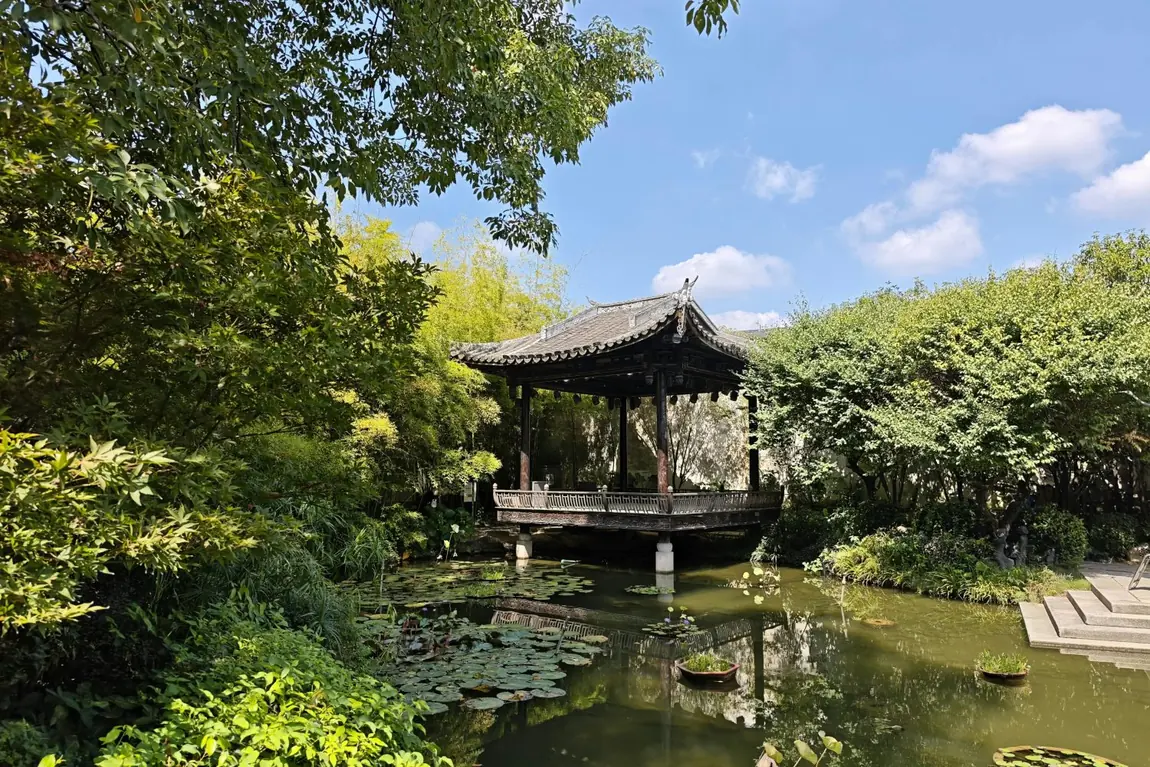
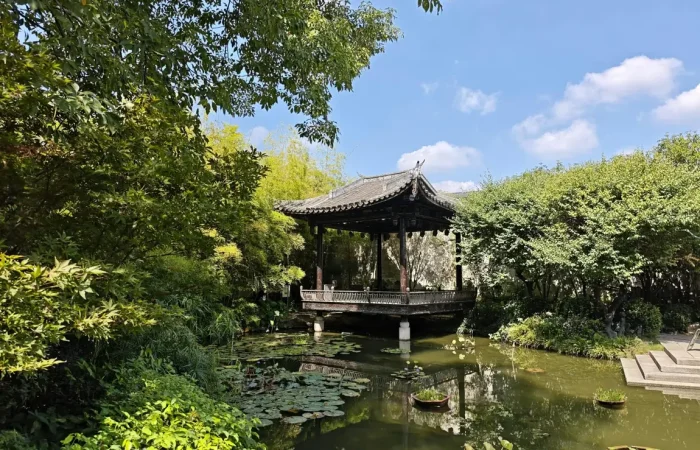
The afternoon turns to Shuzhuang Garden — a private seaside Suzhou-style garden built in 1913 right against the surf, with pavilions, a zigzag bridge over the tide pools, and a banyan-shaded teahouse looking south to Taiwan. Inside the garden, the Gulangyu Piano Museum holds 70 antique pianos collected from 200 years of European and American workshops — Pleyel, Steinway, Bösendorfer, the earliest 1801 Broadwood — donated by a Gulangyu native who emigrated to Australia.
A second island seafood dinner closes the day before the ferry back to the Xiamen mainland.
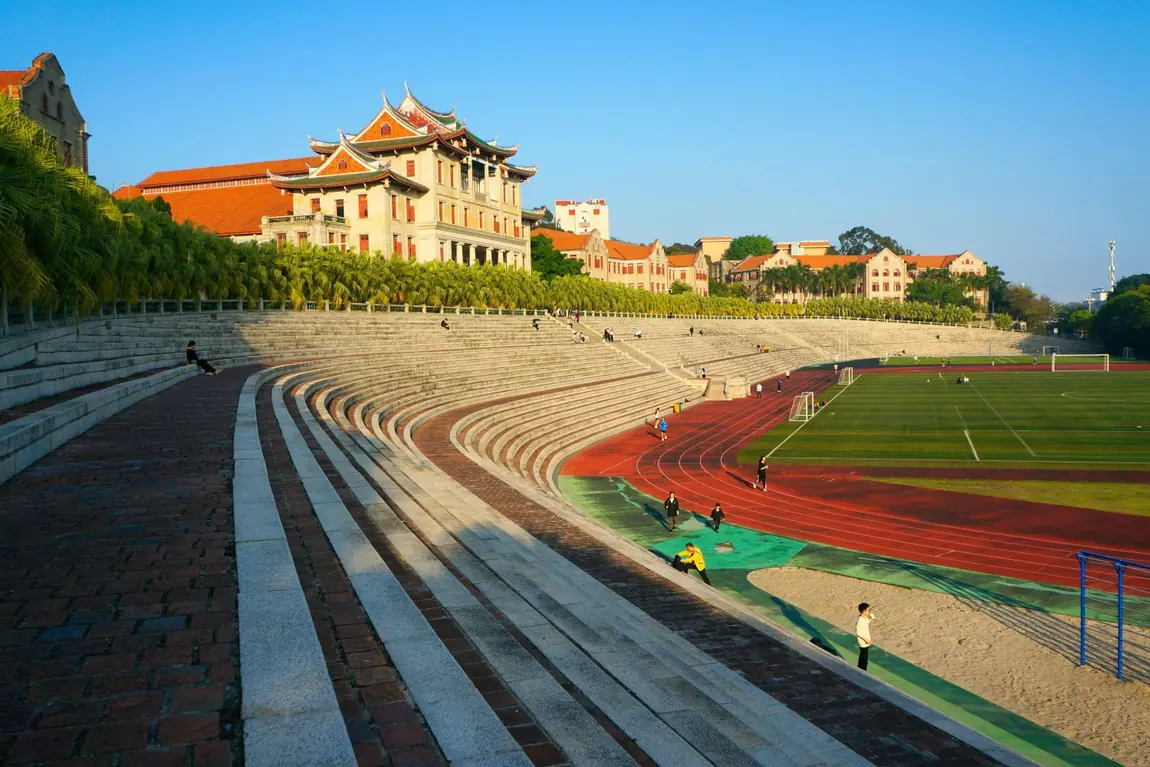
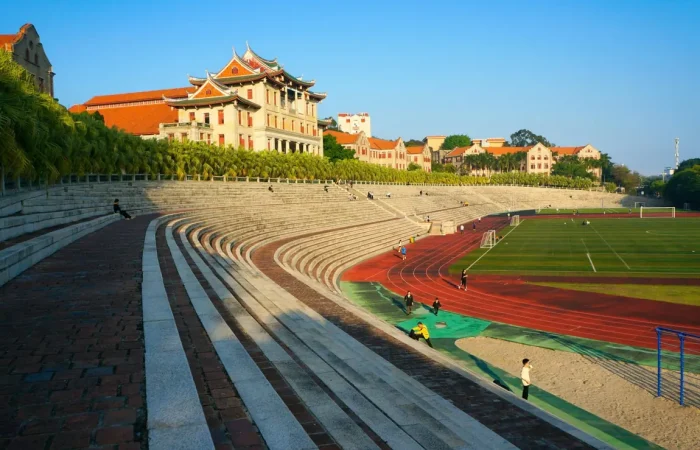
A 40-minute drive across the Jimei Bridge takes you to Jimei School Village — the lifework of Tan Kah Kee (*Chen Jiageng*), the overseas-Chinese rubber merchant who used his Singapore fortune to build eleven schools and universities on his home soil during the Republic and Mao eras. The school village is a small city of red-tile gabled buildings in Tan Kah Kee’s signature Sino-Western style, still operating as a working educational district.
Your guide walks you through the Returning Home Hall (*Guilai Tang*, Tan Kah Kee’s old residence and now his memorial), the Dragon Boat Pool (where the school still races at the Dragon Boat Festival), and Ao Garden — Tan Kah Kee’s seaside memorial garden, where 650 carved stone tablets retell Chinese history under a 28-metre liberation monument carved in the same Huian shadow-carving technique you will try this afternoon.
Lunch is at a Jimei student favourite — cheap, fresh, and the kind of Hokkien home cooking university towns specialise in.
The afternoon is the workshop you came here for. At Huihe Stone Carving Park, a working museum and studio of Huian shadow carving (*yingdiao*, literally “shadow carving”), you sit at a workbench with a heritage master. Yingdiao is a Fujian-only technique: the artist taps tiny graded dots into polished black granite with a single chisel — the density of dots creates a photorealistic image. After about an hour of guided practice you produce a small piece to take home. Dinner is a farewell Xiamen spread back near the hotel.
A relaxed morning starts at Nanputuo Temple — Xiamen’s 1,000-year Chan Buddhist monastery, set against the green slope of Wulao Peak with a famous vegetarian kitchen. Your guide walks you through the four halls, the Lotus Pond, and the carved-stone characters that earlier visiting monks have left on the cliff face above.
A short drive south brings you to Hulishan Fortress — the Qing-era coastal battery that still mounts the largest 19th-century Krupp gun in the world. The seaside walk from the fortress looks across to Kinmen (Taiwan).
A farewell Xiamen lunch — Minnan classics including ginger duck, oyster omelette, and Hokkien spring rolls — closes the trip. Your guide and a private vehicle take you to Xiamen Gaoqi International Airport (about 30 minutes from the city centre) to connect to your departure flight.